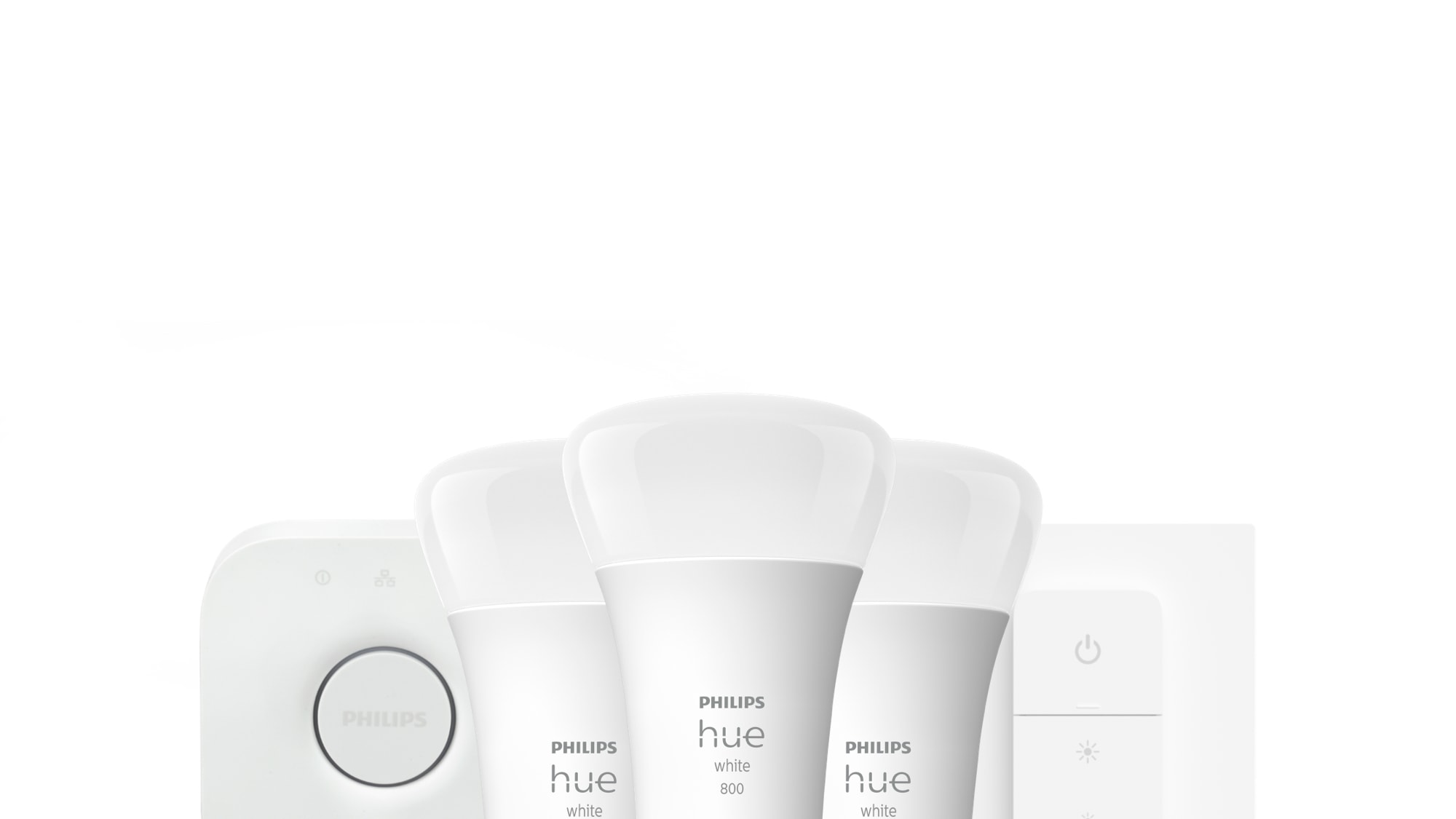
Smart lighting is often the first step into a connected home, and the Philips Hue versus IKEA Dirigera choice keeps coming up in 2026. Both offer colour-changing bulbs, smart controls and voice assistant integration, but the experience, quality and long-term cost differ significantly. Here is how they compare.
Smart Lighting: Contents
- The Ecosystems at a Glance
- Starter Kit Costs
- App Quality and Daily Experience
- Voice Assistant Integration
- Who Should Choose Philips Hue?
- Who Should Choose IKEA Dirigera?
- The Verdict
The Ecosystems at a Glance
Philips Hue launched in 2012 and has spent over a decade building the most comprehensive smart lighting ecosystem available. With hundreds of products, from standard bulbs and light strips to outdoor fixtures, Gradient ambient lights, and the Hue Sync Box for TV backlighting, it offers something for virtually every lighting scenario. The system runs on a Zigbee-based Hue Bridge, which connects to your home network and supports up to 50 lights.
IKEA Dirigera is the successor to IKEA’s original TRADFRI smart home hub. Launched in late 2022 and expanded through 2025, the Dirigera hub supports Zigbee devices and, crucially, Matter, the cross-platform smart home standard. IKEA’s smart lighting range includes the SOLHETTA, TRADFRI, and RODRET bulbs and controls, with a growing selection of colour, white spectrum, and standard white options.
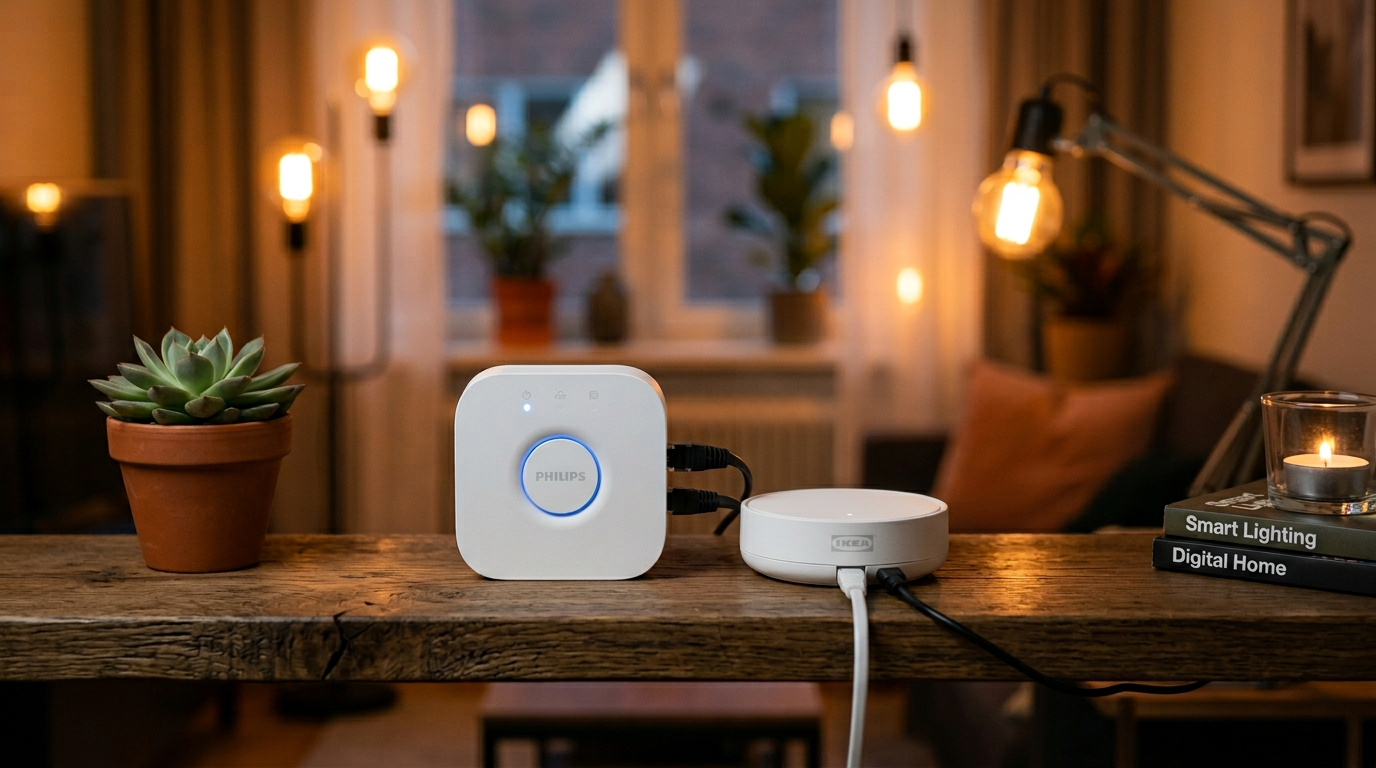
Starter Kit Costs
This is where IKEA’s proposition is most compelling.
A Philips Hue starter kit with a bridge and three colour-capable E27 bulbs costs approximately £135 to £150. Individual Hue colour bulbs retail for around £45 each. White ambiance bulbs (adjustable colour temperature but no colours) are £25 to £30 each. Even the basic white bulbs are £12 to £15.
An IKEA Dirigera starter setup with the hub (£59.99) and three SOLHETTA colour bulbs (around £12 each) comes in at roughly £95. Individual IKEA colour bulbs cost £12 to £15, white spectrum bulbs are £8 to £10, and basic white smart bulbs are as little as £5 to £7.
For a 10-bulb setup across a typical home, you are looking at approximately £450 to £550 for Hue (colour) versus £180 to £220 for IKEA, a significant difference that compounds with every additional bulb, light strip, or fixture you add.
App Quality and Daily Experience
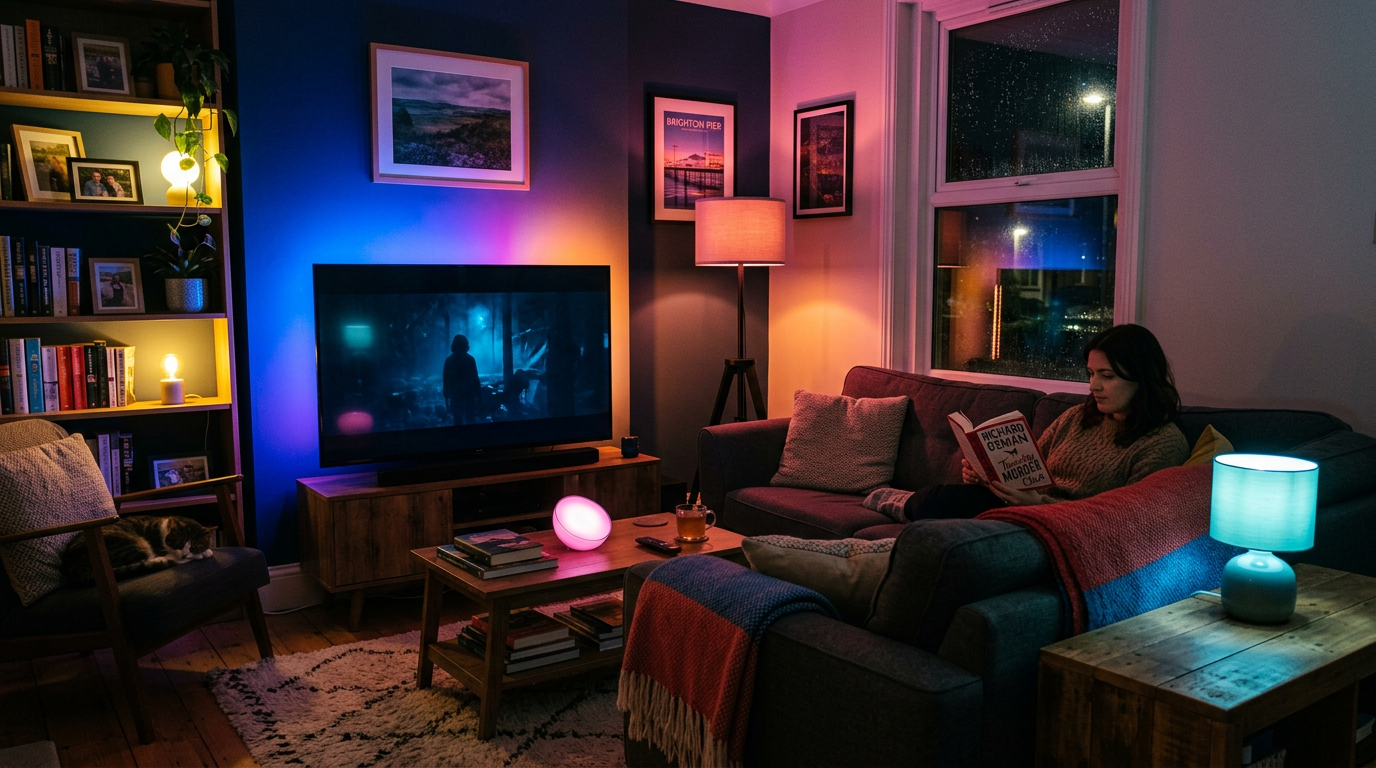
The Philips Hue app is polished, responsive and feature-rich. Room-based controls, custom scenes, automations (based on time, sunrise or sunset, or motion sensors), and Hue Entertainment Areas for syncing lights with music or video are all well-implemented. The app has had years of refinement and it shows, everything feels intuitive and reliable.
The IKEA Home smart app and the Dirigera hub were updated to be Matter-ready through a series of firmware rollouts in 2024 and 2025, per IKEA’s official newsroom. IKEA devices exposed through Dirigera can be added to Apple Home, Google Home or Alexa as Matter devices, giving you flexibility to control them from whichever platform you prefer. The app itself is simpler and less feature-rich than the Hue app, but it is noticeably more responsive than the old TRADFRI app it replaced. For more on how Matter works across platforms, see our guide on what works in smart home 2026.
Voice Assistant Integration
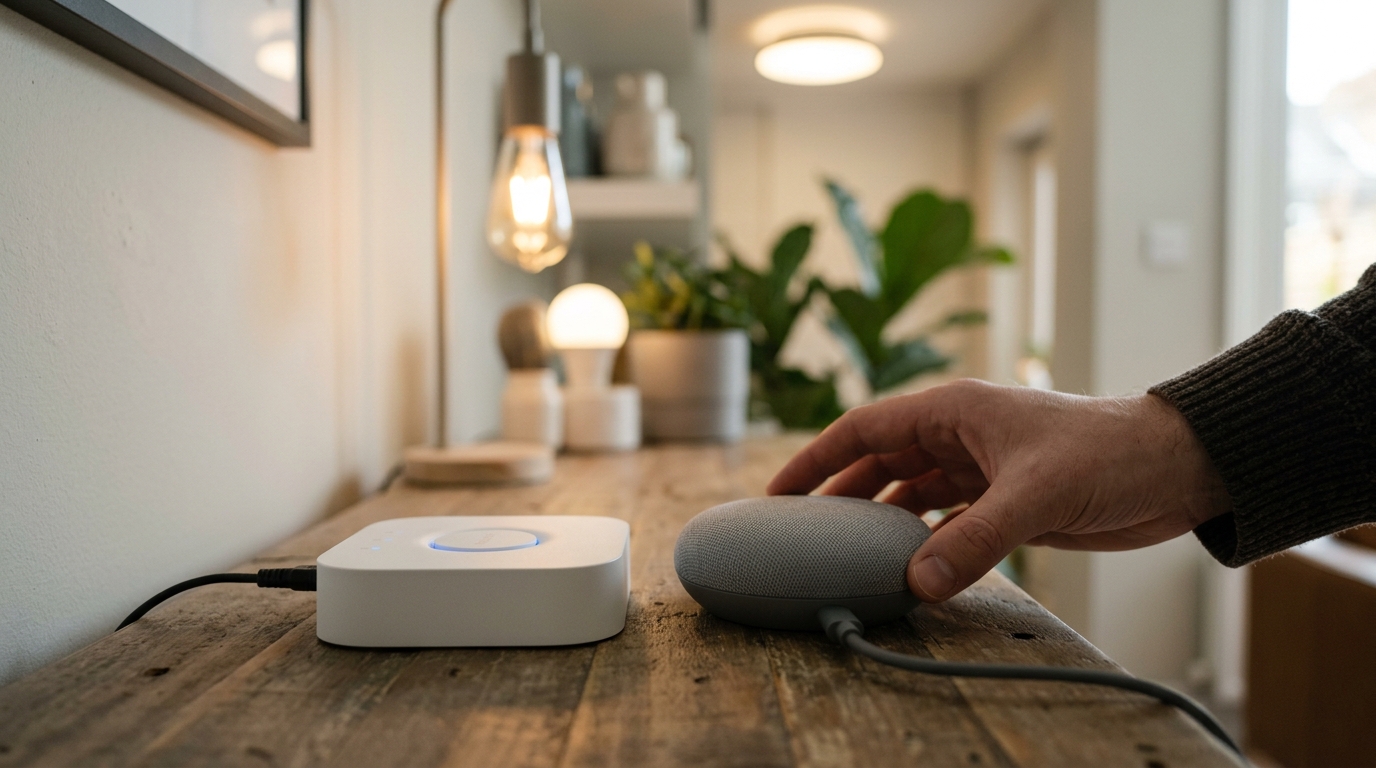
Both Hue and IKEA Dirigera work with Alexa, Google Assistant, and Apple HomeKit/Siri. Integration quality is good on both platforms, voice commands for turning lights on/off, adjusting brightness, changing colours, and activating scenes work reliably.
Hue has a slight edge in the depth of voice integration, with support for naming individual lights, rooms, and zones that makes voice commands more precise. IKEA’s voice integration is functional but can occasionally be less responsive. For more on voice assistant automation, our Alexa routines guide covers how to get the most from smart lighting with voice control.
Who Should Choose Philips Hue?
Choose Hue if you want the best colour quality, the most polished app experience, the widest product range, and you are willing to pay a premium for it. Hue is the right choice for people who see smart lighting as a core part of their home design, accent lighting, entertainment sync, and sophisticated automations are where Hue shines (literally). It is also the better choice if you want everything from one ecosystem, including outdoor lighting and speciality fixtures.
Who Should Choose IKEA Dirigera?
Choose IKEA if you want functional smart lighting without the premium price. If your needs are straightforward, turning lights on and off by schedule, adjusting colour temperature for morning and evening, basic voice control, IKEA covers these use cases at a fraction of the cost. The savings are most significant when lighting an entire home, where the per-bulb price difference adds up quickly. IKEA is also a good choice if you are already buying IKEA furniture and lamps, as the integration is natural. For more on getting started with smart home tech affordably, check out our best smart plugs guide.
The Verdict
Philips Hue wins on quality, ecosystem depth, and experience. IKEA Dirigera wins on price, and the margin is not close. For most people starting out with smart lighting, IKEA provides 80 per cent of the experience for 40 per cent of the cost. For enthusiasts who want the best, Hue remains the gold standard.
Final verdict
Philips Hue vs IKEA Dirigera compared — starter costs, colour quality, app experience, Matter support, product range, and which smart lighting system suits your budget.
How we compare
Buyer action
Where to buy or check next
Use this as the final check before ordering a phone, changing network or trusting a headline monthly price.

Reader discussion
Leave a comment
Comments are moderated. Keep it useful, accurate, and on topic.