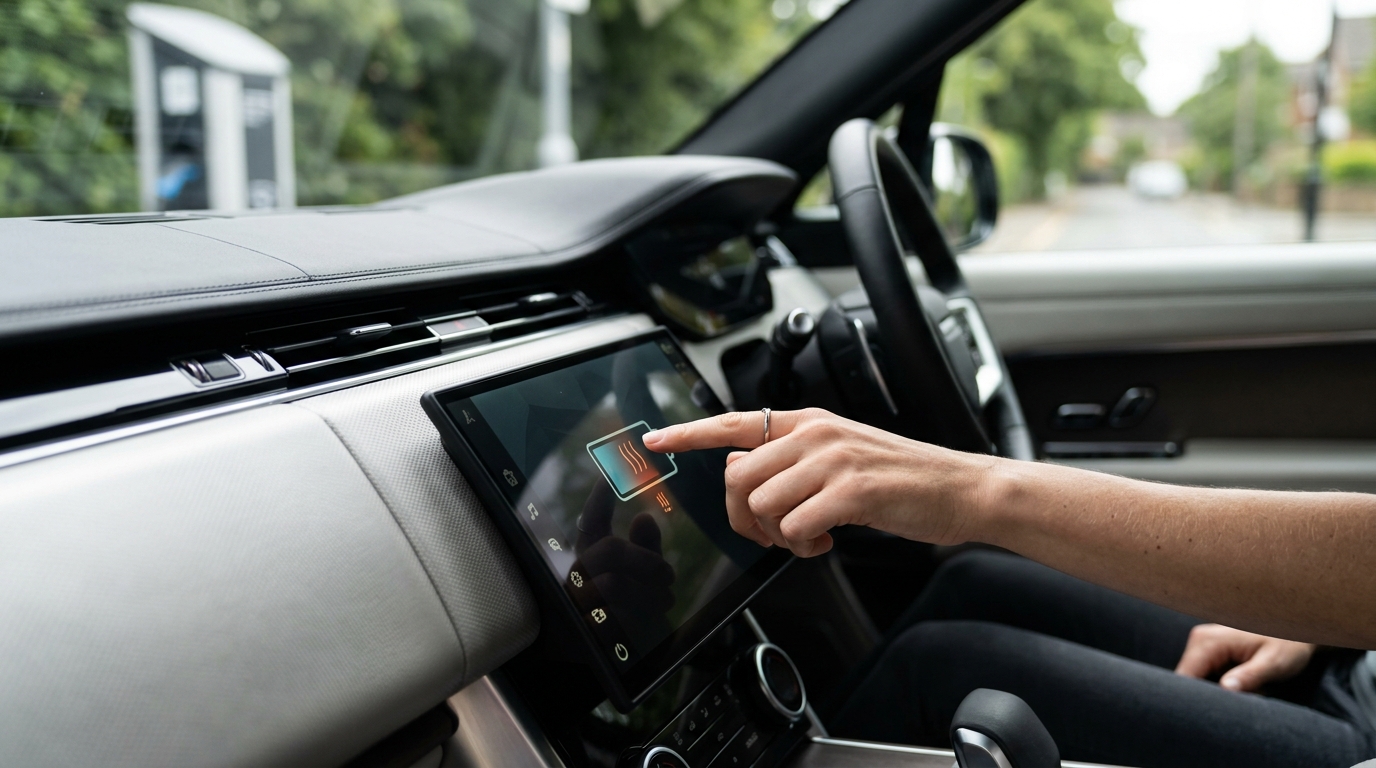
If you have driven an EV through a British winter, you have probably noticed the sharp drop in range. Learning to precondition your EV battery is the key to solving this. That 300-mile estimate on the dashboard becomes 220 miles when the temperature dips below freezing. You have probably also noticed that rapid charging takes longer in the cold — a session that takes 25 minutes in July can stretch to 45 minutes in January. The solution to both problems is battery preconditioning, and most modern EVs can do it automatically if you know where to find the setting.
Precondition Your EV Battery: Contents
- Why Cold Batteries Perform Poorly
- What Battery Preconditioning Actually Does
- How to Activate Preconditioning by Brand
- Home Charging vs Public Fast Charging in Winter
- Practical Cold Weather EV Tips
- Does Preconditioning Damage the Battery?
- The Bottom Line
Why Cold Batteries Perform Poorly
Lithium-ion batteries rely on chemical reactions to store and release energy, and these reactions slow down in cold temperatures. When the battery is cold, the internal resistance increases, which means less energy is available for driving (reduced range) and the battery cannot accept energy as quickly (slower charging).
At 0°C, a typical EV battery operates at roughly 70 to 80 per cent of its warm-weather efficiency. At -10°C, that can drop to 60 per cent. This is not a defect — it is fundamental battery chemistry. The good news is that warming the battery to its optimal operating temperature (around 20 to 25°C) restores full performance, and that is exactly what preconditioning does.
What Battery Preconditioning Actually Does
Before driving: Using the car’s scheduled departure or climate preconditioning feature, the battery is warmed while the car is still plugged in. This means the energy for heating comes from the mains rather than the battery itself, preserving your range.
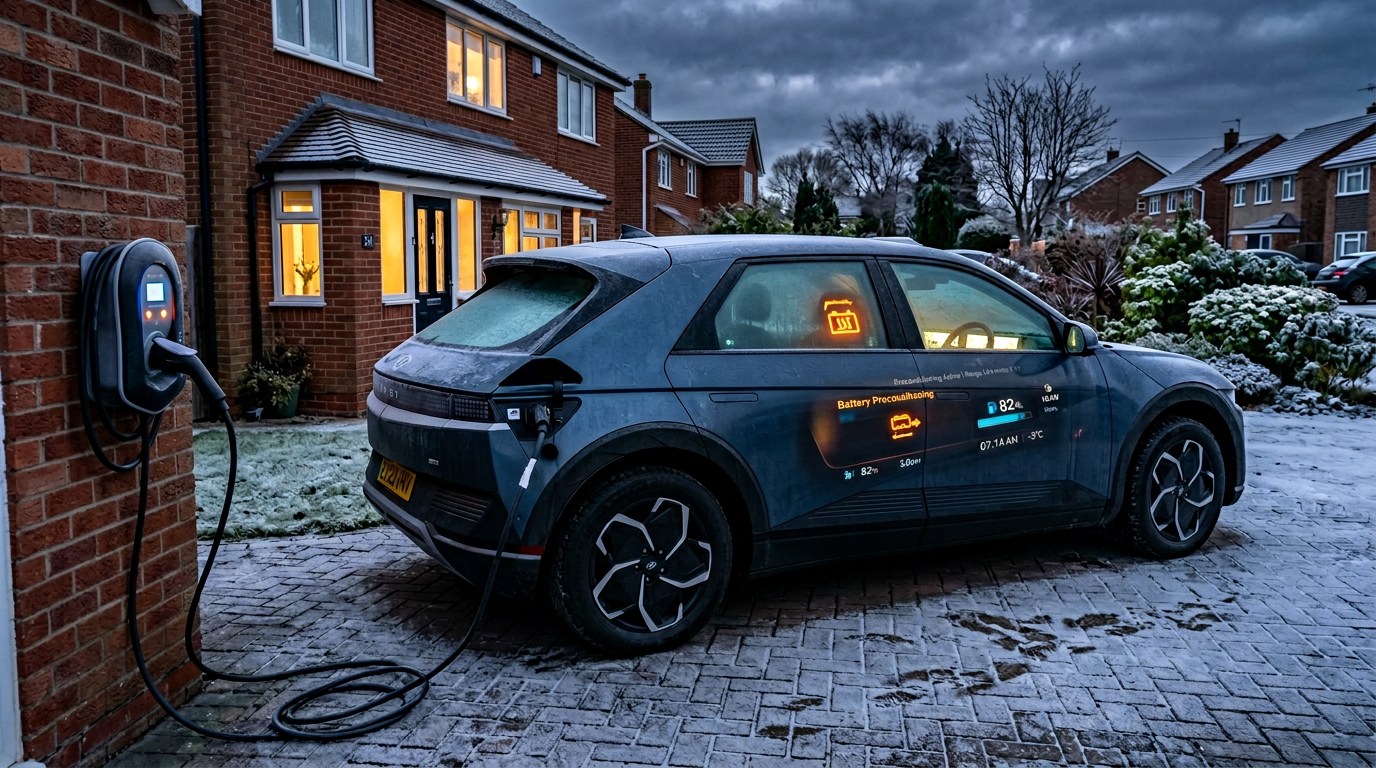
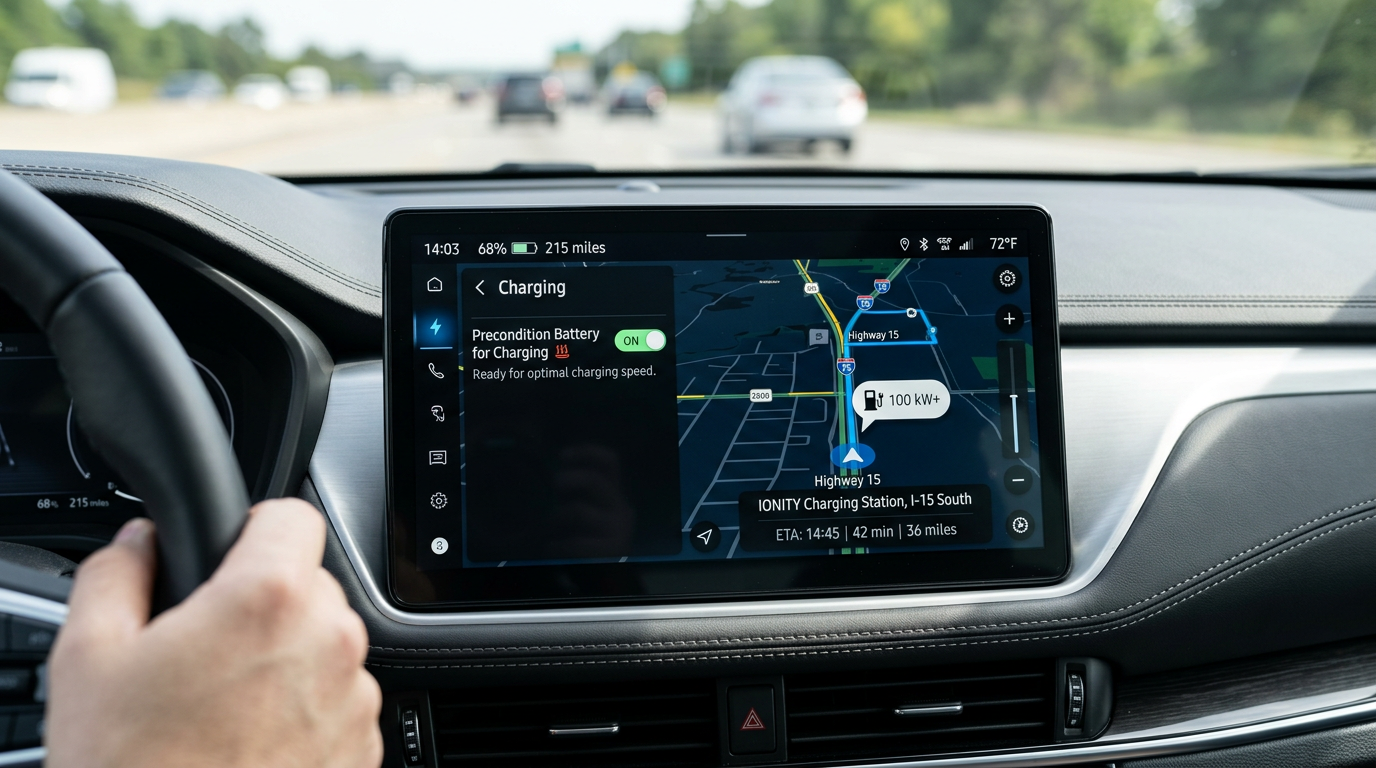
Before fast charging: When you set a fast charger as your destination in the navigation system, many EVs will automatically warm the battery during the drive so it arrives at the charger at the optimal temperature. This can significantly reduce charging time — in some cases cutting a rapid charge session by 10 to 15 minutes.
How to Activate Preconditioning by Brand
Tesla (Model 3, Model Y, Model S, Model X): Tesla’s preconditioning is largely automatic. When you navigate to a Supercharger using the built-in navigation, the car automatically preconditions the battery en route. You will see “Preconditioning battery for fast charging” on the touchscreen. For departure preconditioning, use the Tesla app or the car’s touchscreen: Climate > Schedule > set your departure time. The car will warm both the cabin and the battery before your scheduled departure if it is plugged in.
nergy comes from the mains, not the battery. You leave with a warm battery (full range), a warm cabin (no blasting the heater on battery power), and a full charge.Home Charging vs Public Fast Charging in Winter
Public fast charging is where cold weather has the most impact. A cold battery at a 150kW charger might only accept 50 to 80kW initially, ramping up as the battery warms during the session. Preconditioning via navigation largely solves this — arriving with a warm battery means you can charge at or near the maximum rate from the start. For help finding chargers, our guide to the best EV charging apps covers the most useful tools.
Practical Cold Weather EV Tips
Park in a garage if possible. Even an unheated garage keeps the car 5 to 10°C warmer than outside, which makes a noticeable difference to morning range and charging speed.
Use heated seats and steering wheel instead of the cabin heater. Heating the cabin uses 2 to 5kW of power. Heated seats use around 50 to 100W each. Using seats and steering wheel heating and setting the cabin temperature a few degrees lower can save 10 to 15 per cent of range on a cold journey.
Keep the battery above 20 per cent in cold weather. Cold batteries degrade faster when deeply discharged. Keeping the state of charge above 20 per cent protects battery health and ensures enough energy for preconditioning.

Plan longer stops at fast chargers. Accept that winter charging takes longer and plan accordingly. A 20-minute stop in summer might become 30 minutes in winter, even with preconditioning. Our guide on planning a long-distance EV road trip covers this in more detail.
Does Preconditioning Damage the Battery?
When it comes to Precondition Your EV Battery, no. In fact, it is the opposite — preconditioning protects the battery. Charging or heavily discharging a cold lithium-ion battery can cause lithium plating, which permanently reduces capacity. By warming the battery before demanding high power (either for driving or fast charging), preconditioning reduces stress on the cells and helps preserve long-term battery health.
Most EV manufacturers recommend that you precondition your EV battery in cold weather precisely because it extends battery longevity. For more on battery health and what to look for, see our guide on how to check EV battery health.
The Bottom Lin
Battery preconditioning is one of those features that every EV owner should know about but many overlook. In winter, it can recover 15 to 25 per cent of lost range, cut fast charging times by 10 to 15 minutes, and protect your battery’s long-term health. The setup takes five minutes — find the timed departure feature in your car’s app, set your usual departure time, and let the car do the rest. It is the single most impactful thing you can do to improve winter EV ownership.
Buying a used EV where battery condition matters? Car Deal Expert shows what to check in its used EV battery-health guide.
Buyer action
Where to buy or check next
Use this as the final check before ordering a phone, changing network or trusting a headline monthly price.













Reader discussion
Leave a comment
Comments are moderated. Keep it useful, accurate, and on topic.