This post is from our Windows Phone 7 archive. For our current coverage of technology reviews, see our 2026 latest technology reviews.
Read the 2026 latest technology reviews guide →UPDATED · News · 18 Dec 2010 · MTW Editorial Team

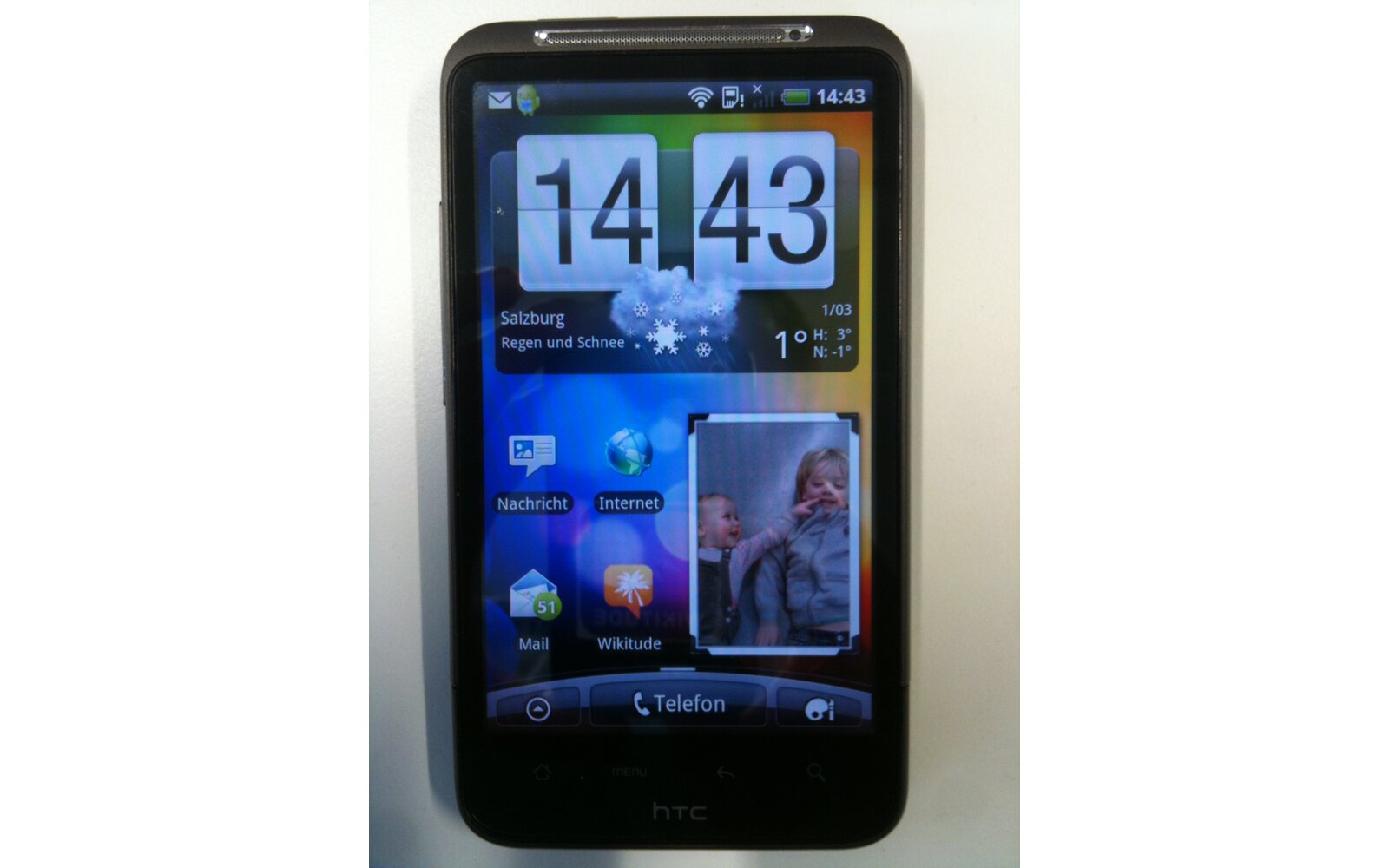
GLBenchmark 2.0 has finally been released to the public today nearly 2 years after being unveiled during MWC 2008. The opportunity was too good so I decided to run it on the HTC Desire HD and Samsung Galaxy S to compare the Qualcomm’s Adreno 205 vs the Power SGX540. I did a chart (posted below after the break) so you can compare the full detailed results of both handsets and not only the overall score. This is really important because only looking at the overall results is actually a bit misleading in this case. As you probably already know the PowerVR SGX540 is currently the fastest mobile GPU currently available in retail devices and so far nothing has come close to it (besides the Tegra 2 which is pumping out results close to the Galaxy Tab in OGLES 2.0) but Samsung is currently the only OEM shipping handsets featuring this GPU. The newest entrant is the Adreno 205 which is part of the latest MSM8255 and MSM7X30 chipset from Qualcomm and used in several HTC devices. The Adreno 205 is an updated / tweaked version of the Adreno 200 found in the original QSD8250 chipset. Anyway check out the results below:
| HTC Desire HD / Adreno 205 | Samsung Galaxy S / SGX540 | |
| GLBenchmark 2.0 Egypt : | 2043 Frames (18.1 Fps) | 2423 Frames (21.4 Fps) |
| GLBenchmark 2.0 Egypt FSAA : | 1705 Frames (15.1 Fps) | 1957 Frames (17.3 Fps) |
| GLBenchmark 2.0 Egypt FSAA Fixed Time : | 194328 ms | 170861 ms |
| GLBenchmark 2.0 PRO : | 1269 Frames (25.4 Fps) | 1931 Frames (38.6 Fps) |
| GLBenchmark 2.0 PRO FSAA : | 973 Frames (19.5 Fps) | 1441 Frames (28.8 Fps) |
| GLBenchmark PRO FSAA Fixed Time : | 69861 ms | 51186 ms |
| Array test: uniform array access : | 2325 kVertex/s (17.7 Fps) | 2026 kVertex/s (15.4 Fps) |
| Branching test: balanced : | 5484 kShader/s (10.6 Fps) | 2862 kShader/s (5.6 Fps) |
| Branching test: fragment weighted : | 11726 kFragment/s (30.5 Fps) | 9996 kFragment/s (26.0 Fps) |
| Branching test: vertex weighted : | 2084 kVertex/s (15.9 Fps) | 2398 kVertex/s (18.3 Fps) |
| Common test: balanced : | 3385 kShader/s (6.6 Fps) | Failed / Not supported |
| Common test: fragment weighted : | 7872 kFragment/s (20.5 Fps) | Failed / Not supported |
| Common test: vertex weighted : | 503 kVertex/s (3.8 Fps) | 2295 kVertex/s (17.5 Fps) |
| Geometric test: balanced : | 3071 kShader/s (6.0 Fps) | 2862 kShader/s (5.6 Fps) |
| Geometric test: fragment weighted : | 8654 kFragment/s (22.5 Fps) | 5082 kFragment/s (13.2 Fps) |
| Geometric test: vertex weighted : | 820 kVertex/s (6.2 Fps) | 2398 kVertex/s (18.3 Fps) |
| Exponential test: balanced : | 6121 kShader/s (11.9 Fps) | 3270 kShader/s (6.3 Fps) |
| Exponential test: fragment weighted : | 14674 kFragment/s (38.2 Fps) | 7543 kFragment/s (19.6 Fps) |
| Exponential test: vertex weighted : | 1124 kVertex/s (8.6 Fps) | 2379 kVertex/s (18.1 Fps) |
| Fill test: texture fetch : | 182942 kTexels/s (7.4 Fps) | 73753 kTexels/s (3.0 Fps) |
| For loop test: balanced : | 4175 kShader/s (8.1 Fps) | 3089 kShader/s (6.0 Fps) |
| For loop test: fragment weighted : | 10598 kFragment/s (27.6 Fps) | 2333 kVertex/s (17.8 Fps) |
| For loop test: vertex weighted : | 877 kVertex/s (6.7 Fps) | 2333 kVertex/s (17.8 Fps) |
| Triangle test: textured : | 9266 kTriangles/s (70.6 Fps) | 4046 kTriangles/s (30.8 Fps) |
| Triangle test: textured, fragment lit : | 7729 kTriangles/s (58.9 Fps) | 2806 kTriangles/s (21.4 Fps) |
| Triangle test: textured, vertex lit : | 7715 kTriangles/s (58.7 Fps) | 3364 kTriangles/s (25.6 Fps) |
| Triangle test: white : | 12118 kTriangles/s (92.3 Fps) | 5219 kTriangles/s (39.7 Fps) |
| Trigonometric test: balanced : | 3244 kShader/s (6.3 Fps) | 2030 kShader/s (3.9 Fps) |
| Trigonometric test: fragment weighted : | 8800 kFragment/s (22.9 Fps) | 2757 kFragment/s (7.2 Fps) |
| Trigonometric test: vertex weighted : | 850 kVertex/s (6.5 Fps) | 1730 kVertex/s (13.2 Fps) |
| Swapbuffer speed : | 592 (59.2 Fps) | 560 (56.0 Fps) |
As you can see the SGX540 performed better in the scenery benchmarks but was totally obliterated by the Adreno 205 in most of the synthetic tests. The only time the SGX540 was pulling ahead was in vertex shading performance. This oblivious doesn’t mean much to the end user but I was relatively surprised to see that Adreno 205 held its own against the beastly SGX540. Anandtech did similar benchs comparing many more devices and the results are also really interesting. But it should also be noted that the Adreno 200 and 205 CPUs are always running a 16bit depth buffer while the SGX5XX are in 24bit (the same applies to the Tegra 2 which is also currently only set at 16bit).The thing you will notice when looking at the current top chart on GLBenchmark’s website is that the highest ranked OGL 2.0 device is the low-end Sony Ericsson Xperia X10 Mini powered by an Adreno 200 GPU. How is this possible? Well that’s because it’s running at a resolution of 320×240 compared to WVGA on the vast majority of the other handsets. Lowering the resolution of a 3D application can dramatically improve it’s performance this is why Microsoft has been evangelizing the use of the build-in hardware scaler in the Windows Phone 7 devices if a developer wishes to create a 3D intensive applications (render everything at a lower resolution with a similar aspect ratio and upscale the output to WVGA for free).

One thing to note thought is that the HTC Desire HD exhibited rendering artifacts during the Egypt benchmark (something that the Galaxy S didn’t):
Buyer action
Where to buy or check next
Use this as the final check before ordering a phone, changing network or trusting a headline monthly price.