
LG G6 OLED Review: The 4,500-Nit RGB Tandem Flagship Built for Bright-Room British Living Rooms
LG quotes 4,500 nits for the G6. The lab sheets land a shade over 3,100. That gap of nearly 1,400 nits is the whole story of this television — and the curious thing is that it barely dents the case for buying one. FlatpanelsHD’s 2026 lab measurements put the 65in OLED65G6 at 3,106 nits on a 2% window, against 2,341 nits on last year’s G5. Those are the brightest numbers I’ve seen come off an OLED panel, and they arrive with an asterisk LG would rather you didn’t read.
The 4,500-nit headline, and what it actually means
Here is the marketing position, stated plainly. The 55in to 83in G6 models use what LG calls a Primary RGB Tandem 2.0 WOLED panel paired with “Brightness Booster Ultra”, and the company claims up to 4,500 nits of peak output — pitched as 3.9 times brighter than its old B6. TFTCentral’s full spec breakdown lays the architecture out without the gloss: the “tandem” bit means stacked blue emission layers feeding a panel that drives the red, green and blue sub-pixels harder than a conventional WOLED, which is where the extra headroom comes from.
The number itself isn’t a lie so much as a laboratory ceiling — a figure squeezed from a tiny window under conditions no film will ever reproduce. Independent testing tops out around 3,100 nits. That roughly 3,100-nit measured peak is a real, repeatable step of about a third over the G5’s 2,341 nits. So treat 4,500 as a spec-sheet trophy and 3,100-plus as the figure you’ll actually live with. Both can be true. Only one matters in your living room.
What they’re not telling you in the headline is the shape of that curve. A 2% window is a small bright object on a dark field — a candle flame, a glint, a sun reflection. The instant more of the screen lights up, output drops, because OLED is bound by how much power and heat a panel can shed. That isn’t a flaw unique to the G6; it’s the physics of the format. The G6 simply starts from a much higher ceiling than anything before it, so even after the roll-off it has more highlight energy in reserve than a G5 ever did.
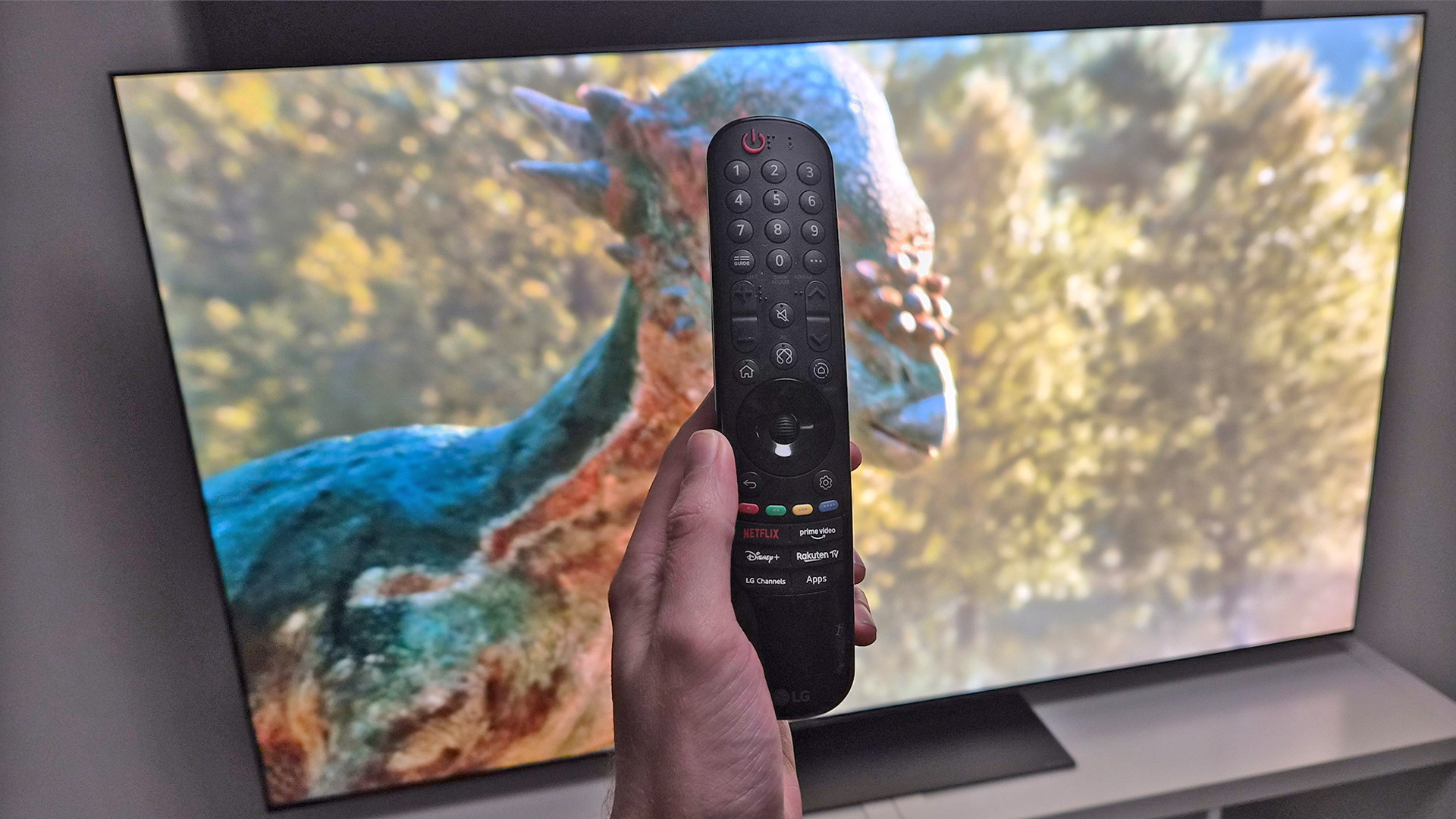
Treat 4,500 as a spec-sheet trophy and 3,100-plus as the figure you’ll actually live with. Both can be true — only one matters in your living room.
Why brightness is the right battle for a UK home
This is where the G6 earns its keep on this side of the Channel. British rooms are not American home cinemas — they’re bay windows, north-facing afternoons and a single overhead light you can’t be bothered to dim. OLED’s historic weakness was never black level; it was holding onto highlight punch with the curtains open. A panel this bright genuinely changes that. Specular highlights — sun off chrome, a torch beam, stadium floodlights — keep their snap in daylight rather than collapsing into grey.
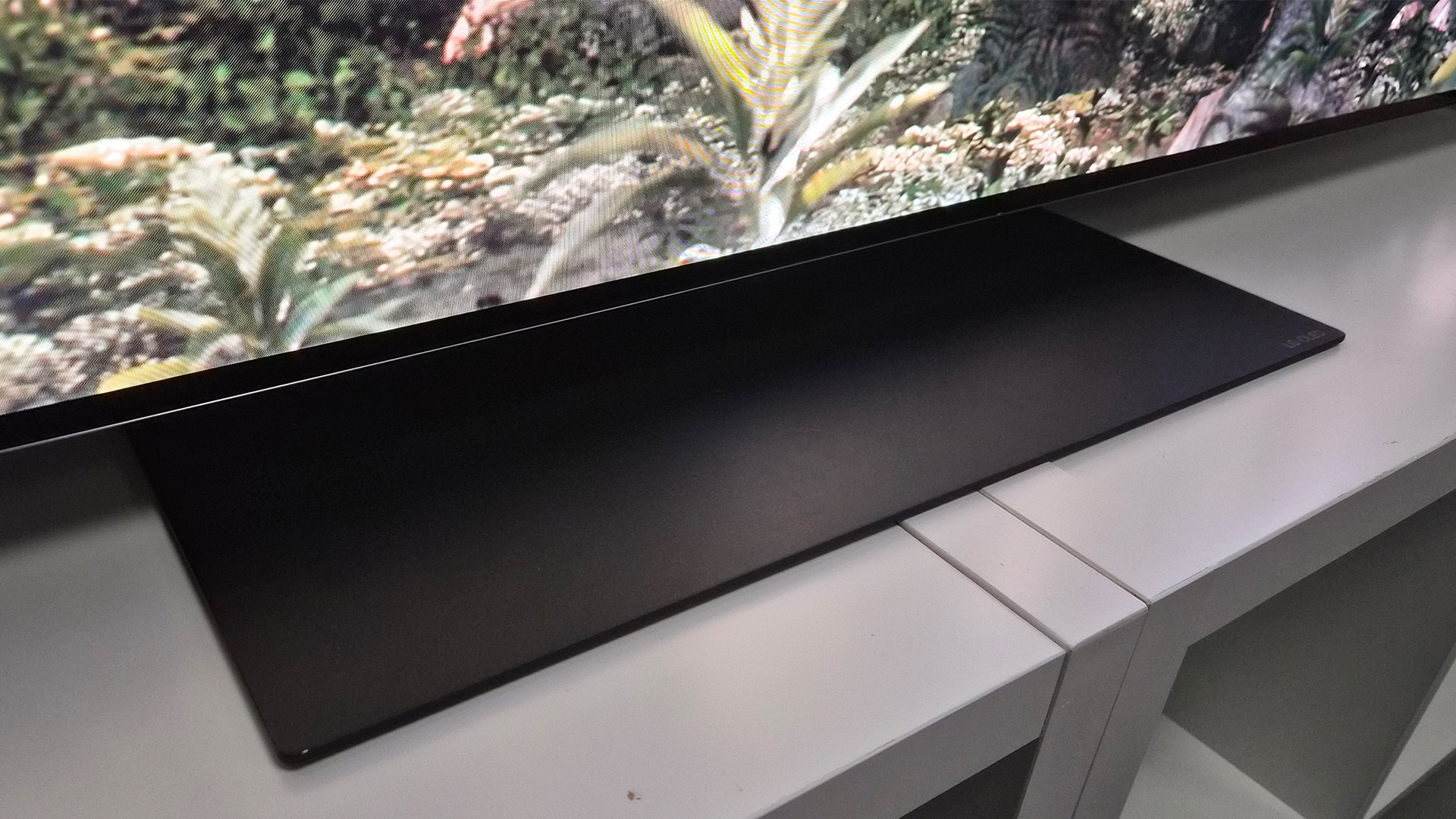
There is a second daylight win that gets less attention: the G6’s anti-reflection treatment. LG’s recent Gallery panels use a matte-leaning finish that scatters a window’s reflection rather than throwing it back as a mirror, and on a set this bright the combination matters more than either part alone — you get highlights that punch through ambient light and a screen that isn’t busy reflecting your garden back at you. In a typical UK lounge with the telly opposite the window, that is the difference between a watchable afternoon match and a squint.
The caveat worth knowing: full-field brightness — the whole panel lit white — falls away sharply, exactly as it does on every OLED, bound by power and heat. That ceiling is fine for film and telly, where bright scenes are rarely full-screen, and it’s the reason I’d still steer a permanently sun-blasted conservatory towards a high-end Mini-LED. For everything else, this is the bright-room OLED the format has been promising for years.
The processor, the gaming, and the connections
Brightness is the marquee, but the α11 AI Gen 3 processor is the quieter upgrade. LG cites a 5.6x faster NPU, a 50% CPU lift and a 70% GPU boost over the previous generation — headroom that goes into upscaling and motion handling rather than benchmark bragging. In practice that means cleaner detail from the sub-4K material that still makes up most British viewing — Freeview HD, older box sets, the compressed end of the streaming catalogue — where a weaker chip leaves edges soft or noisy.
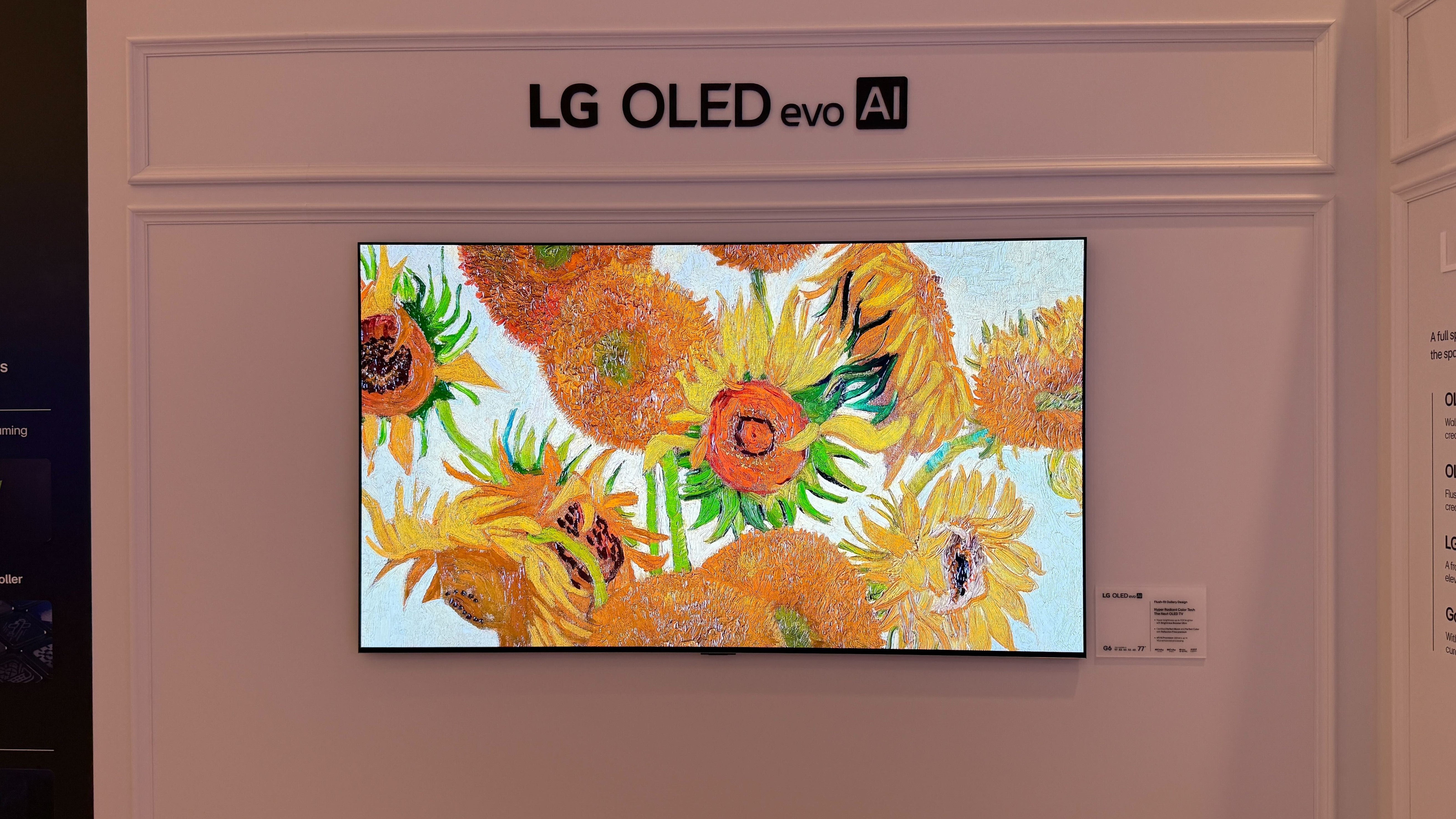
For gamers, the connectivity is the genuine draw: four HDMI 2.1 ports, a 165Hz refresh ceiling, plus Dolby Vision and Dolby Atmos. Four full-bandwidth ports is still rare and still the right answer when a console, a PC and a soundbar are all fighting for a socket — most rivals give you two and make you choose. Pair that with the standard LG gaming kit (VRR, auto low-latency switching and a near-instant response time) and the G6 covers a PS5 Pro, an Xbox and a high-refresh PC without you reaching behind the set every time you switch. On sound, the panel’s slim Gallery build means the built-in speakers are competent rather than commanding; LG’s WOW Orchestra mode, which blends the TV’s drivers with a compatible LG soundbar, is the honest route to cinema audio if you care.
Price, sizes and the two traps
The 65in G6 lands at £2,999 in the UK (for context, $3,399 in the US and AU$4,999). It spans 48in, 55in, 65in, 77in, 83in and 97in, and What Hi-Fi?’s UK listing is the place to track availability and the inevitable post-launch discounts as stock settles. As a Gallery-series set, the G6 ships with the flush wall-mount bracket in the box and is designed to sit hard against the wall like a frame; if you want it on furniture, the desktop stand is a separate purchase, which is worth budgeting for before you commit.
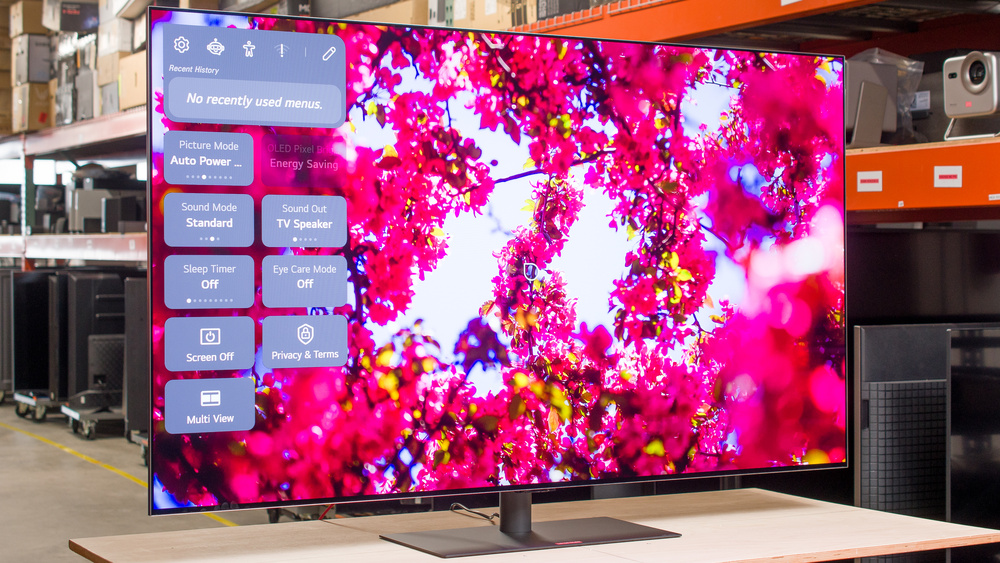
Two sizes carry caveats I’d want a buyer to understand before the money leaves the account. The 48in runs lower peak brightness than its larger siblings, so the headline numbers above don’t fully apply to the small model — if brightness is the reason you’re here, the 48in is the wrong door. And the flagship 97in — the one that looks like the ultimate statement piece — does not use the RGB Tandem 2.0 panel or the Brightness Booster tech at all. Spend five figures on the biggest G6 and you are, ironically, buying the one version that can’t do the trick the range is famous for. The sweet spot sits squarely in the 55in to 83in band, where the panel and the brightness story actually line up, and where the price-per-inch maths still flatters the set rather than insulting it.
Who should write the £2,999 cheque
If you watch in a bright room and you’ve been holding off on OLED because it washed out by day, the 65in G6 is the one I’d buy without much hand-wringing — it’s the first OLED I’d back to win a fight against a British afternoon. Gamers chasing 165Hz across multiple devices have an easy yes here too. The people I’d talk out of it are three: anyone seduced by the 4,500-nit line expecting to see it (you won’t); anyone eyeing the 97in for that headline panel (it isn’t in there); and anyone with a genuinely light-flooded room where full-field output matters more than highlight peaks — that’s still Mini-LED territory. What would change my mind on the value? A G5 falling far enough in the sales to make a one-third brightness gain feel like a luxury rather than a leap. Until then, at £2,999 the G6 is the OLED I’d point a discerning UK buyer towards — provided they buy the right size.
How we test
Buyer action
Where to buy or check next
Use this as the final check before ordering a phone, changing network or trusting a headline monthly price.












Reader discussion
Leave a comment
Comments are moderated. Keep it useful, accurate, and on topic.