Google DeepMind and the UK: why Britain’s home-grown AI lab matters now
Google DeepMind is Britain's strongest frontier-AI claim, a London lab it founded then sold to Google. What it gives the UK, and the sovereignty tension.
Google DeepMind UK is the most awkward fact in Britain’s artificial intelligence story: the country’s single strongest claim to a frontier-AI lab is a company it founded, then sold, and no longer owns. DeepMind was started in London in November 2010 by Demis Hassabis, Shane Legg and Mustafa Suleyman, acquired by Google in January 2014, and its work has since produced AlphaFold and Gemini, with Hassabis sharing the 2024 Nobel Prize in Chemistry. As London Tech Week 2026 closes today and ministers talk up a sovereign-AI push, that tension is the question Britain keeps avoiding.
Founded in London, 2010: DeepMind was established in November 2010 by Demis Hassabis, Shane Legg and Mustafa Suleyman, per the company’s own history at deepmind.google.
Acquired by Google, January 2014: Google bought DeepMind on 26 January 2014, in a deal reported between roughly $400m and $650m.
Nobel-grade research: AlphaFold (2020) predicted the structures of nearly all known proteins; Hassabis and John Jumper shared the 2024 Nobel Prize in Chemistry for it.
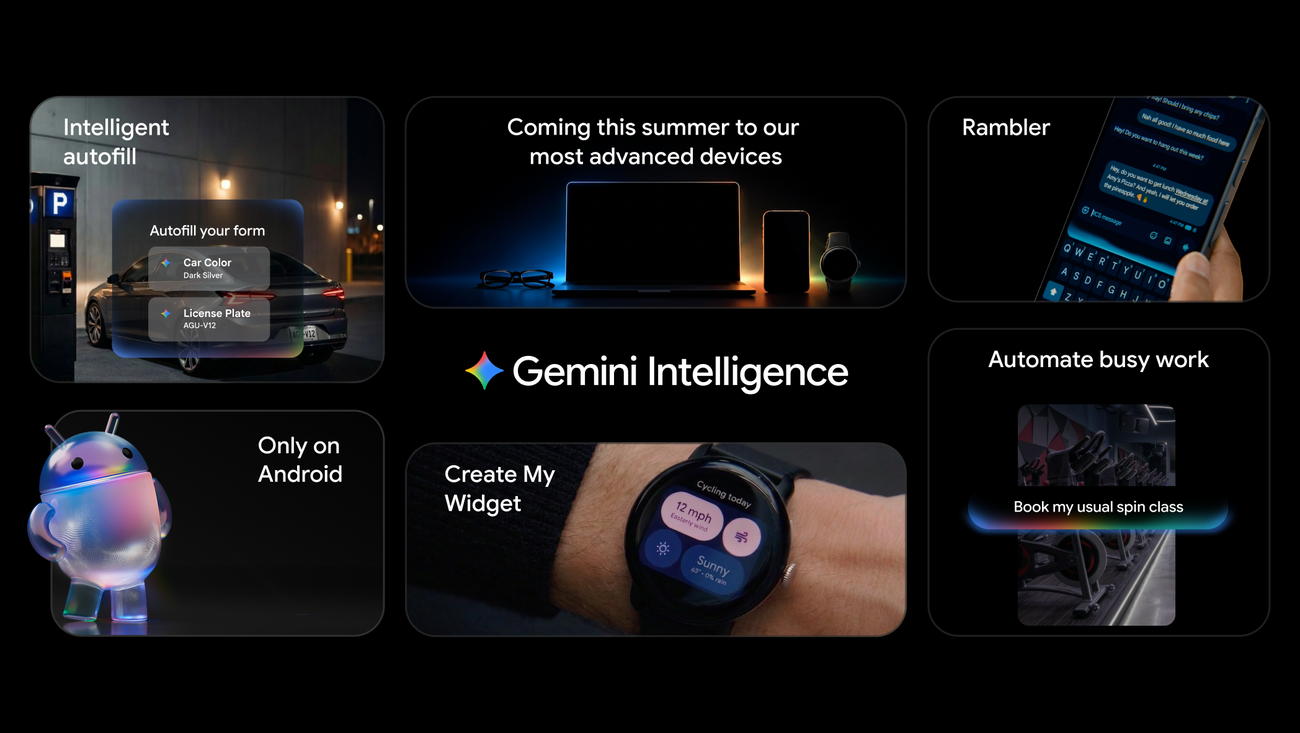
Gemini sits here too: Google DeepMind now develops Gemini, the model behind much of Google’s consumer AI, run from a London-headquartered lab in King’s Cross.
Policy backdrop: The UK’s sovereign-AI programme is framed as a £500m fund with Isambard-AI compute, set against ministers’ “AI maker, not taker” ambition (gov.uk, London Tech Week 2026).
Why Google DeepMind UK still matters to Britain
Start with the thing nobody disputes: DeepMind is a genuinely British scientific achievement. It was founded in London in 2010, it grew up in the UK research ecosystem, and its King’s Cross headquarters remains one of the densest concentrations of frontier-AI talent anywhere in Europe. When ministers say Britain should be a maker of artificial intelligence rather than a taker of it, the honest version of that boast points straight at this lab. The UK did not stumble into the AI age; it produced one of the handful of organisations actually defining it.
The research record is the part you cannot wave away. AlphaFold, released in 2020, predicted the three-dimensional structure of almost every protein known to science and handed that database to biologists worldwide; it is the reason Demis Hassabis and John Jumper shared the 2024 Nobel Prize in Chemistry. Before that came AlphaGo, which in 2015 became the first program to beat a professional human Go player and in 2016 went on to defeat world champion Lee Sedol. These are not marketing milestones. They are the kind of results that reshape entire scientific fields, and they came out of a lab that still calls London home. For readers weighing up whether Google’s consumer AI is worth paying for, our verdict on whether Gemini is worth it in the UK traces a direct line back to this research base.
Then there is the talent dividend. A lab of this calibre acts as a magnet: it draws PhD researchers to the UK, trains them, and seeds spin-outs and academic posts across the country. That ecosystem effect is precisely what the government is trying to buy with its sovereign-AI cash, and DeepMind has been quietly generating it for over a decade. If you want to understand why London still ranks as a serious AI city despite American dominance in compute and capital, the answer is largely this one address in King’s Cross.
Image: Google
The ownership problem Britain keeps dodging
Here is where the pride has to meet the arithmetic. Google bought DeepMind on 26 January 2014. The lab is British by origin and by postcode, but it is American by ownership, and that is not a technicality. The strategy, the compute budget, the commercial priorities and ultimately the value created flow up to Alphabet in California. When Gemini ships, it ships as a Google product on Google’s terms. Britain hosts the brains; it does not hold the balance sheet.
This is the exact critique that ran through London Tech Week coverage this week. Industry commentary, including from Computing.co.uk, warned that Britain’s sovereign-AI ambitions still rest on heavy reliance on US tech giants for the hardware, the cloud and now the flagship models. You can pour £500m into a sovereign fund and stand up the Isambard-AI supercomputer in Bristol, and both are worth doing, but the uncomfortable truth is that the country’s most celebrated AI asset already answers to Mountain View. Our breakdown of the UK’s £500m sovereign-AI fund and what Isambard means for you sets out exactly how much of the stack remains American.
Britain’s best claim to AI sovereignty is a London lab it no longer owns. That is the sentence ministers will not say out loud.
Image: Google
None of this makes DeepMind a loss. Foreign ownership of a world-class research operation is still vastly better than not having the research at all, and Google’s compute has plainly accelerated the science. But it does puncture the cleaner version of the sovereignty story. A country that is serious about being an AI maker cannot point only at a lab it sold and call the job done. The DeepMind case is a reminder that sovereignty is not just about where the cleverest people sit; it is about who decides what they build and who captures the upside.
The video above, from Google DeepMind’s official channel, shows how the lab is now pushing AI into scientific discovery, the same lineage that produced AlphaFold. It is a useful corrective to the idea that frontier AI is only chatbots: the most consequential UK-rooted AI work has been in biology, weather and materials, not just text.
What it means for UK users right now
For everyday readers, DeepMind’s British roots are not an abstraction. The research feeds Gemini, which is now woven through Android, Search, Gmail and Docs, and which UK users pay for in pounds. If you are deciding between the major assistants, our Copilot versus Gemini comparison for UK users and our look at Claude, Copilot and Gemini for UK business both turn on capabilities that trace back, in Gemini’s case, to this London lab. The AlphaFold database, meanwhile, is free and already used by NHS-adjacent and academic researchers across the country.
Image: Google
There is also a competitive frame UK readers should hold. DeepMind is not the only frontier lab planting a flag in Britain. Anthropic has built a London presence too, and we have covered what its London office means for Britain and what its CEO Dario Amodei signals for the UK. The pattern is consistent: the biggest AI players want London talent, but the headquarters, the ownership and the strategic control sit in the United States. DeepMind is simply the oldest and most British example of that pattern.
The UK hosts the brains. It does not hold the balance sheet. Any honest sovereignty plan has to start there.
Image: Google
The practical upshot is mixed. UK users get genuinely world-class AI, often first, because so much of it is built here. But the country has limited leverage over how that AI is priced, governed or restricted, because the decisions are not made here. When Google changes Gemini’s pricing or trims a free tier, Britain is a customer, not a shareholder. That is the daily reality behind the sovereignty rhetoric.
How the sovereign-AI push fits the DeepMind story
This week’s announcements try to answer exactly this gap. At London Tech Week 2026, which ran 8 to 12 June at Olympia and was opened by Prime Minister Keir Starmer, the government leaned into a sovereign compute strategy: roughly £400m earmarked for specialist AI chips, sitting alongside a £500m Sovereign AI programme that hands supported companies access to Isambard-AI, the Bristol supercomputer built on thousands of NVIDIA Grace Hopper chips. The framing, repeated since the AI Opportunities Action Plan, is that Britain should be an “AI maker, not an AI taker”.
The DeepMind story is both the inspiration and the warning for that plan. It proves Britain can grow a frontier lab; it also proves how easily one can drift into foreign hands once the compute bills and acquisition offers arrive. The lesson is not to wall off the country, which would be self-defeating, but to make sure the next DeepMind has a credible reason to stay British: domestic compute it can actually use, capital that can match American cheques, and a regulatory environment that does not push founders to relocate. Our coverage of the big wins from London Tech Week 2026 goes through what was actually committed versus what was merely announced.
Image: Google
There is a credible counter-case worth stating fairly. Some argue ownership matters less than access: as long as British researchers, startups and the NHS can use the outputs, whether AlphaFold’s protein database or Gemini’s models, the nationality of the parent company is secondary. That view has force, and it is roughly the bet the government is hedging by buying compute rather than trying to repatriate labs. But access can be revoked, repriced or geofenced, as the wider debate over the CMA’s Google AI search ruling for UK publishers shows. Sovereignty is partly about not being at the mercy of someone else’s terms of service.
It is also worth being precise about what is verified and what is not. The £500m sovereign fund and the ~£400m chips commitment both appear in credible reporting from London Tech Week, though the exact relationship between the two figures is not fully pinned down in public sources, so we treat them as related but distinct. What is not in doubt is the DeepMind timeline, the Nobel, and the King’s Cross base, all of which we checked against deepmind.google and primary reporting before publishing.
Where to check next in the UK
If you want to follow this story rather than take our word for it, here is where to look (last checked: 2026-06-12):
Image: Google
deepmind.google: the lab’s own research, blog and AlphaFold database, free to browse, for the primary record on Gemini, AlphaFold and scientific projects.
gov.uk: the Prime Minister’s London Tech Week 2026 speech and the AI Opportunities Action Plan for the official “AI maker, not taker” framing and funding figures.
londontechweek.com: the 2026 agenda and session recordings to see which sovereign-AI commitments were detailed and which were headline-only.
University of Bristol and NVIDIA: for Isambard-AI specifications and the projects it now hosts, including health foundation models.
Companies House and Alphabet investor filings: to confirm DeepMind’s UK corporate registration alongside its US parent ownership.
Britain should be proud of DeepMind and clear-eyed about it in the same breath. It is the strongest single piece of evidence that the UK can produce frontier AI, a London-born lab with a Nobel Prize and a protein database that changed biology. It is also the strongest single piece of evidence that producing the science is not the same as keeping control of it, because the country sold the company in 2014 and now consumes its output as a customer. Both things are true, and any sovereignty plan that only celebrates the first is not serious.
Our position: the £500m fund and Isambard-AI are sensible and overdue, but they are insurance, not independence. The real test of the “AI maker” ambition is not whether Britain can host American labs; it plainly can. It is whether the next DeepMind, the one being founded in a London or Bristol office right now, has enough domestic compute, capital and confidence to stay British when the acquisition offer lands. On today’s evidence, that remains an open question, and London Tech Week did more to name it than to answer it. If you are a UK user, enjoy the world-class AI built down the road, and remember you are renting it, not owning it.
Is Google DeepMind a British company?
DeepMind was founded in London in November 2010 by Demis Hassabis, Shane Legg and Mustafa Suleyman, and it is still headquartered in London’s King’s Cross. However, it has been owned by Google since January 2014, so it is British by origin and base but American by ownership. That split is the heart of the UK sovereignty debate around it.
When did Google buy DeepMind and for how much?
Google confirmed its acquisition of DeepMind on 26 January 2014. The price was never officially detailed but was widely reported at between roughly $400 million and $650 million. The deal moved one of Britain’s most promising AI startups under American ownership while keeping its research operation based in London.
What has DeepMind actually achieved?
Its landmark results include AlphaGo, which in 2015 became the first program to beat a professional human Go player and in 2016 beat world champion Lee Sedol, and AlphaFold (2020), which predicted the structures of nearly all known proteins. AlphaFold earned Demis Hassabis and John Jumper a share of the 2024 Nobel Prize in Chemistry. DeepMind now also develops Gemini, the model behind much of Google’s consumer AI.
Why does Google DeepMind UK matter for sovereignty?
It is Britain’s clearest proof that the country can build a frontier-AI lab, which is central to the government’s “AI maker, not taker” ambition. But because Google owns it, the strategy, compute budget and commercial decisions sit in the United States. That makes DeepMind both the inspiration for the UK’s sovereign-AI push and a warning about how easily home-grown labs can pass into foreign hands.
Did Demis Hassabis win a Nobel Prize?
Yes. Demis Hassabis, DeepMind’s co-founder and CEO, shared the 2024 Nobel Prize in Chemistry with colleague John Jumper for AlphaFold, the AI system that predicts protein structures. Hassabis was born in London in 1976. The award is one of the strongest single endorsements of UK-rooted AI research to date.
How does DeepMind connect to Gemini I can use in the UK?
Google DeepMind develops Gemini, the model that now powers AI features across Android, Search, Gmail and Docs that UK users pay for in pounds. So the assistant on your Pixel or in your Google account traces back, in part, to research from this London lab. If you are weighing it up, compare the paid tiers carefully before committing to any subscription.
What is the UK’s £500m sovereign-AI fund?
It is a government programme, framed at around £500 million, that gives supported British companies and startups access to sovereign compute, including the Isambard-AI supercomputer in Bristol. It sits alongside a roughly £400m commitment to buy specialist AI chips announced at London Tech Week 2026. The aim is to reduce reliance on foreign infrastructure.
Is Isambard-AI related to DeepMind?
Not directly. Isambard-AI is a UK government-backed supercomputer at the University of Bristol, built on thousands of NVIDIA Grace Hopper chips, intended to give British researchers and startups sovereign compute. DeepMind, by contrast, runs on Google’s own infrastructure. Isambard-AI is part of the state’s answer to the gap DeepMind’s foreign ownership exposes.
Should Britain have kept DeepMind?
It is a genuine debate. Foreign ownership brought Google’s compute and accelerated the science, and a world-class lab in London is far better than none. But the country lost control over strategy and captured little of the financial upside. The honest answer is that selling DeepMind was rational in 2014 and looks more costly in hindsight as AI became strategically central.
Where can I verify these DeepMind facts?
Start with deepmind.google for the lab’s own history, AlphaFold and Gemini work, and the Nobel announcement. Use gov.uk for the London Tech Week 2026 speech and the AI Opportunities Action Plan funding figures, and the University of Bristol and NVIDIA pages for Isambard-AI specifications. We checked all of these before publishing.
We use cookies to make this site work, measure how it is used, and (with your consent) personalise advertising. Strictly necessary cookies always run. Analytics and advertising cookies run only if you accept. See our Cookie Policy and Privacy Policy.
Mobile Tech World is a trading name of Greyline Technologies Limited. Registered in England & Wales, company no. 16673047. Registered office: 71-75 Shelton Street, London WC2H 9JQ.














Reader discussion
Leave a comment
Comments are moderated. Keep it useful, accurate, and on topic.