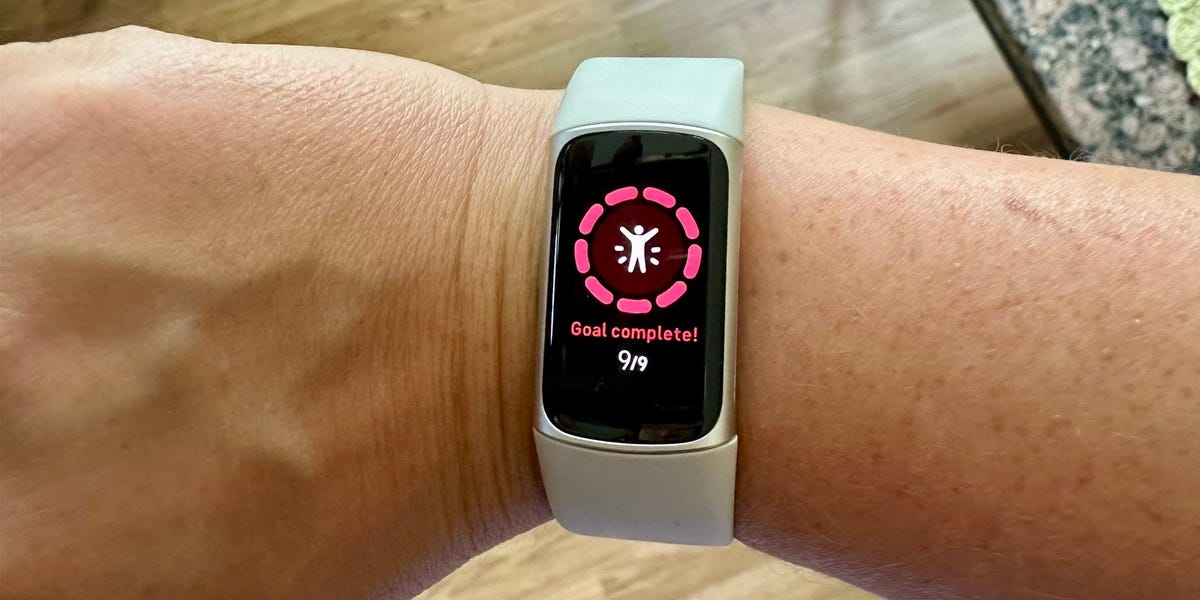
Here is the awkward truth about the most-searched Fitbit of the year: it doesn’t exist yet. Google has confirmed nothing. Yet the “Fitbit Charge 7” is already a fixture of wishlists, and smartwatchinsight.com reports the band is only pencilled in for a possible Made by Google reveal in autumn 2026, with a retail release that might land in October or November. There is no hardware to handle and no battery to drain — Google hasn’t so much as acknowledged the name. What there is, instead, is a question worth answering now: does Google’s fitness band still have a reason to exist in 2026, and what would the Charge 7 have to fix to earn your £140-odd?
The answer starts with the band it replaces, because the Charge 6 is the device setting every expectation. Everything below is built from the Charge 6’s documented behaviour and the credible rumour trail, and I’ll mark plainly where one ends and the other begins. On the numbers, the Charge 6 is both very good and quietly frustrating — and that tension tells you exactly where its successor can win or lose.
The battery promise versus the battery reality (Fitbit Charge 7)
Fitbit’s headline for the Charge 6 was “up to seven days.” That phrase does a lot of heavy lifting. In practice, as CNET found and Business Insider echoed, real-world use — switching the always-on display off and on, taking GPS workouts, letting notifications buzz through — pulls that closer to four or five days. That’s not a scandal; it’s simply the gap between a spec sheet written for a lab and a band worn by a human who actually uses the features they paid for.
For a fitness tracker, four-to-five days is the number that matters, because the whole pitch of a band over a smartwatch is that you forget it’s there. The moment you’re charging it as often as a Pixel Watch, the premise wobbles. So the single most important question for the Charge 7 isn’t a new sensor or a flashier face — it’s whether Google can hold that realistic five-day figure while making the screen bigger.
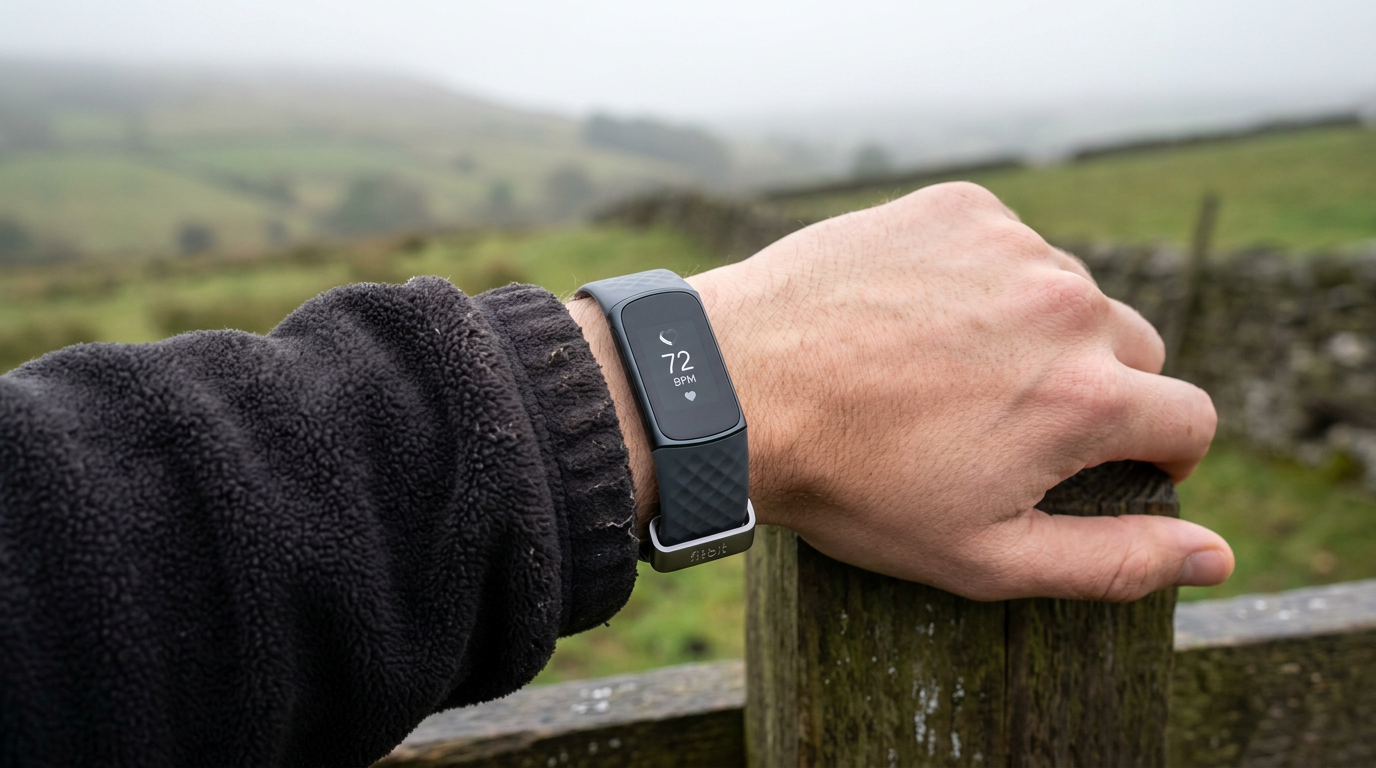
A bigger, brighter AMOLED that quietly eats a day of battery wouldn’t be an upgrade — it would be a downgrade wearing nicer clothes.
A bigger screen is the rumour — and the risk
The most concrete bit of Charge 7 chatter is the display. smartwatchinsight.com suggests a larger AMOLED panel of around 1.15 inches, up from the Charge 6’s 1.04-inch screen, though nothing about this is confirmed. On paper that’s lovely — the Charge 6’s display is the one part of it that feels genuinely cramped, especially if you’ve come from a proper smartwatch and want to read a full message rather than a fragment of one.
But more glass is more power. This is exactly where I’d want to see Google show restraint. A 1.15-inch panel is only an improvement if the battery holds; otherwise the Charge 7 trades the one thing a band is supposed to be best at — vanishing onto your wrist for the better part of a week — for a few extra pixels. I want the bigger screen. I do not want it at the cost of the five-day figure that makes the form factor worth choosing in the first place.
What the Charge 6 already gets right
It would be unfair to set up the Charge 7 as a rescue mission, because the band it inherits is genuinely good at the basics. In its Charge 6 review, CNET singled out a meaningfully more accurate heart-rate sensor than the Charge 5 managed — the kind of improvement that actually matters if you train to zones rather than just glance at a number. The side button came back too, which sounds trivial until you’ve fought a touch-only band with sweaty fingers mid-run. Throw in built-in GPS, an ECG app, and the on-wrist Google extras — Maps directions, Google Wallet, YouTube Music controls — and you have, as both CNET and Business Insider conclude, one of the most complete trackers in its class.
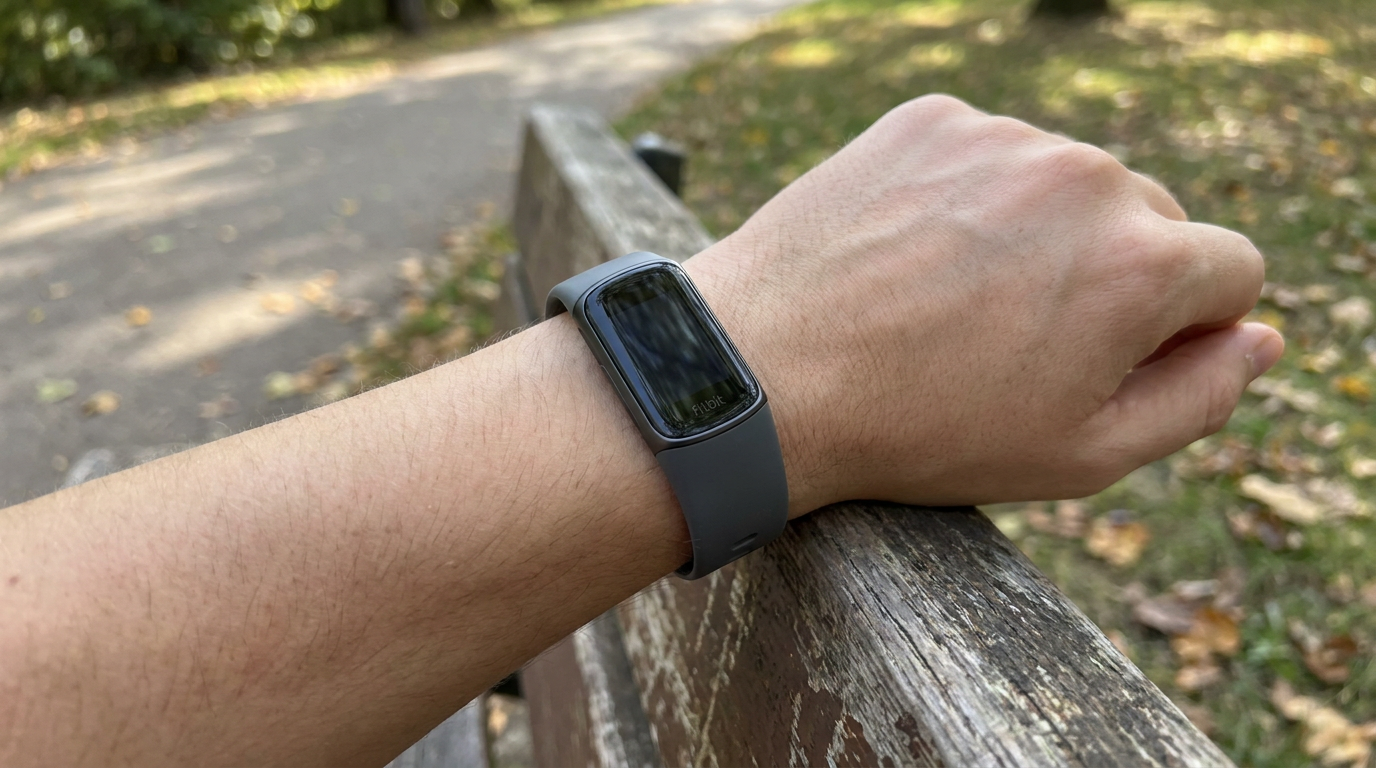
So the Charge 7’s job isn’t to reinvent anything. It’s to keep all of that, add the screen people keep asking for, and — the hard part — not let the trade-offs creep back in. That’s a narrower brief than the marketing will pretend, and it’s the right one. The danger for any successor is feature-creep: bolt on a brighter panel, more on-wrist Google services and a hungrier processor, and the battery quietly slides back towards smartwatch territory, at which point the band has talked itself out of a reason to exist.
The Google tax nobody puts on the box
Here’s the part that would genuinely shape my buying decision, and it has nothing to do with hardware. The Fitbit experience is increasingly tangled up with Google accounts and with Fitbit Premium, the subscription that gates a chunk of the deeper insight you might assume you’d bought outright. As smartwatch-guru put it, the Charge 6 is a solid health tracker — “if you can live with Google and subscriptions.” That qualifier is the whole ballgame.
If the Charge 7 ships with the same posture — a fine band wrapped around a recurring monthly ask — then “can it still compete?” stops being a question about step counts and becomes a question about how much of your data and your direct debit you’re willing to hand over for features that ought to be standard at this price. That, more than any sensor, is what would make me hesitate. The Premium fee is the bit the spec sheet won’t show you, and it compounds: pay it for two or three years and the running cost can quietly overtake the price of the band itself.
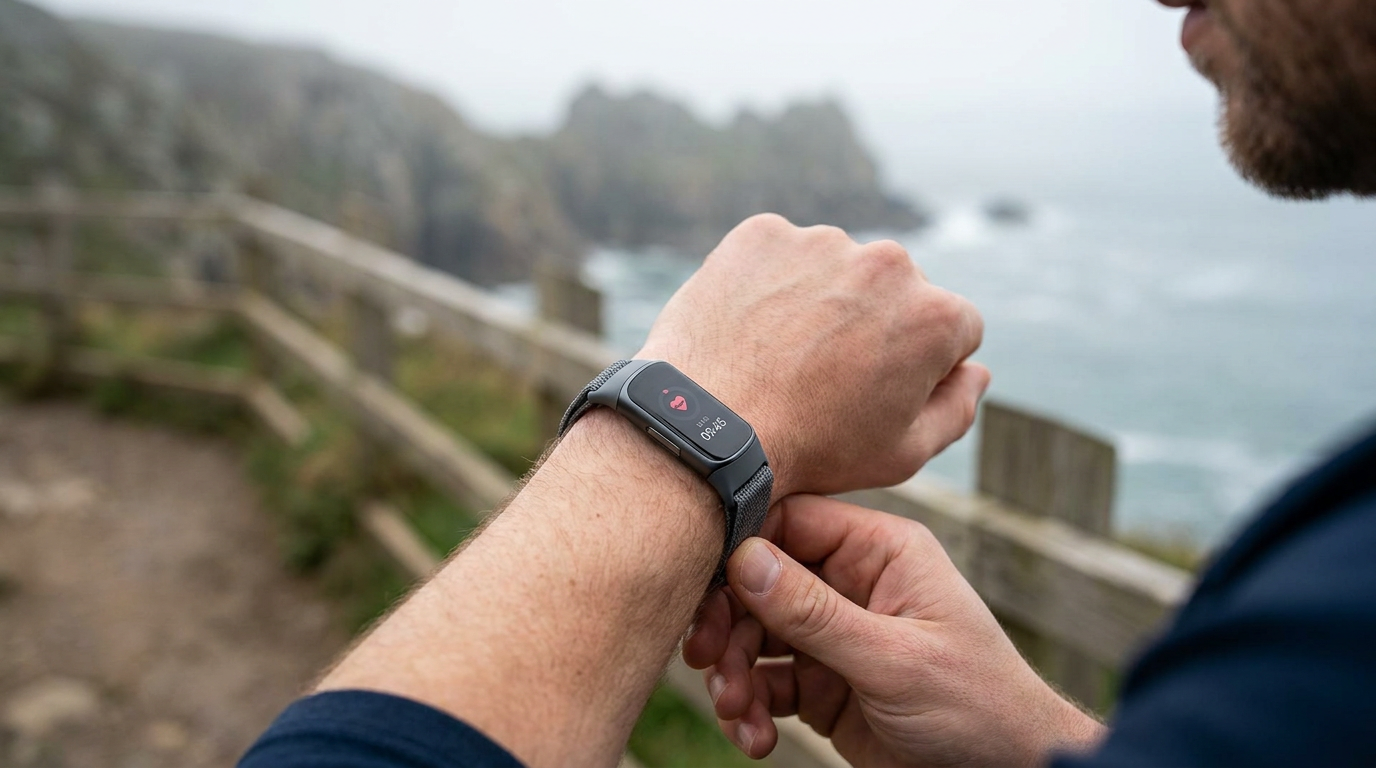
This is where the UK calculus gets sharper, because the obvious rival doesn’t play that game. A Garmin sitting in the same bracket gives you the deep training metrics, the recovery and sleep analysis and the multi-day battery as a one-off payment, with no monthly gate on your own numbers. Set a Charge 7 against that and a buyer is right to count Fitbit Premium as part of the real cost of ownership, not an optional extra. A band that asks you to subscribe to insights a rival hands over outright has to be visibly better elsewhere to justify it.
What the price tells you
The Charge 6 launched at the equivalent of roughly £140 in the UK back in September 2023, per CNET’s review (a $159 US sticker at the time). The early Charge 7 estimates, again from smartwatchinsight.com, point to a similar-to-slightly-higher launch. Translate that loosely and you’re looking at a band that, in UK money, lands in roughly the same £140-to-mid-£150s territory — premium for a tracker, but well short of a full smartwatch. Expect it to surface where the Charge 6 lives now: Argos, John Lewis, Amazon UK and Google’s own Store, usually discounted within weeks of launch.
That positioning is the crux. At £140-plus, the Charge 7 isn’t competing with the cheap rubber pedometers; it’s competing for the wrist of someone who has genuinely decided they want focused fitness tracking rather than a wrist-bound phone. For that buyer, the band format is the point — lighter, simpler, longer-lasting than a smartwatch by design. The Charge 7 only justifies the asking price if it nails that brief better than the Charge 6 already does, and at this money the Premium upsell starts to look less like a perk and more like a second price tag.
So who is this actually for?
Let me take a clear position, because you didn’t come here to read a shrug. If you already own a Charge 6 and it’s behaving, there is nothing in the Charge 7 picture — which, as of now, is to say nothing confirmed at all — that justifies waiting on a tracker you can’t buy and can’t yet trust the battery life of. Keep what you have.
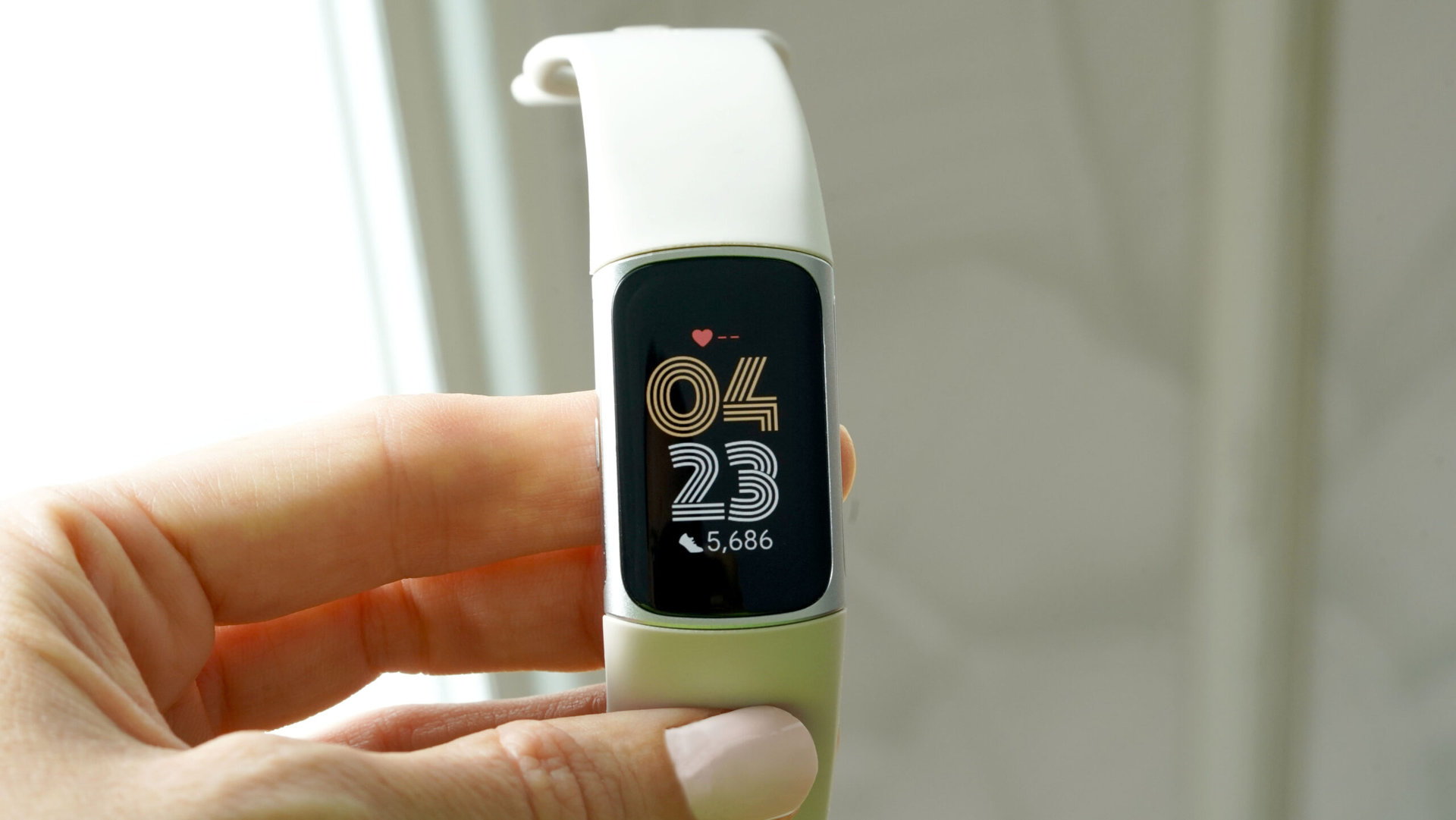
If you’re shopping fresh and you want a dedicated fitness band rather than a smartwatch, the smart move today is to judge the Charge 6 on its real five-day-ish battery and its genuinely good tracking, and to go in clear-eyed about the Google account and the Premium upsell. Buy it for what it verifiably is, not for what an unannounced successor might become. And if subscriptions are a dealbreaker, that’s your cue to cross the aisle to a one-off-payment Garmin before you commit.
And the Charge 7 itself? I’ll believe the bigger screen when Google shows it holding the battery, and I’ll believe it’s a genuine competitor when it stops asking me to subscribe to my own heart rate. Until those two things are answered on a stage and not a rumour blog, the only honest stance is interested, not sold. Get them right, and the most-searched Fitbit of the year will finally deserve the attention. Get them wrong, and it’ll just be a slightly larger reminder of why bands keep losing ground to the watches above them.
Buyer action
Where to buy or check next
Use this as the final check before ordering a phone, changing network or trusting a headline monthly price.





Reader discussion
Leave a comment
Comments are moderated. Keep it useful, accurate, and on topic.