The dual-camera pitch is the whole argument for the DJI Air 3S — and it is also the bit that can empty a creator’s wallet without earning the spend. Gadget Scout’s June 2026 review puts the UK base kit at £859 (aircraft, one battery, RC-N3) and the Fly More path at £1,100+ with three batteries and the RC 2 screen controller. That is not impulse money. It is a deliberate step into DJI’s mid-premium creator tier, launched in October 2024, and the only fair question in 2026 is whether the second lens and the flight package justify the premium over lighter single-sensor craft in the same workflow conversation.
My position is straightforward. If your work actually needs two focal lengths in the air — a wide establishing shot and a compressed medium without landing to swap glass — the Air 3S is worth the creator premium. If you mainly want “nice 4K from the sky” for occasional B-roll, you are paying for a system you will underuse. The kit choice matters almost as much as the airframe: the single-battery base box is a taster; the multi-battery Fly More bundle is the real working purchase.
Two sensors, one aircraft — what the dual system is for
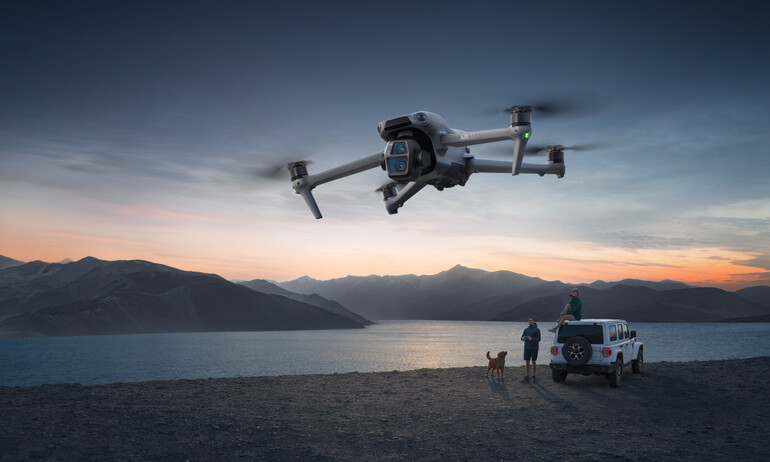
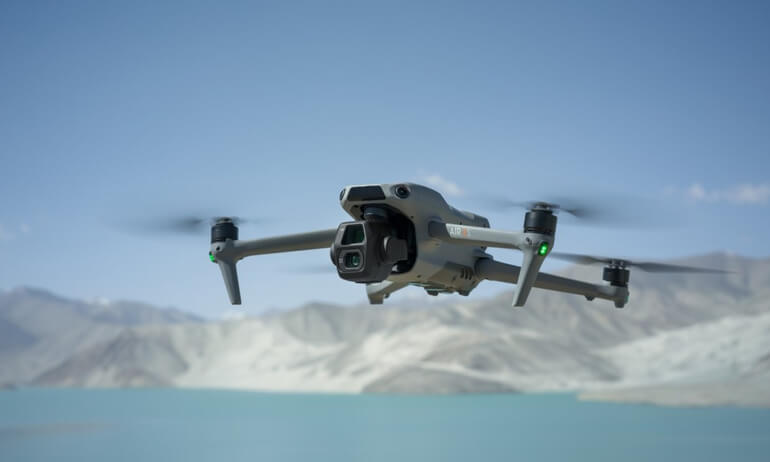
DJI’s dual setup is not a marketing garnish. The primary is a 1-inch CMOS at a 24mm equivalent, 50MP. The second is a 70mm telephoto with a 48MP sensor on a 1/1.3-inch format — the pairing Gadget Scout’s review treats as the product’s centre of gravity, not an accessory list. Wide for landscape, approach, and travel openers; tele for subject isolation, compressed city lines, and the kind of medium shot that used to mean a second flight or a different craft.
Video is where this Air tier sells itself to people who cut for clients, not just social: 4K/120fps slow motion and 4K/60fps HDR sit at the top of the published mode stack. Dynamic-range marketing for the aircraft has quoted up to 14 stops in Auto-managed modes — headroom when the system is handling mixed light, not a blank cheque for every manual cinema profile. Creators who grade heavily should treat that figure as a ceiling in those modes, not a guarantee once you leave Auto.
The dual-camera Air 3S only earns its premium when both lenses show up in the edit — otherwise you have bought an expensive single-look aircraft with a second sensor along for the ride.
Image: DJI
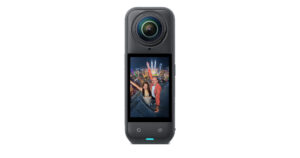
I put this next to other creator tools on the site for a reason. A vlogging kit is a system, not a single SKU. The best vlogging drone UK 2026 guide is where use-case and price meet; the Air 3S sits in the dual-camera premium slice of that map, not in the pocketable day-trip slot. Ground-level immersion is a different job again — the Insta360 X5 at £519 is the 360 option I would rather point someone at when the story is wraparound action, not framed aerial stills and controlled fly-throughs.
Forty-five minutes on paper, a real session on the clock
Official flight time runs to up to 45 minutes. Gadget Scout’s real-world window is the figure I trust for planning: 33–38 minutes with reserves. That gap is normal — wind, temperature, aggressive manoeuvres, and the reserve you should never burn all change the clock — but it still shapes how you budget a UK shoot day when weather windows are short and coastal wind is not a brochure footnote.
One battery at 33–38 minutes is a solid single session: a coastal walk, a property exterior set, a wedding venue fly-over with takes to spare. It is not a full afternoon of multi-location work. That is why the Fly More package’s three batteries are not a luxury upsell for working creators; they are how you turn one good flight into a day that pays. At £1,100+ for three packs and the RC 2, you are buying continuity. At £859 with a single pack and the RC-N3, you are buying the aircraft and accepting battery discipline as your hard limit.
For paid work, I treat that limit as a scheduling problem, not a spec-sheet argument. If your day needs two locations plus a golden-hour return, one pack forces compromises; three packs let the dual cameras do the job they were priced for. The RC 2 screen controller is part of that same working posture — fewer phone-brightness fights on a bright British hillside, a dedicated control surface that feels like kit rather than a clamp afterthought.
Image: DJI
UK rules in 2026: C1, UK1, and what you must register
Hardware specs only half-answer a UK buy. From 1 January 2026, the registration picture tightens in ways every Air 3S owner needs in writing before the first flight. DJI’s UK regulations briefing sets out the transition: the Air 3S sits as C1 (EU) / UK1 (UK) under the transition rules. EU C-marks remain valid until 31 December 2027, after which the UK class system fully replaces them. That runway matters if you are buying in 2026 and plan to keep the aircraft through the decade’s second half — you are not buying into an immediately obsolete class mark, but you should track the 2027 cut-over.
Registration is not optional theatre. From that same 2026 start date, DJI’s summary of the UK rules is clear: registration is mandatory for drones ≥100g (Flyer ID) or ≥250g (Operator ID). The Air 3S is not a sub-250g “lighter paperwork” story. If you want that regulatory envelope, the conversation moves to a different product line — including the path covered in the DJI Mini 5 Pro for UK buyers, which is aimed at a different weight and compliance pitch. Choosing the Air 3S means accepting full adult registration and class discipline as part of ownership, not as an afterthought on launch day.
That paperwork cost is not a reason to skip the aircraft if the dual-lens brief is real. It is a reason to stop treating a mid-premium dual-camera buy like a toy you unbox and fly the same afternoon without admin. Budget the CAA account, the Operator ID, and the insurance conversation the same week you compare kits — not the morning of a client shoot.
Where the £859 and £1,100+ tickets actually land
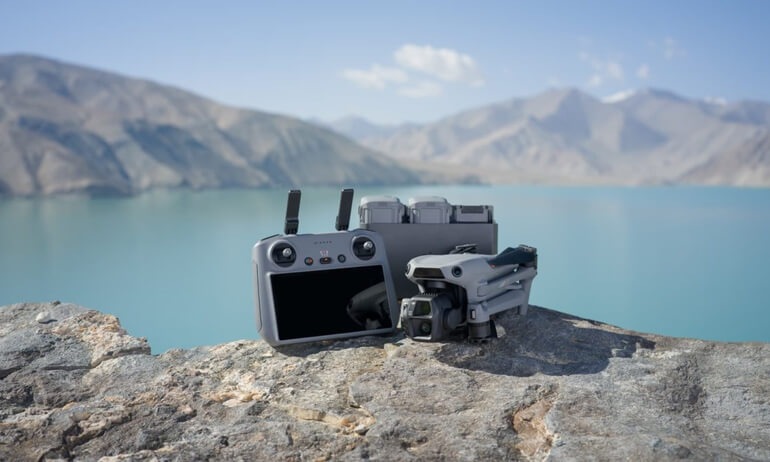
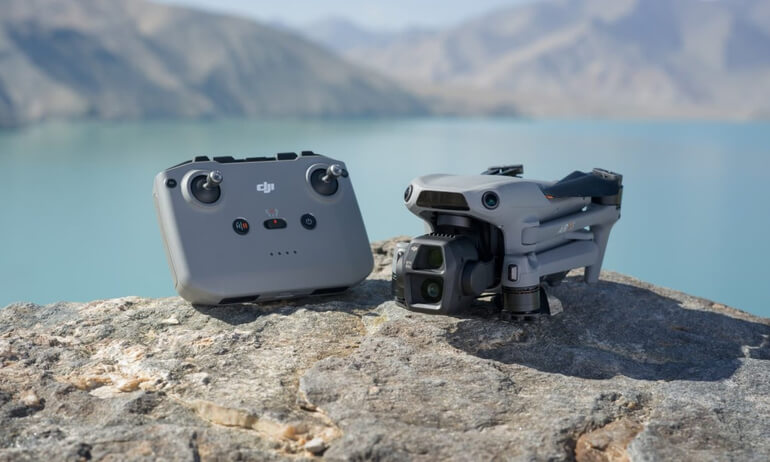
UK money, as cited for this piece, breaks cleanly. The base kit at £859 gets you the dual-camera Air 3S, one battery, and the RC-N3 controller. That is the entry ticket to the dual-lens system. The Fly More Combo from £1,100+ adds the working kit: three batteries and the RC 2 with its screen. I treat those as two different products that share an airframe.
Image: DJI
The base kit answers “can I own the dual-camera Air 3S?” The Fly More answers “can I work it across a real day without living on a charger?” For anyone whose income or serious hobby output depends on multiple takes, locations, or weather windows, the multi-battery path is the one that matches the aircraft’s ambition. Paying £859 to “get in” and then running short on power every afternoon is how mid-premium kit becomes a frustration rather than a tool.
Retail is straightforward to reach from the UK: DJI’s UK Air 3S store page is the clean manufacturer endpoint when you are ready to compare live bundles against the June 2026 pricing anchors above. Shelf promotions move; the dual-camera justification does not. Check the live kit contents before you click — batteries and controller choice are the real money decision once you have accepted the airframe.
When the creator premium is the wrong spend
Clear no’s matter as much as the yes. Skip the Air 3S premium if you only need occasional wide aerials for social — a lighter single-camera craft in a lower tier will match that brief with less kit overhead. Skip it if your entire brief is ground-level 360 or helmet-mount immersion; that is where a camera like the X5 earns the bag space. Skip it if the regulatory and battery overhead of a classed, multi-pack workflow does not fit how you actually fly.
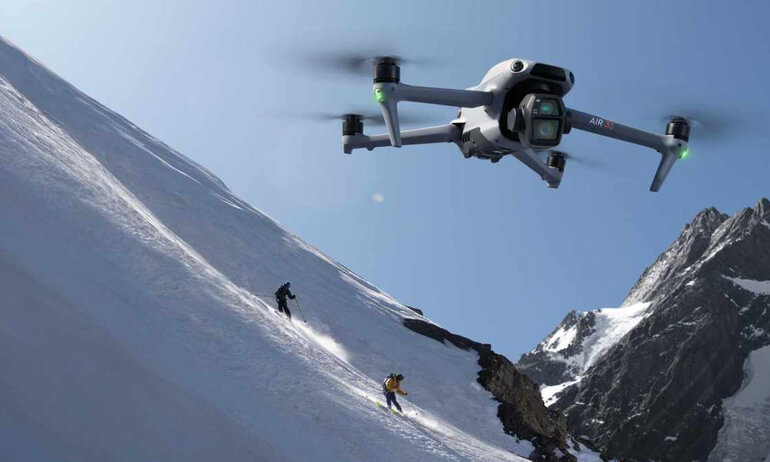
The dual system only pays when both lenses appear in finished work with intent. If every cut is the same 24mm wide look, the 70mm sensor is dead weight you still funded. If you never push slow motion or HDR, you are still fine — those modes are tools, not homework — but the dual focal lengths remain the centre of the value case. A fashionable mid-tier DJI badge on a weekend that never leaves the wide lens is how you overspend with a clean conscience and a thin edit.
Image: DJI
The dual-lens buy I would actually make
I would spend the creator premium on the Air 3S when the edit needs wide and tele in the same flight day, when battery swaps are part of the workflow, and when UK class registration is already accepted as the cost of doing this properly. That buy is the Fly More path — three batteries, RC 2, the dual cameras earning their keep — not the single-pack starter as a permanent working kit.
I would not spend it to own a fashionable mid-tier DJI badge, to chase a brochure 45-minute flight you will not schedule to the edge, or to replace a 360 or ground camera that solves a different brief. The Air 3S is a dual-camera aerial system with a real UK price spine and a clear regulatory home through 2027. Used that way, the premium is coherent. Used as a single-look weekend toy, it is an expensive way to learn you needed less aircraft and more intention.
That is the line I draw: both lenses in the story, batteries that last the day, paperwork treated as part of the craft. Cross those three, and the Air 3S is worth what UK creators are asked to pay. Miss them, and the dual-camera brochure is just a prettier way to overspend.
Buyer action
Where to buy or check next
Use this as the final check before ordering a phone, changing network or trusting a headline monthly price.
We use cookies to make this site work, measure how it is used, and (with your consent) personalise advertising. Strictly necessary cookies always run. Analytics and advertising cookies run only if you accept. See our Cookie Policy and Privacy Policy.
Mobile Tech World is a trading name of Greyline Technologies Limited. Registered in England & Wales, company no. 16673047. Registered office: 71-75 Shelton Street, London WC2H 9JQ.

Reader discussion
Leave a comment
Comments are moderated. Keep it useful, accurate, and on topic.