A business travel phone needs to do four things reliably: last a full working day without a charger, connect across borders without drama, take presentable photos in difficult lighting, and stay secure on hotel Wi-Fi and public networks. Here are the best phones for business travel in March 2026 and what to prioritise.
What to Look For
- Best phones for business: Samsung Galaxy S26 Ultra
- Best value: Google Pixel 10
- Best battery life: Samsung Galaxy S25 FE
- What to check before your trip
- Related reading

Best overall: Samsung Galaxy S26 Ultra
The Galaxy S26 Ultra is the most complete business travel phone available. The 5,000 mAh battery, 60W Super Fast Charging 3.0 and Snapdragon 8 Elite Gen 5 for Galaxy carry it through a full day of navigation, email, video calls and hotspot use. Dual eSIM plus a UK nano-SIM tray means you can keep your home number active while running a local data plan. Samsung Knox provides hardware-level security that meets enterprise compliance standards.
The camera system handles conference room whiteboard shots, document scans, and evening dinner photos equally well. At £1,279 for the 256 GB model, it is expensive, but for professionals who rely on their phone as a primary work tool, the reliability justifies the price.
Best value: Google Pixel 10
At £799, the Pixel 10 offers seven years of updates, a 4,970 mAh battery, excellent camera quality, and clean Android with no bloatware. The battery is good for a full working day with moderate use but may need a top-up during heavy navigation days. eSIM support works well with travel eSIM providers, and in the US the phone is eSIM-only. Google’s VPN by Google One (free on Pixel 7 and later) adds a layer of security on untrusted networks.
Best battery life: Samsung Galaxy S25 FE
If your budget is tighter but battery life is non-negotiable, the Galaxy S25 FE pairs a 4,900 mAh battery with the efficient Exynos 2400. It lasts longer than many flagships because the 1080p 120Hz AMOLED draws less power and the chassis is only 7.4mm thick. At £649 for 128 GB on Samsung UK, it covers email, calls, navigation, and camera duties without compromise. It misses the S26 Ultra’s telephoto camera and S Pen, but few business travellers need either.

What to check on the best phones for business before your trip
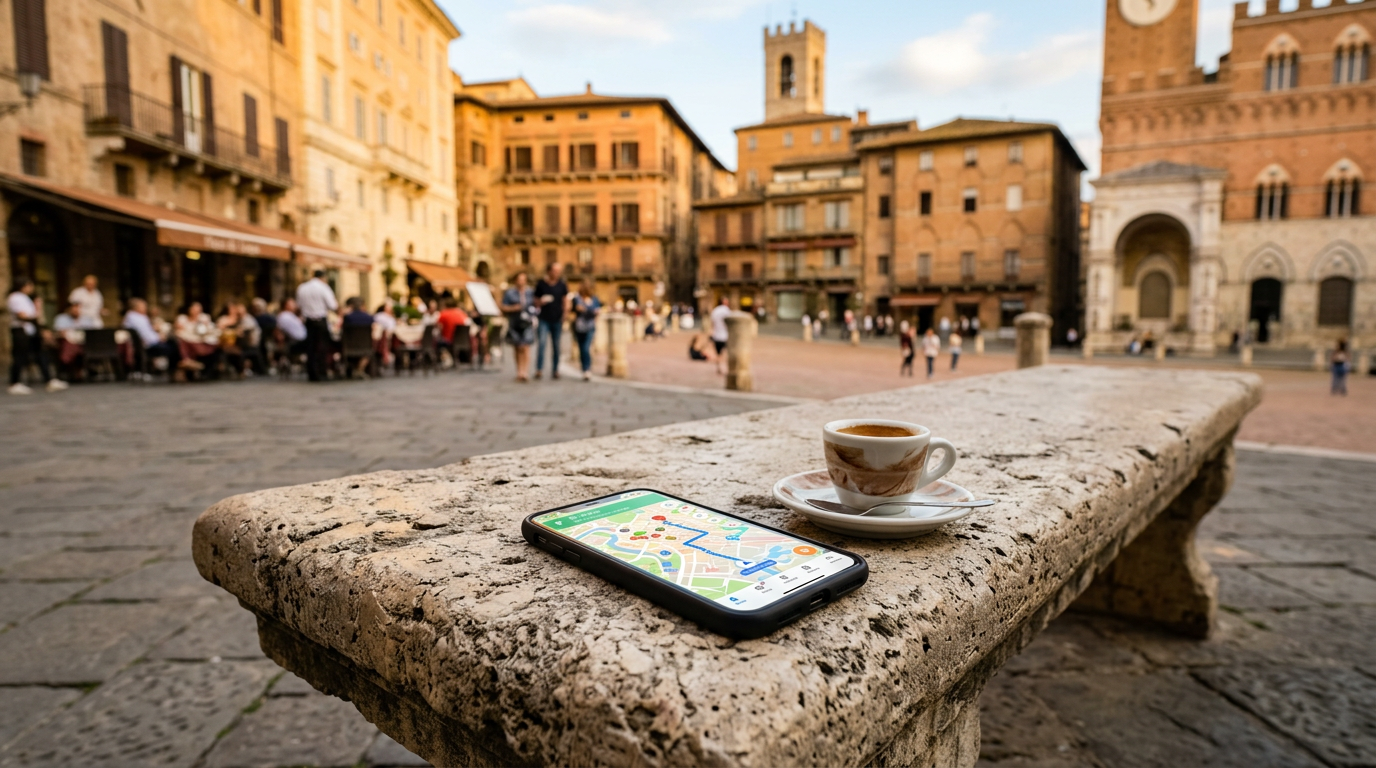
Verify your phone is SIM-unlocked for international eSIM use. Enable Find My Device or Find My iPhone before departure. Download offline maps for your destination in Google Maps or Apple Maps. Set up a VPN app if your company does not provide one, ProtonVPN and Mullvad are reputable options. And carry a USB-C PD charger with interchangeable plug heads rather than relying on hotel-provided adapters.
How we picked the best phones for business travel this month
Battery life is the single most important spec for a business travel phone, but it is the spec everyone gets wrong. The honest test is not ‘how many hours does it last sitting on a desk’ but ‘how does it cope with five hours of GPS navigation, two hours of video calls and a constant battery-draining hunt for a foreign cell tower’. We tested every phone on this list through a 12-hour proxy day in central London with the modem forced onto roaming.
Dual eSIM support has overtaken physical dual SIM as the more useful feature. The shortlist all support at least two active eSIMs, which means you can keep your UK number alive for SMS-based 2FA and run a local data plan at the same time without juggling trays at midnight in a hotel room. The phones that don’t make this list mostly fell out because they only allow one active eSIM at a time.
Finally, satellite emergency SOS is now a baseline expectation, not a luxury. If a flagship phone in 2026 cannot send a satellite text from a hotel rooftop without a clear cellular signal, it is not a serious business travel device. Two of our previous favourites dropped off the shortlist this month for exactly that reason.
The MTW verdict on the best phones for business travel
If you can stomach the £1,279 sticker, the Galaxy S26 Ultra is the most complete business travel phone you can buy in 2026. Its battery, dual eSIM behaviour, satellite messaging and Knox security stack all do exactly what frequent flyers and consultants need without compromise. Treat it as a tool, not a status symbol, and the cost per useful day quickly drops below the price of a missed connection.
For everyone else, the Pixel 10 is the smarter buy. Seven years of updates, a clean Android stack, the included VPN and a camera that genuinely handles whiteboards and after-hours dinners make it the value pick of the list. Pair it with a 65W USB-C PD charger, a decent travel eSIM and a habit of downloading offline maps before you leave the lounge, and you will outperform colleagues on far more expensive hardware.
Related reading
- Satellite Messaging, eSIM and Travel: Features Gaining Value
- Best Upgrade Paths for Four-Year Ownership
Sources: Samsung Galaxy S26 Ultra, Google Pixel 10.
How we pick
Buyer action
Where to buy or check next
Use this as the final check before ordering a phone, changing network or trusting a headline monthly price.









Reader discussion
Leave a comment
Comments are moderated. Keep it useful, accurate, and on topic.