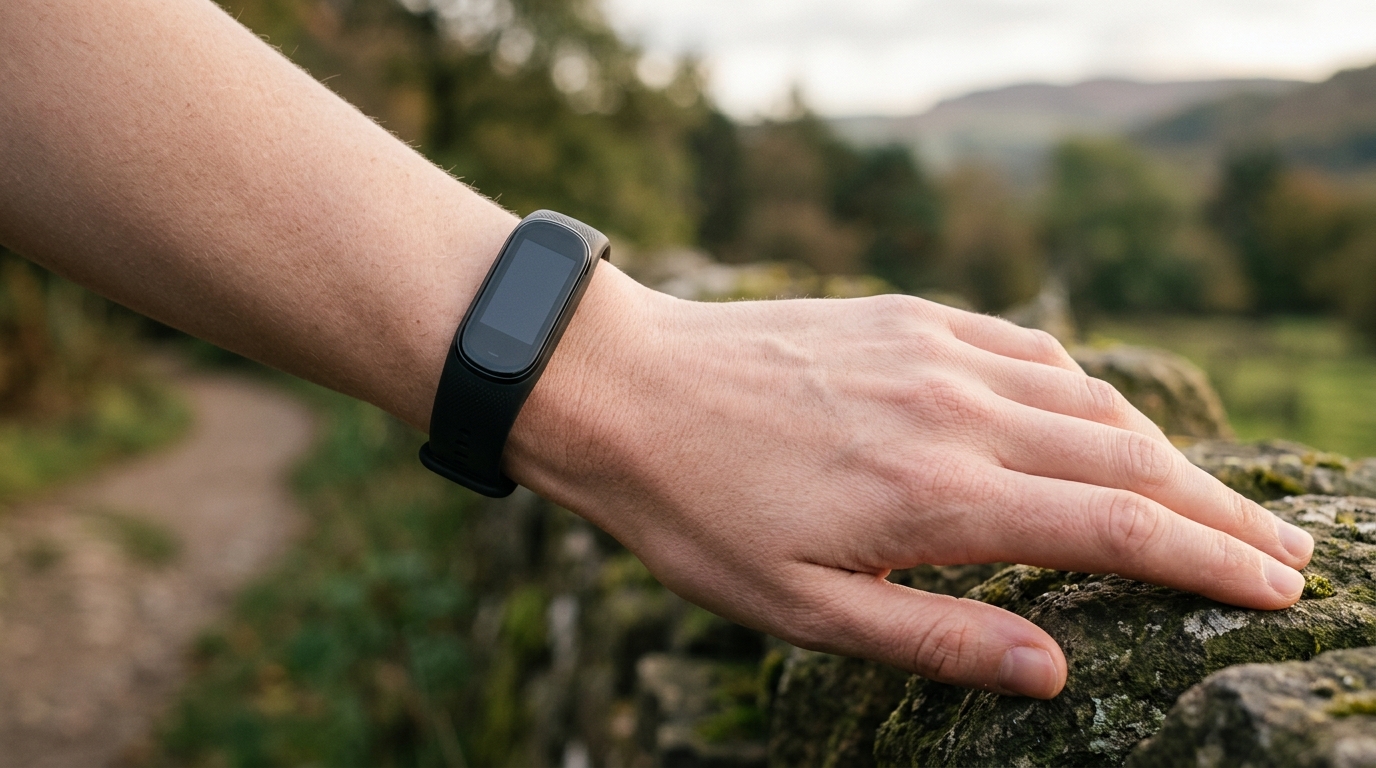
Not everyone needs a smartwatch with a titanium case and cellular connectivity. If you are after reliable health monitoring, step counting, and sleep tracking without spending the same amount as a weekend away, the best fitness trackers under £100 are still some of the smartest purchases in wearable tech. We have tested the best options available in 2026, and each one offers genuinely useful health data without the complexity or cost of a full smartwatch.
Best Fitness Trackers Under £100: Contents
- Xiaomi Smart Band 9: Best Overall Value
- Fitbit Inspire 3: Best for Health Ecosystems
- Samsung Galaxy Fit 3: Best Display
- Garmin Vivosmart 5: Best for Serious Fitness
- How to Choose the Right Tracker
Xiaomi Smart Band 9: Best Overall Value
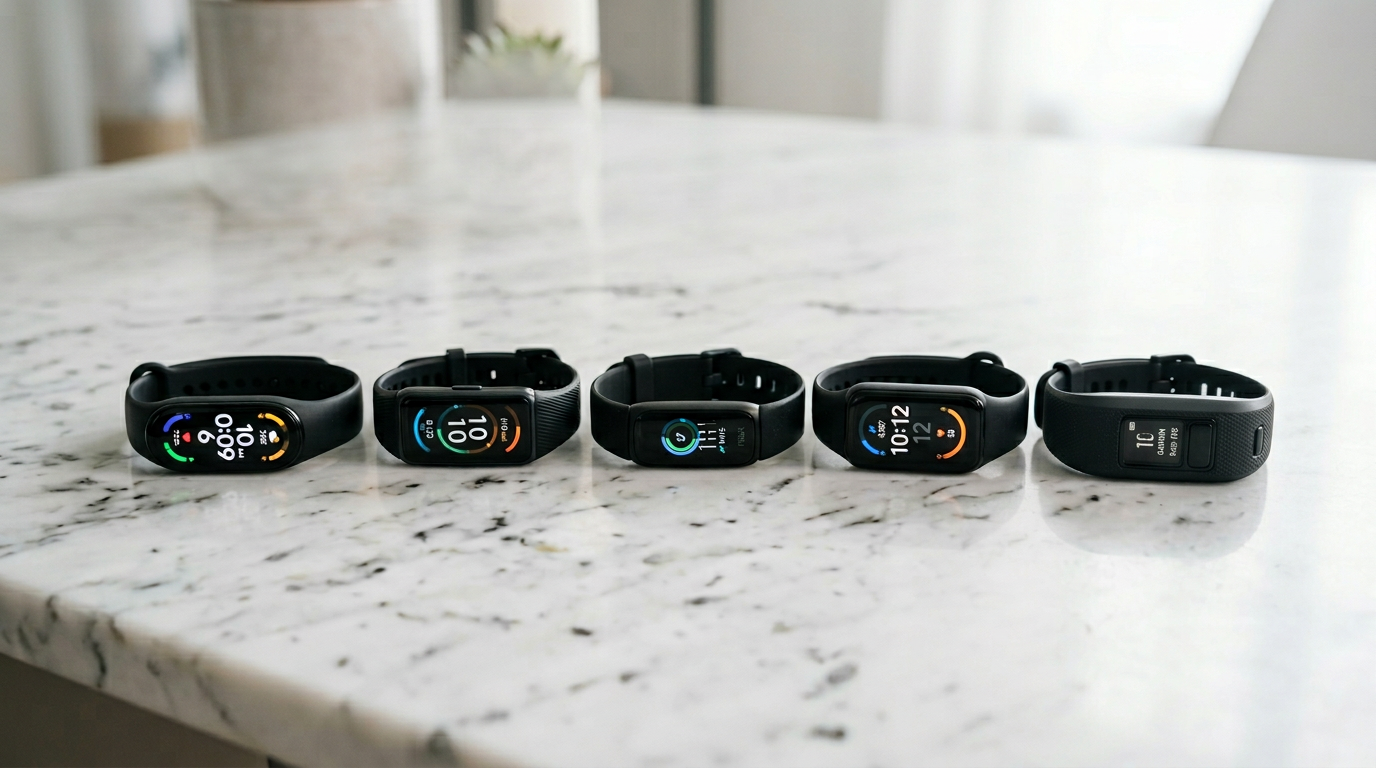
The Xiaomi Smart Band 9 costs around £34.99 at retail, and at that price it is borderline absurd how much it offers. The 1.62-inch AMOLED display is bright, sharp, and responsive, a significant improvement over earlier generations. It tracks over 150 sport modes, offers continuous heart rate monitoring, SpO2 measurement, stress tracking, and sleep analysis that breaks down light, deep, and REM stages with reasonable accuracy.
Battery life is where the Smart Band 9 truly excels. Xiaomi claims up to 21 days with typical use, dropping to about 9 days with always-on display enabled, and we consistently managed 16 to 18 days with AOD disabled and notifications enabled. That is charging roughly twice a month, which makes it one of the lowest-maintenance wearables you can buy. The Mi Fitness app is clean and informative, offering clear trends over time. Water resistance is rated at 5ATM, so swimming is perfectly fine.
Fitbit Inspire 3: Best for Health Ecosystems
Fitbit has paused work on a numbered Inspire successor and is funnelling its premium features into the Pixel Watch line, but the Fitbit Inspire 3 remains the best option if you want Fitbit’s app experience and health scoring in a band. It sits around £69 on the Google Store with regular sale drops below £60. Heart rate, SpO2, skin temperature variation, stress management score and sleep stages are all there, presented through what is arguably still the most readable health dashboard in the industry.
Battery life is rated at 10 days, and we found this to be accurate with moderate notification usage. It supports connected GPS, and the exercise auto-detection works well, recognising walks, runs, and bike rides without you needing to start a session manually. If you already use Fitbit or are invested in Google’s health platform, the Inspire 3 is a natural choice. For those comparing against a full smartwatch, our Garmin Venu 4 vs Apple Watch SE 3 comparison explores when a step up makes sense.
Samsung Galaxy Fit 3: Best Display
The Samsung Galaxy Fit 3 is the easiest tracker to read at arm’s length thanks to its 1.6-inch AMOLED screen at 402 x 256 resolution, which makes the £49 list price look like a bargain. It is frequently on sale from £30 at Argos and Currys.
Health features cover the essentials: heart rate, SpO2, sleep tracking, and stress monitoring. Samsung Health is a comprehensive app that presents data clearly and integrates well with other Samsung devices. Note that unlike the full Galaxy Watch line, the Galaxy Fit 3 does not include NFC or a microphone, so there are no contactless payments or voice calls from the band. Battery life is rated at 13 days, dropping to about 3.5 days with the always-on display enabled, and we found around 10 to 11 days realistic in mixed use. Water resistance is 5ATM, and the tracker supports automatic workout detection for common activities. The Galaxy Fit 3 works with Android; iOS support is limited and Samsung Health’s features are much richer on Galaxy devices. If screen quality matters to you, this is the tracker to beat.
Garmin Vivosmart 5: Best for Serious Fitness
Garmin’s reputation for fitness tracking is earned, and the Vivosmart 5 brings that expertise into a slim, affordable package. At around £120, it technically sits above our £100 threshold, but it frequently drops below £95 during sales, and the feature set justifies a mention. The Vivosmart 5 offers Body Battery energy monitoring, Pulse Ox, stress tracking, hydration logging, respiration rate tracking, and women’s health tracking, which is a more comprehensive health suite than any other tracker here.
What sets the Garmin apart is the accuracy and depth of its fitness data. The heart rate sensor is consistently reliable during exercise, and the Garmin Connect app provides analysis that rivals dedicated sports watches. You get training load data, recovery time recommendations, and VO2 max estimates. For those who prioritise data accuracy over screen quality, the Vivosmart 5 is difficult to beat.
How to Choose the Right Tracker
Picking between these four depends on what you value most. Here is a simple framework to help decide:
Best overall value: The Xiaomi Smart Band 9 offers extraordinary features for £35. If you want health monitoring on a budget, nothing else comes close. The battery life alone makes it the most hassle-free option.
Best app experience: The Fitbit Inspire 3 has the most polished software and the strongest community features. If you want motivation and a beautiful dashboard, this is the one.
Best display: The Samsung Galaxy Fit 3 has the most readable screen at this price. If you want a tracker that is easy to glance at in sunlight, Samsung delivers.
Best fitness accuracy: The Garmin Vivosmart 5 provides the most detailed and reliable fitness data. If you are training with purpose, such as following a running plan, tracking recovery, or monitoring training load, Garmin’s depth is unmatched at this price.
If you are also weighing up whether to spend more on a full smartwatch, consider what the health data from an Apple Watch or Garmin watch offers beyond these trackers. For many people, a dedicated fitness tracker provides everything they need, and the money saved can go towards a decent pair of running shoes instead.
Buyer action
Where to buy or check next
Use this as the final check before ordering a phone, changing network or trusting a headline monthly price.






Reader discussion
Leave a comment
Comments are moderated. Keep it useful, accurate, and on topic.