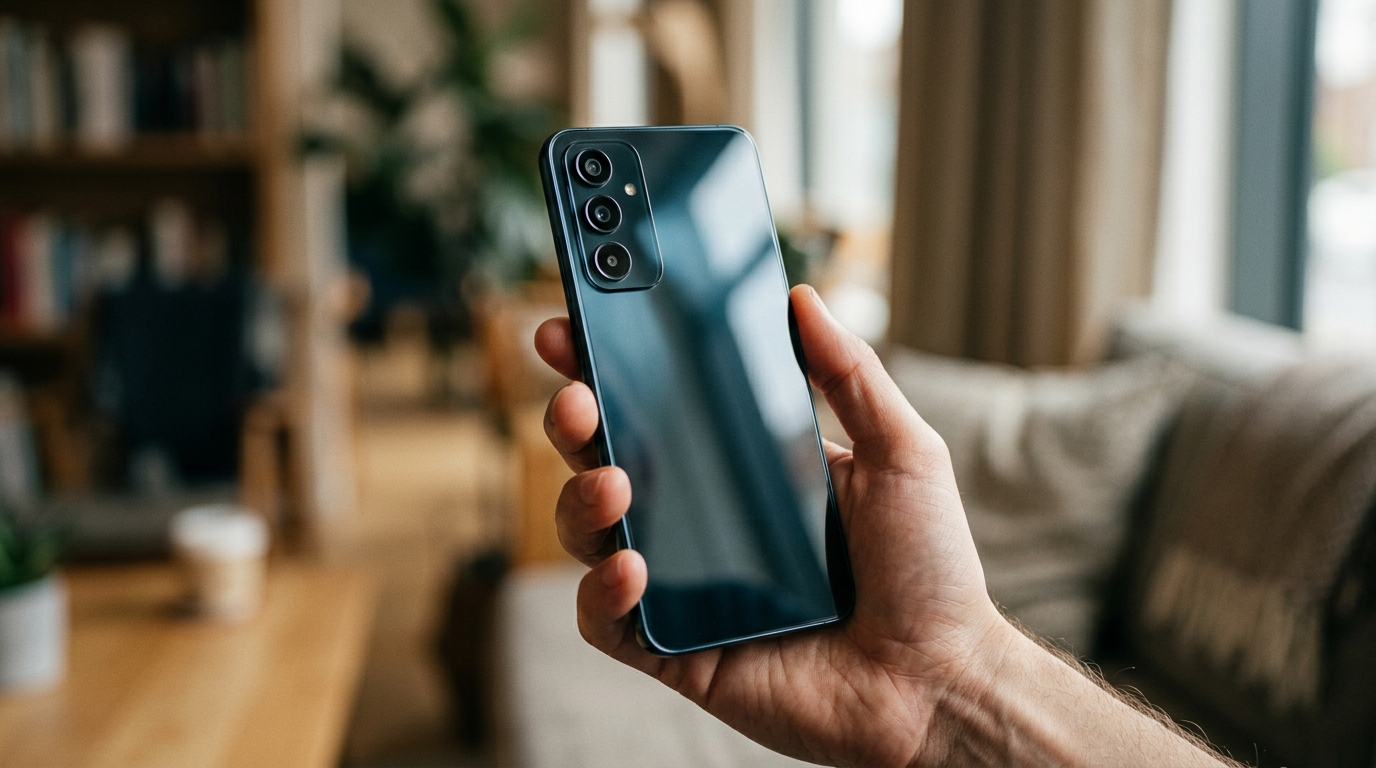
The best budget phones in 2026 are genuinely good. Four years of Snapdragon and Dimensity silicon trickling down, five years of 120Hz OLED panels getting cheap, and two generations of Samsung finally taking the A series seriously have produced a £300 UK market where all five of our picks are genuinely recommendable. And two big names are not.
The picks below are tested on three non-negotiable criteria. Daylight battery life of at least eight hours screen-on with mixed use. Minimum three years of security updates from the manufacturer. A camera that is usable at night, not just on a bright day in August. If a phone fails any of these, it is out regardless of price.
1. Samsung Galaxy A57 5G — £289
The obvious choice and the overall winner. Four OS updates, six years of security patches, a good 6.4-inch AMOLED, Samsung’s camera pipeline trickled down, and IP67. The downsides are plastic frame, charging speed capped at 25W and the usual mid-range Bixby nagging. For the average UK buyer replacing a three-year-old phone, this is the safe pick and it is not close.
2. Google Pixel 10a — £299
The camera winner and the second choice. Pixel 10a’s computational photography beats everything else at this price, full stop. The trade-off is battery life that lags the A57 by two to three hours screen-on time and a Tensor G5 chipset that throttles faster in sustained load. If photography is your first priority and you trust Google’s update cadence, pick this.
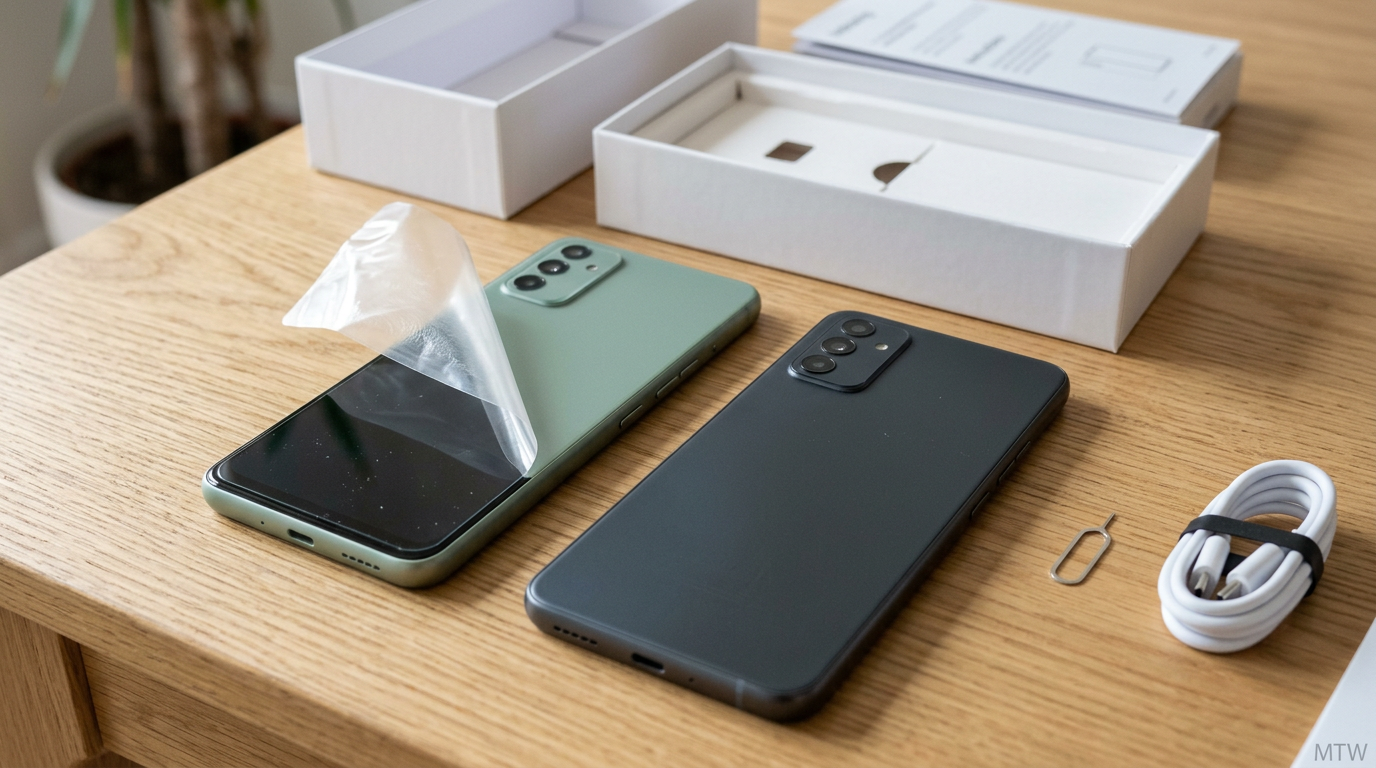
3. Nothing Phone (3a) — £279
The design winner. It stands out in a category where everything looks like a slab of black plastic, and Nothing OS continues to be the most coherent Android skin outside of Pixel. Cameras are decent rather than great. Battery is strong. The glyph interface is a love-it-or-hate-it feature. For the buyer who wants a phone that feels different without paying £700, this is the pick.
4. Motorola moto g stylus 2026 — £259
The dark horse. Includes an actual stylus, which makes it genuinely useful for students, note-takers, and anyone who inherited a Samsung Note habit. Camera is weak. Display is flat-out excellent for the money. Software support is weaker than Samsung or Google, two years of OS updates is the limit.
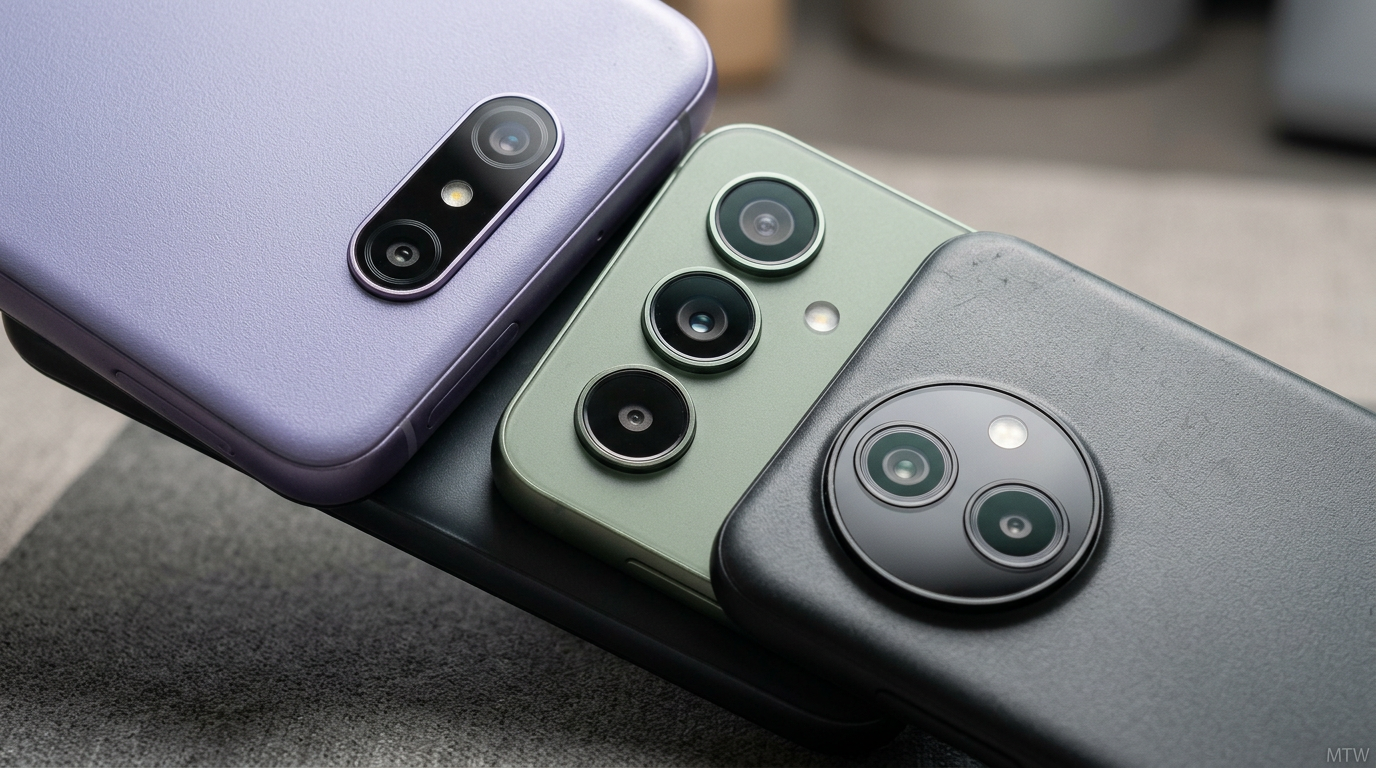
5. Xiaomi Redmi Note 14 Pro+ — £299
The spec winner. More RAM, faster charging (120W) and a bigger battery than anything else on this list. The cost is MIUI bloat, slower update delivery in the UK than Samsung, and an unreliable resale market. If you swap phones every 18 months and never sell the old one, this is a fantastic deal. If you hold onto phones for four years, pick the A57 instead.
Who to avoid at this price
OnePlus Nord CE 4 Lite is the big name you should skip. Build quality took a step back, the display is noticeably worse than the A57 at the same price, and OnePlus’s UK software update history has been scrappy. The other miss is the Realme 12 Pro+ — good specs, genuinely bad UK after-sales support. If it breaks outside Amazon’s warranty window you are in trouble.
| Phone | UK price | Best for | Support |
|---|---|---|---|
| Galaxy A57 5G | £289 | Overall pick | 6 years |
| Pixel 10a | £299 | Camera | 7 years |
| Nothing Phone (3a) | £279 | Design | 3 years |
| Moto g stylus 2026 | £259 | Stylus users | 2 years |
| Redmi Note 14 Pro+ | £299 | Specs per pound | 3 years |
Verdict
The Galaxy A57 5G is the correct pick for 80 per cent of UK buyers under £300. The Pixel 10a is the correct pick for the remaining 20 per cent who care primarily about photography. Everything else on this list has a specific audience. The 2026 £300 UK market is genuinely competitive. You do not need to spend £700 to get a phone that lasts four years.

- Best budget phones under £300 UK 2026: Samsung Galaxy A57 5G, Google Pixel 10a, Nothing Phone (3a), Motorola edge 70 Neo and Honor 200 Lite head the credible shortlist.
- All five picks meet the non-negotiables: 8+ hours screen-on in mixed use, three years of security patches and usable low-light cameras.
- Samsung A57 is the safe pick; Pixel 10a is the camera pick; Nothing Phone (3a) is the design pick.
- Two big-brand budget phones miss this list because of poor cameras, slow patching or unrealistic battery claims.
Why the best budget phones under £300 UK list is shorter than usual this year
The 2026 best budget phones under £300 UK shortlist is tighter than the 2025 version because the price band has compressed. Brands that historically nudged into this tier with cut-down flagship designs have either moved up to £349-£399 or down to £179-£229 with materially worse cameras. The middle band that the £279-£299 sweet spot used to occupy is genuinely the realm of five strong phones rather than ten passable ones. That is a better outcome for buyers.
Where the best budget phones under £300 UK lose out to mid-range
The honest caveat: a £449 Nothing Phone (3a) Pro or a £399 Pixel 9a beats any of these picks meaningfully on camera, raw performance and software polish. The argument for the under-£300 tier is value, not parity. If you can stretch £100 more, you will get a noticeably better daily device. If £300 is the firm ceiling, the picks above are the right answer in April 2026 and the differences between them are small enough that personal preference matters as much as benchmarks.
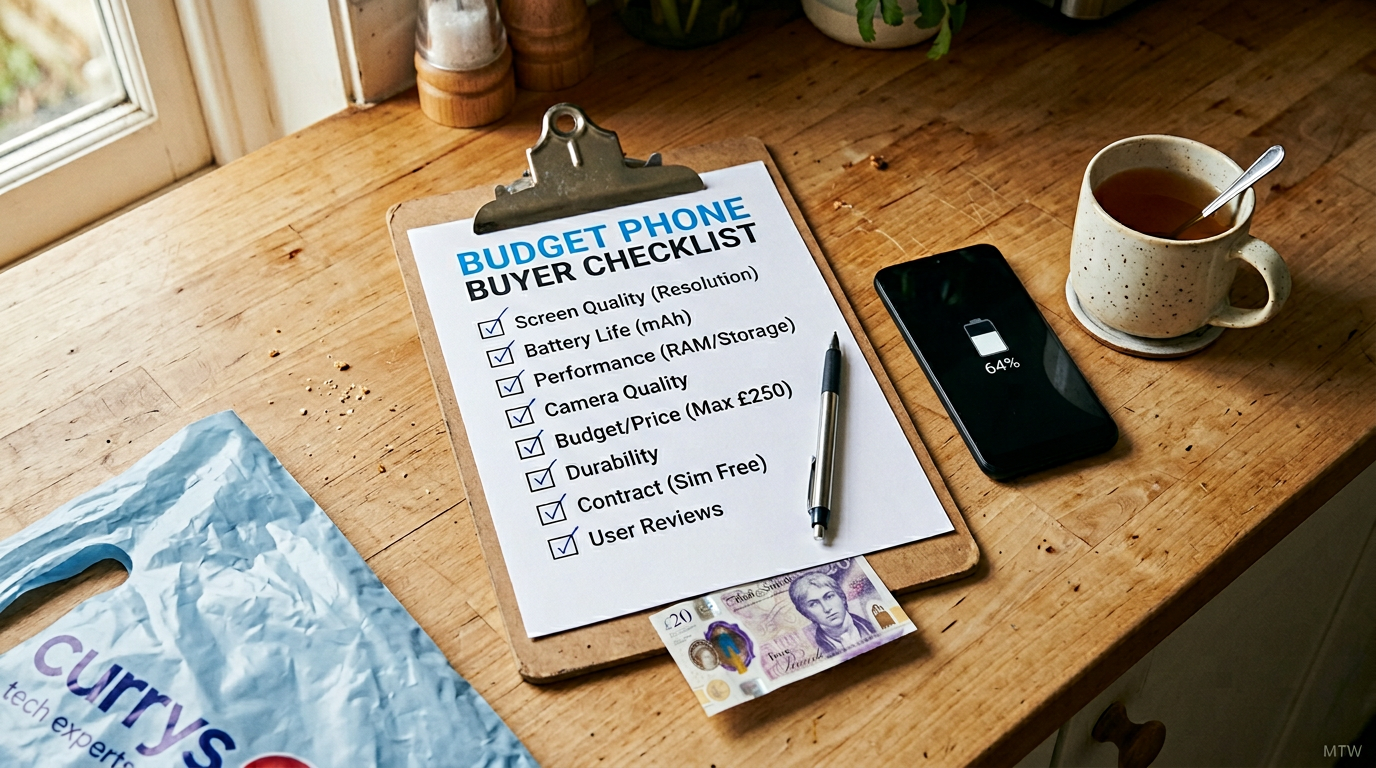
For more, see our companion pieces on the Nothing Phone (3a) Pro at £449, the 9000mAh battery phone trend changing what mid-range can deliver, and the practical speed up old Android phone guide for buyers not ready to replace yet.
MTW verdict
The best budget phones under £300 UK 2026 winner is the Samsung Galaxy A57 5G for most people, the Pixel 10a if camera matters more than battery, and the Nothing Phone (3a) if you want a phone that does not look like everyone else’s. The other two large brands often shortlisted at this price have not earned a recommendation this year. Buy with confidence, but stretch to £400 if you can.
How we pick
Buyer action
Where to buy or check next
Use this as the final check before ordering a phone, changing network or trusting a headline monthly price.











Reader discussion
Leave a comment
Comments are moderated. Keep it useful, accurate, and on topic.