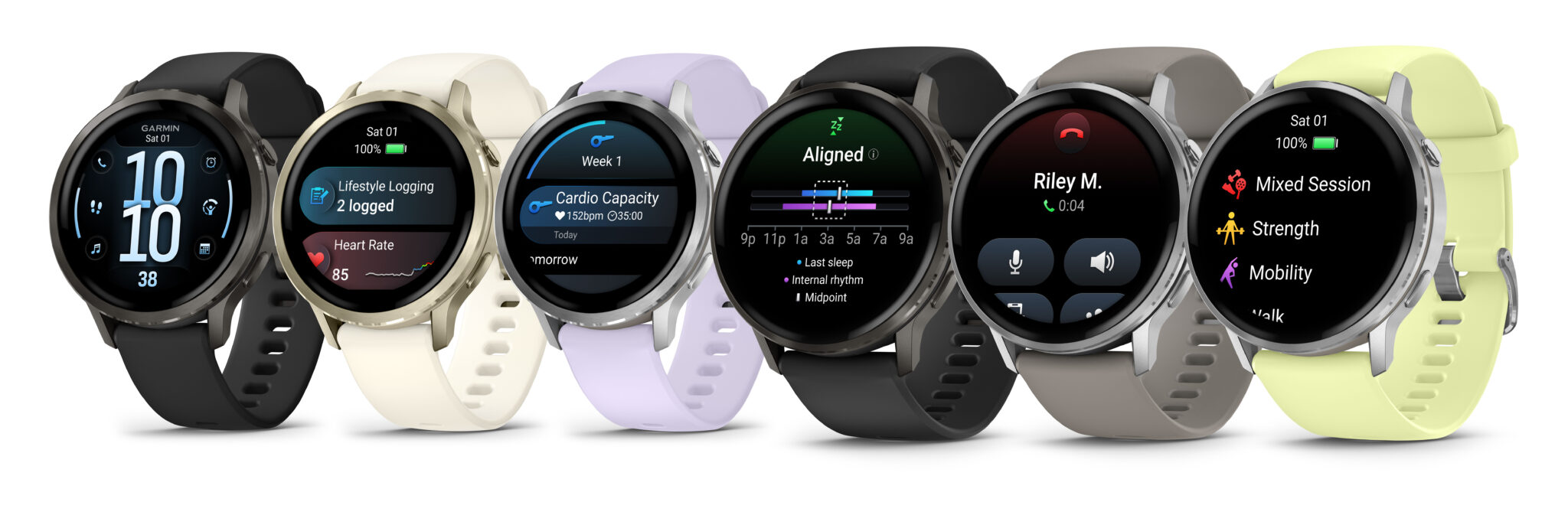
Two battery numbers tell you almost everything about where the Garmin Venu 4 sits in the UK market, and they don’t quite agree with each other. In its 2026 review, GadgetScout clocked the 45mm model at up to 14 days between charges with the always-on display switched off; inkl’s reviewer got 12. Turn the always-on screen on and the gap widens into a chasm: 8 to 9 days by one account, 4 to 5 by the other. That spread isn’t sloppy testing. It’s the whole pitch. The Venu 4 asks you a question the Apple Watch never bothers to — how much screen do you actually want on your wrist, and how much endurance are you willing to trade for it?
At £469.99 direct from Garmin’s UK store, in either the 41mm or 45mm case, this is not a watch you buy on a whim. So let me work through what the numbers actually justify.
The screen is the point — and the compromise (Garmin Venu 4)
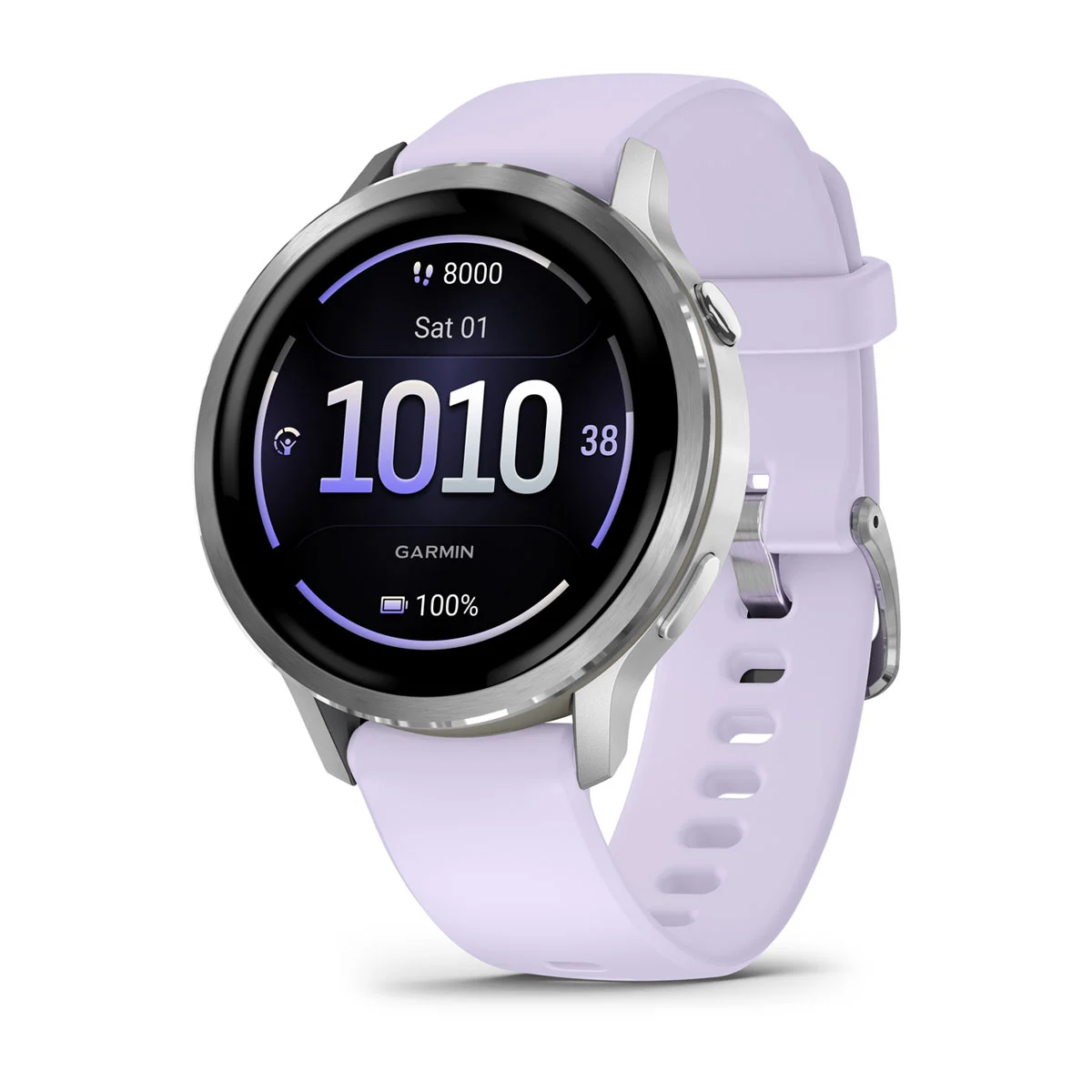
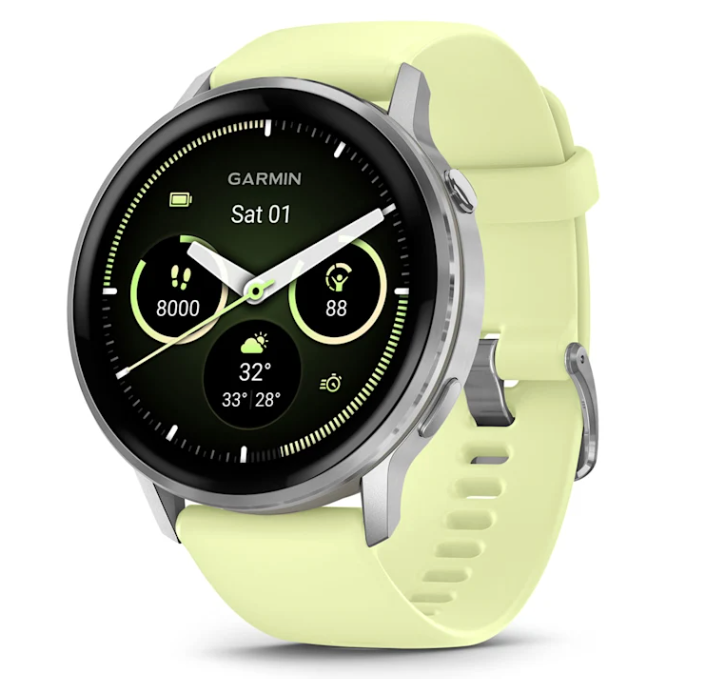
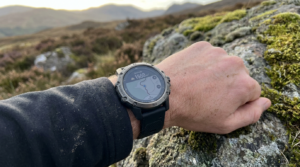
Garmin has spent years being the brand you wore when you cared more about a marathon split than a notification. The Venu line was always the softer edge of that identity, and the Venu 4 leans into it hard: a 1.4-inch AMOLED panel on the 45mm, 1.2 inches on the 41mm. This is the display doing the heavy lifting — bright, saturated, the kind of screen that finally makes a Garmin look like something you’d wear to dinner rather than only to a parkrun.
The catch is that AMOLED and Garmin’s traditional fortnight-plus battery life pull in opposite directions, and the always-on setting is where that fight happens. Leave the screen dark until you raise your wrist and you get that headline endurance. Insist on a watch face that’s always visible — the thing most people actually want from a premium AMOLED — and you’re back to charging every four or five days, which is Apple Watch territory. The Venu 4 doesn’t hide this. It just hands you the dial and lets you decide.
The Venu 4’s real feature isn’t any single sensor. It’s the tension between a screen you’d show off and a battery you’d brag about — and Garmin makes you pick your side.
ECG, and why the UK caveat matters
The headline health addition is a single-lead ECG, and crucially it is live in the UK, with MHRA acknowledgement noted in GadgetScout’s review — not the “coming soon, region-dependent” limbo that has haunted so many wearable heart features here. The mechanic is familiar to anyone who’s used an Apple Watch or a Withings: press and hold for 30 seconds, sit still, and the watch records a trace that can flag signs of atrial fibrillation. Results sync to Garmin Connect and export as a PDF you can actually hand to a GP.
I’d temper the excitement with the obvious: this is a screening prompt, not a diagnosis, and a 30-second spot check is a very different thing from continuous monitoring. But the fact that it works out of the box on British wrists, rather than being geo-locked into uselessness, is a genuine mark in its favour. For a lot of buyers over 50 eyeing their first “proper” health watch, that single line — ECG, UK, live — is the sentence that closes the sale.
The GPS numbers, and the honesty problem
Here the conflicting figures get sharper, and more interesting. GadgetScout quotes up to 35 hours of standard GPS on the 45mm and around 22 hours in the more accurate multi-band mode. Runner’s World, testing it as a running watch rather than a lifestyle device, landed at 17 hours. Both can be true — GPS drain depends brutally on the signal environment, whether you’re recording heart rate and music at the same time, and how often the screen wakes.
What that range tells me is that the Venu 4 is a superb everyday and half-marathon companion, and a slightly nervous ultra one. If your longest day out is a 20-mile trail loop, you’re fine on multi-band. If you’re eyeing a hundred-mile weekend, this was never the Garmin for you — and the brand knows it, which is exactly why the harder-nosed Fenix and Apple Watch Ultra tier exists a few hundred pounds up the range. The Venu 4 is the health-and-lifestyle Garmin that happens to run well, not the endurance monster that happens to tell the time.
What £469.99 buys against the field
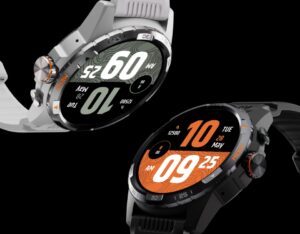
Positioning matters here more than any single spec. At full price the Venu 4 sits directly alongside the Apple Watch Series and the pricier Samsung Galaxy Watch, and it undercuts none of them on smart-features — no proper app ecosystem, no cellular on this model, an experience that assumes your phone is nearby. What it offers instead is the thing those watches can’t: a screen you’d actually want on, paired with a battery that, tuned right, embarrasses them.
The AMOLED-plus-endurance combination is increasingly the whole game in wearables — it’s why even the entry end, with something like the £99 CMF Watch 3 Pro, now leads with an AMOLED panel. What separates the Venu 4 from the cheap seats isn’t the screen technology; it’s Garmin’s sensor suite, its training and recovery metrics, and the sleep and stress data that have quietly become the reason people stay in the ecosystem. If you’re the sort of buyer who reads their morning Body Battery score before their emails, this is the tier where that data earns its keep.
There’s a running-cost footnote, too, and it’s newer than the watch. Garmin has started paywalling some of its more advanced insights behind Connect+ at £6.99 a month, which nudges the true cost of ownership above the sticker. The core training and health data remains free — this isn’t a hostage situation — but it’s worth knowing that the “subscription-free watch” pitch now carries an asterisk.
The discount changes the maths
Then there’s the number that quietly rewrites the verdict. inkl spotted the 45mm on Amazon UK at roughly £380 at the time of writing — nearly £90 off list. At £469.99, the Venu 4 is a considered purchase you weigh carefully against an Apple Watch. At £380, it’s close to an impulse buy for anyone already Garmin-curious, and it makes more basic fitness bands look thin. A price like that also tells you something about how these watches are actually sold in the UK: the RRP is the ceiling, and patience is a feature. If you’re not in a hurry, the difference between “premium splurge” and “obvious buy” can be one retailer’s promotion away.
Where I land on it
The Venu 4 is the most convincing case Garmin has made for a health watch you’d wear because you like it, not because you’re training for something. The ECG working properly in Britain, the AMOLED that finally looks the part, the sensor data that remains best-in-class for the money — those are real, and they add up to a watch I’d recommend without much hesitation to the right person.
That person isn’t a PB-chasing athlete, and it isn’t someone who wants their wrist to replace their phone; a Fitbit-style band or a full smartwatch serves those two better. It’s the everyday wearer who wants serious health tracking, a screen that isn’t apologetic, and enough battery to forget the charger for a week if they’re willing to dim the display. For them, £469.99 is fair and £380 is a small triumph. The Venu 4 doesn’t try to be everything — and on the numbers, that restraint is exactly why it works.
Buyer action
Where to buy or check next
Use this as the final check before ordering a phone, changing network or trusting a headline monthly price.










Reader discussion
Leave a comment
Comments are moderated. Keep it useful, accurate, and on topic.