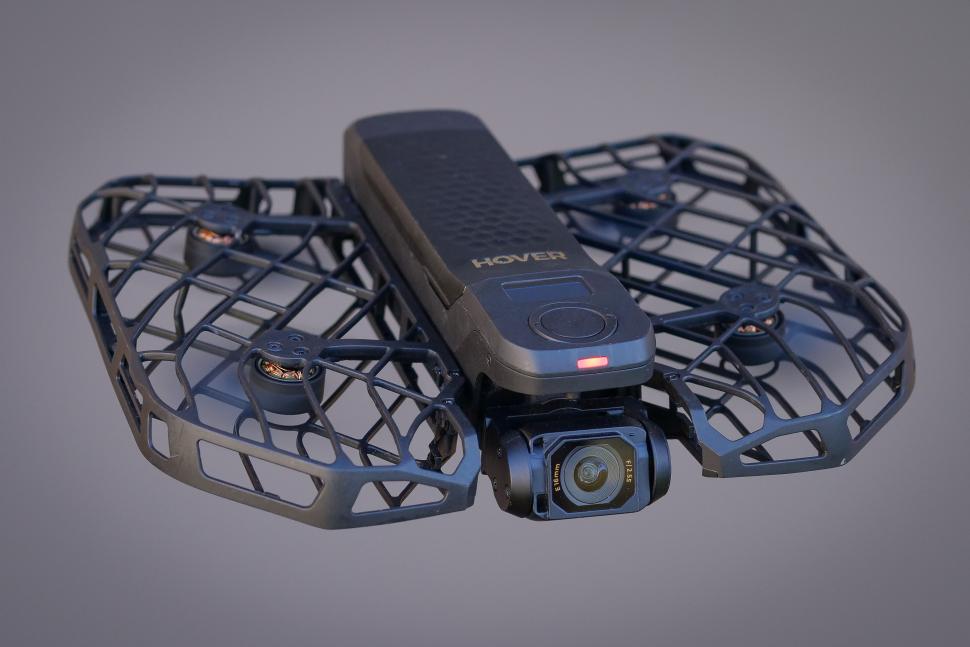
A drone that weighs less than a tin of beans, fits in a jacket pocket and will chase you down a singletrack descent at 42km/h without a controller in your hands — that is the pitch HoverAir is making with the X1 ProMax, and at £639 it is asking premium-compact-camera money to deliver it. road.cc’s 2026 review is where I’d start if you want the unvarnished version, because the numbers it puts on the table tell you almost everything about who this little machine is for — and exactly where it stops short.
Let me be blunt about my position before I justify it: the ProMax is the first selfie drone I’d take seriously as a creator tool rather than a gimmick, but the thing that would stop me reaching for my card sits in plain sight on the spec sheet, and no amount of 8K marketing makes it go away. The case for it rests on the trail testers who have ridden hard with it — Singletracks, WIRED and road.cc — and on the spec sheet, which doesn’t lie about flight time even when the marketing would prefer it did.
What £639 actually buys you (pocket follow-cam)
The Standard Bundle lands at £639 direct from HoverAir UK, which maps to roughly $699 globally (about AU$1,140, as WIRED notes). For that you get a 192.5g aircraft built around a 1/1.3-inch CMOS sensor — and that sensor size is the headline, not the 8K. A one-over-1.3-inch chip is genuinely large for a sub-200g flyer, the same class of sensor you’ll find in a serious flagship phone camera, and it is the reason the ProMax can credibly claim 48MP stills and a usable image rather than the smeary, over-sharpened mush most pocket drones produce.
On top of that sits 8K/30fps capture and — far more interesting to me — 4K at 120fps for slow motion. The 107° field of view is wide enough to keep you in frame when it’s tracking close, without bending the horizon into a fishbowl. This is a properly specified camera that happens to fly, and at this price that framing matters: you are not paying for a toy, you are paying for a stabilised cine-rig that follows you.
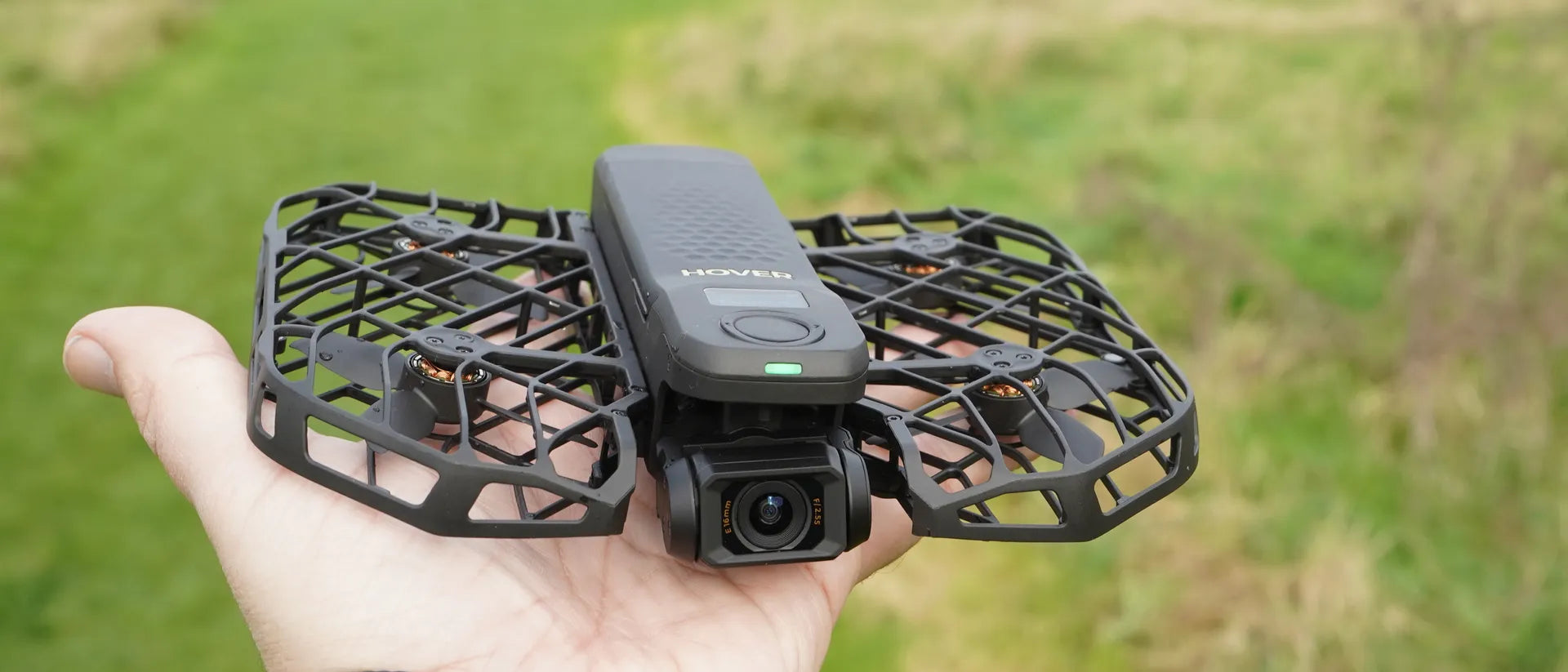
The sub-200g weight is not just a marketing line for British buyers, either — it is a legal one. Under the UK’s drone rules, a sub-250g aircraft sits in the most permissive open-category bracket, so you can fly closer to people and skip the heavier registration burden a 250g-plus machine would drag in. For a creator who wants to grab follow footage on a trail, a beach or a quiet bit of moorland without a flight plan and a risk assessment, that 192.5g figure is doing quiet, important work. It is the difference between a tool you actually carry and one that stays in the cupboard.
The follow-cam trick, and why the ProMax earns its name
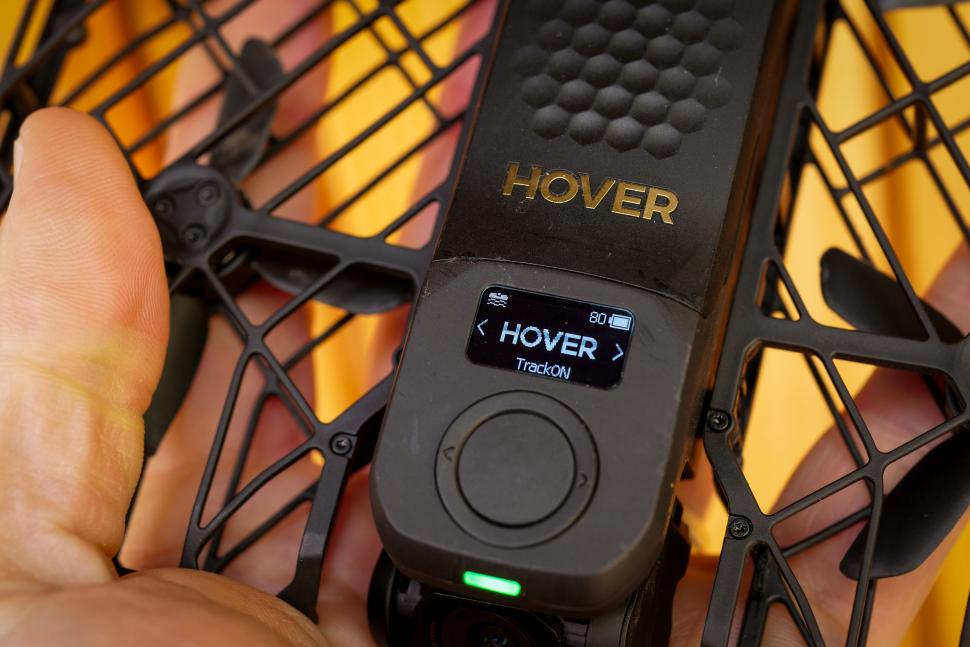
The whole proposition lives or dies on tracking, and this is where the ProMax separates itself from the cheaper Pro. Both get rear obstacle detection, but the ProMax adds vision sensors — and the difference shows up the moment you move quickly. HoverAir quotes a max follow speed of 42km/h (26mph), with bursts up to 60km/h (37mph), and the mountain-bike testing over at Singletracks is the real-world stress test that backs the marketing up: this is a drone built to hold a rider on a trail, not just orbit someone standing still in a park.
What I like about HoverAir’s approach is that the tracking is visual, not GPS-leashed to a phone in your pocket. The aircraft is watching you, which is why it copes with the awkward stuff — a rider dropping behind a tree line, a runner turning sharply, a skier cutting across a slope. The on-board modes matter here too: the standard follow, the side-track that runs parallel to you, the bird’s-eye that climbs and looks down, and the manual nudge you get from the companion app. None of that is exotic on paper, but the ProMax’s combination of vision sensors and the larger sensor is what turns those modes from a novelty into footage you’d actually cut into an edit.
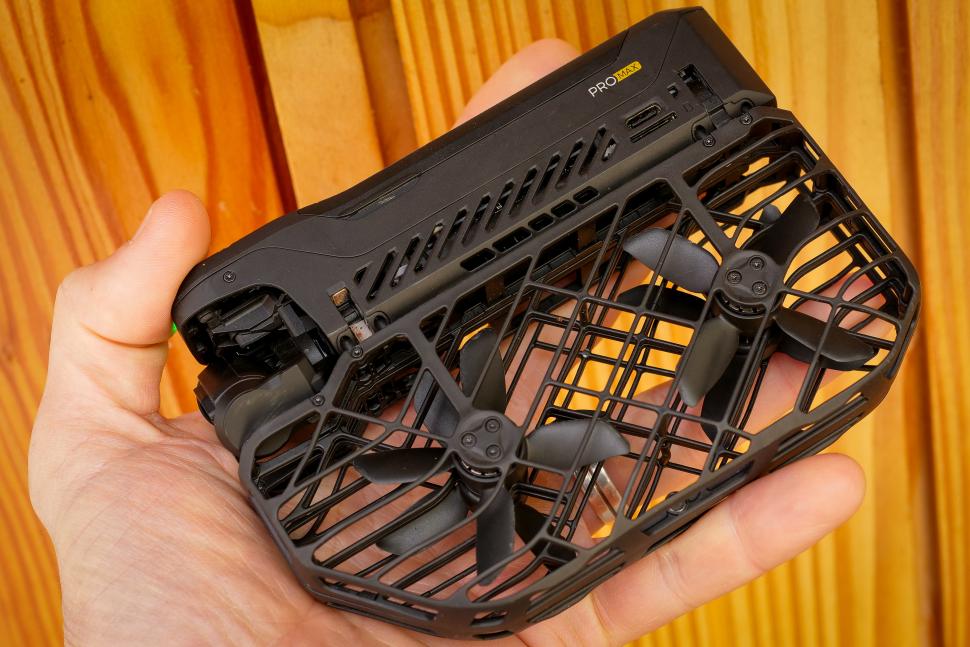
That 42km/h figure is the one I’d hang my buying decision on if I rode or ran. It is fast enough for road cycling, trail running and most descents; it is not fast enough for a flat-out road sprint or anything motorised, and the bursts to 60km/h are recovery headroom, not a cruising speed. Know which side of that line your hobby falls on and you’ll know whether the ProMax is the drone for you. Push past it and the drone doesn’t crash dramatically — it simply drops back, loses the framing, and you end up with a clip of yourself receding into the distance.
A one-over-1.3-inch sensor on a 192.5g aircraft is the spec that actually matters here — the 8K is the poster, but the chip is the camera. Everything good about this drone flows from that single decision.
The catch nobody prints on the box
Here is the bit that would stop me. The ProMax carries a 1920mAh battery rated for a theoretical 16 minutes of flight — and in the field that collapses to 11 to 13 minutes of usable time once you factor in wind, fast tracking and the cold. Eleven minutes is one descent, maybe two short clips and a re-frame, and then you’re landing to swap cells. For a creator that means buying spare batteries is not optional, it’s part of the real price of ownership, and it pushes the genuine cost of a working kit well north of that £639 sticker.
And the British weather makes that worse, not better. Lithium cells hate the cold, so the 11-to-13-minute window you’ll get on a mild day in a UK winter — the exact conditions where a snowy trail or a grey, moody coastline gives you your best footage — can shrink further. Pack the spares in an inside pocket to keep them warm, and assume your real working session is a sequence of short, deliberate flights, not one long uninterrupted shoot. That is a planning change as much as a spending one.
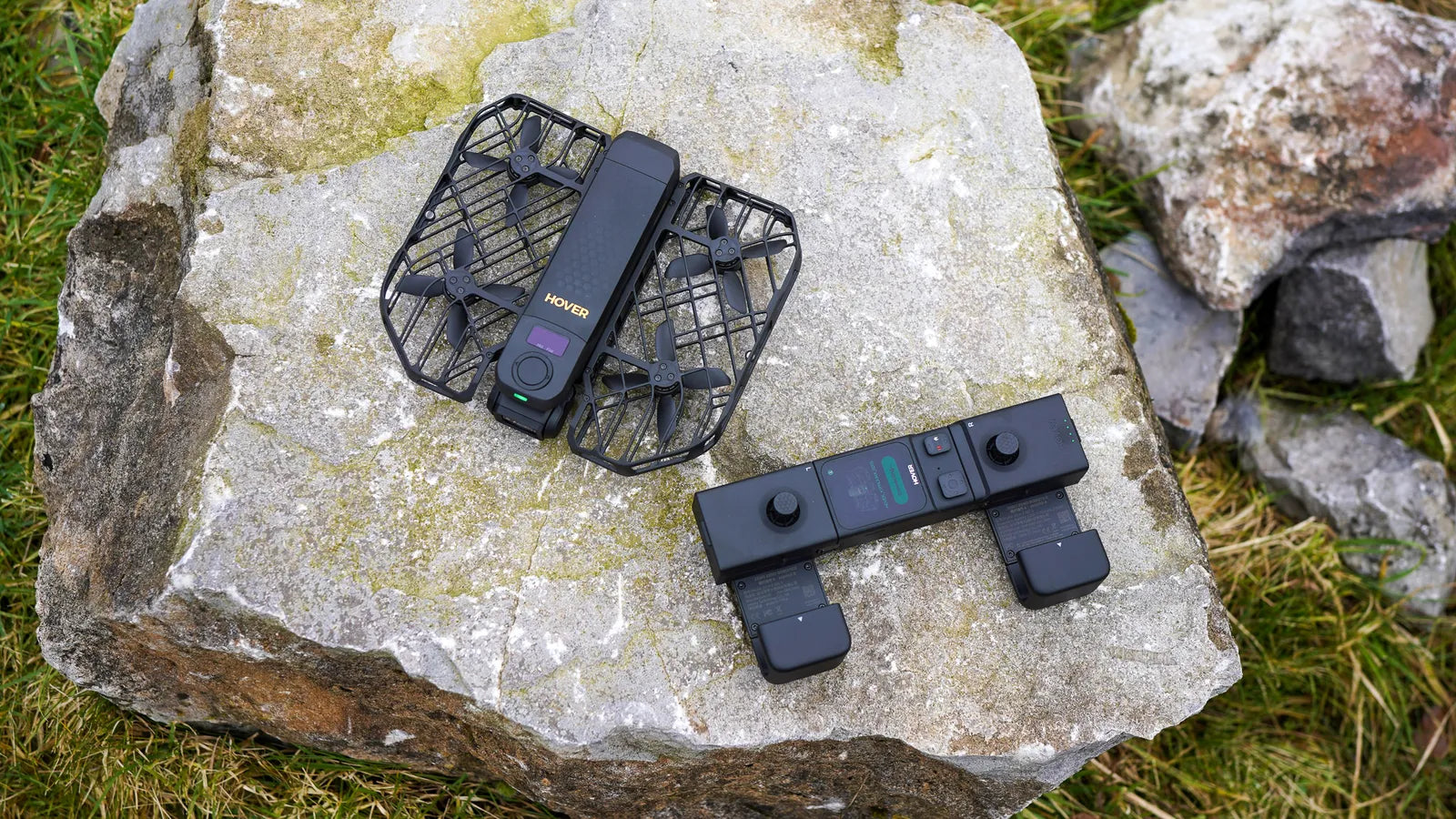
I don’t think this is a dealbreaker so much as an honesty test. Anyone selling you a sub-200g drone with an 8K sensor and 42km/h tracking is making physics trade-offs, and battery is where they made it. If you go in expecting roughly a quarter of an hour and pack two or three spares, you’ll be delighted. If you expect a half-hour session on one charge, you’ll be back at the car park sooner than you’d like.
Storage, and the 8K reality
8K footage is enormous, so the ProMax sensibly ships with 64GB of internal storage, expandable via microSD up to 1TB, as both Singletracks and road.cc confirm. Take the microSD seriously: 64GB disappears fast at 8K/30 or 4K/120, and a high-endurance card is the cheapest performance upgrade you’ll make. It’s also worth being honest with yourself about whether you need 8K at all — most people will edit and publish in 4K, and the headroom 8K gives you for reframing and cropping is the real argument for it, not delivery resolution.
There’s a workflow cost to all that resolution, too. 8K files are heavy to offload, heavy to scrub through and heavy on your editing machine — if your laptop already wheezes at 4K, you’ll feel it. My honest steer for most UK buyers is to shoot the everyday stuff in 4K, keep 8K for the hero shots where you know you’ll want to crop in, and budget a fast card reader alongside that high-endurance microSD. The drone is only half the kit; the pipeline behind it is the other half, and it’s the half people forget to cost in.
Who this is for, and the line I’d draw
So here’s where I land. If you ride, run, ski, skate or do anything where you move at a clip and want hands-free cinematic follow footage that doesn’t look like a flying potato shot it, the X1 ProMax is, on the numbers and the trail testing, the most convincing pocket follow-cam yet — and £639 is fair for the sensor and tracking you’re getting. That’s a tier-appropriate price, not a bargain, and I’d not pretend otherwise.
But I’d only buy it with my eyes open on two things. Budget for spare batteries from day one — treat the eleven-to-thirteen-minute reality as the true flight time, not the sixteen on the box. And be brutally honest about your top speed: if your activity routinely outpaces 42km/h, this isn’t your drone and no firmware update will change that. Sort those two questions and the ProMax is an easy recommendation. Dodge them and you’ll be the person posting a one-star review about a drone that did exactly what its spec sheet always said it would.
Buyer action
Where to buy or check next
Use this as the final check before ordering a phone, changing network or trusting a headline monthly price.









Reader discussion
Leave a comment
Comments are moderated. Keep it useful, accurate, and on topic.