Reolink Altas PT Ultra review: the £200 battery 4K camera that promises 500 days off the ladder
Five hundred days. That’s the number Reolink hangs on the Altas PT Ultra’s 20,000mAh battery, and it’s the figure that decides whether this £200 camera earns a spot on your wall or just becomes another fortnightly trip up a ladder with a charging cable. As Mighty Gadget’s hands-on review set out when the camera reached the UK, the pitch is simple and slightly outrageous: a 4K, pan-and-tilt, fully wireless security camera that you can, in the right conditions, fit and effectively forget. The spec sheet, the GB pricing and the early UK reviews tell a clear enough story to say who should buy this and who absolutely shouldn’t.
I want to be clear about what that 500-day claim actually means before anyone gets carried away, because it’s exactly the sort of figure that sells a camera and then quietly disappoints. It’s a PIR-mode number — the camera sitting in low-power standby, only waking and recording when its passive-infrared sensor catches motion. Point this thing at a busy pavement, or a tree that sways every time the wind picks up, and you will not get 500 days. You’ll get a fraction of it. But the principle holds: this is a battery camera built for people who are sick of battery cameras that need feeding every six weeks.
What you actually get for £200 (battery 4K camera)
Reolink launched the Altas PT Ultra across Europe, North America and Australia on 25 September 2024, a debut Mighty Gadget covered at announcement. UK pricing lands at £200 for the camera on its own and £220 for the bundle that adds a solar panel, according to Reolink’s own GB product page. At launch there was an early-bird window pricing it at £178 camera-only and £198 with the panel — worth knowing if you’re tracking it for the next promotional dip, because Reolink runs these offers often enough that £200 should be treated as a ceiling, not a fixed price. If you’re patient and you set a price alert, paying full RRP for any Reolink product is usually a mistake.
Here’s where I’d spend the extra £20 without a second thought: get the solar panel. The entire proposition of this camera is that you mount it somewhere awkward and leave it alone. Pairing a 20,000mAh cell with a constant trickle of solar is what turns “up to 500 days” into “genuinely never thinking about it again”. Buying the bare camera to save a score, then discovering you’ve put it somewhere you now have to unbolt twice a year, is a false economy. And the British caveat matters here: a solar panel does far less work facing a north wall under a Manchester December than it does on a south-facing gable in July, so think about where the light actually falls before you commit the mount, not after.
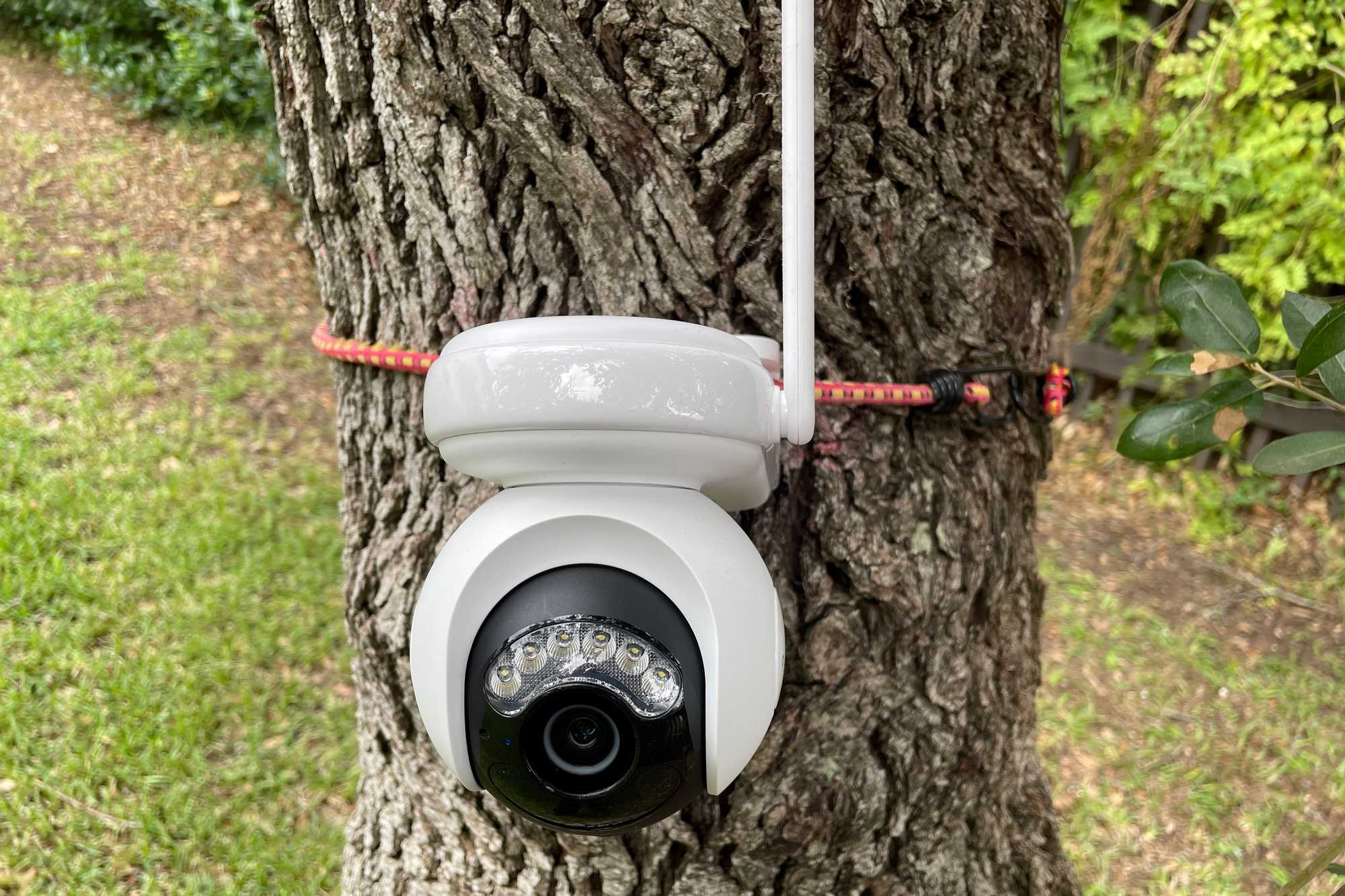
This is a battery camera built for people who are sick of battery cameras — and the solar panel is what turns a clever spec sheet into a camera you can actually forget.
The 4K question — and the asterisk that matters
The sensor shoots 4K UHD, a true 3840×2160, which on a security camera buys you something specific: the ability to crop into a recorded clip and still read a number plate or make out a face, rather than squinting at a smear of pixels. That’s the real-world value of 4K on a camera you’ll mostly watch after the fact, not live. If your actual worry is a car being keyed on the drive or a parcel walking off the step, the resolution to zoom in later is the feature that justifies the whole purchase — far more than any live feed you’ll rarely sit and watch.
But read the frame rate. It’s 15fps at 4K, confirmed on Reolink’s own spec sheet. Fifteen frames a second is fine for a static driveway and a person walking up to your door. It is not smooth, and fast motion across the frame will judder. For the job a security camera actually does — recording who was there, not producing cinematic footage — I think that’s an acceptable trade for the resolution and the battery life it protects. Just don’t expect doorbell-cam fluidity, and don’t expect to make a clean read of a car travelling at speed across the bottom of the frame; the still-frame quality is the point, not the motion.
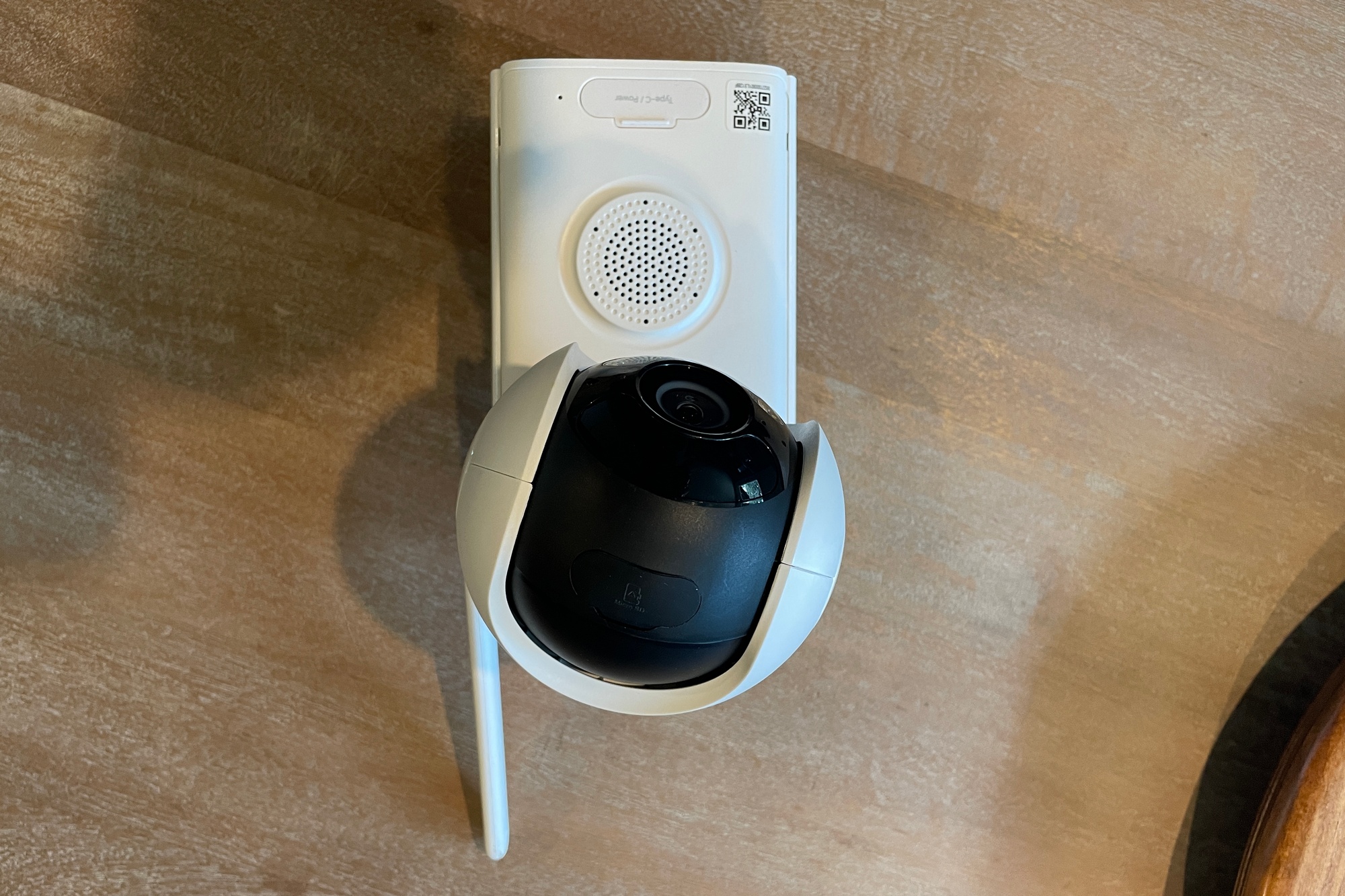
Storage is local: up to a 512GB microSD card slotted into the camera, which is the part that should appeal to anyone allergic to monthly cloud subscriptions. You buy the card once and you own your footage outright. Because this is an event-based camera rather than one recording 24/7, that 512GB stretches a very long way — weeks of motion clips for a quiet domestic spot — so for most homes the card is genuinely a one-time cost, not a buffer you’re forever overwriting. The pan-and-tilt motor, meanwhile, means a single unit can sweep a whole driveway or back garden rather than staring fixedly into one cone — which is where a lot of cheaper battery cameras quietly fall down, forcing you to buy two to cover what this covers with one.
Where the marketing and the reality part ways
One number I want to correct, because it’s the kind of thing that gets repeated until people believe it. This is not an always-recording camera in any practical sense. Continuous recording maxes out at 96 hours — four days — and only if you’re feeding it power. The Altas PT Ultra is fundamentally a motion-triggered, event-based camera, and that’s by design: continuous 4K capture and a battery you never charge are mutually exclusive physics. If you need true 24/7 rolling footage — a shopfront, a busy commercial yard, anywhere you genuinely cannot afford a gap between triggers — this is the wrong camera and you should be looking at a mains-wired system instead.
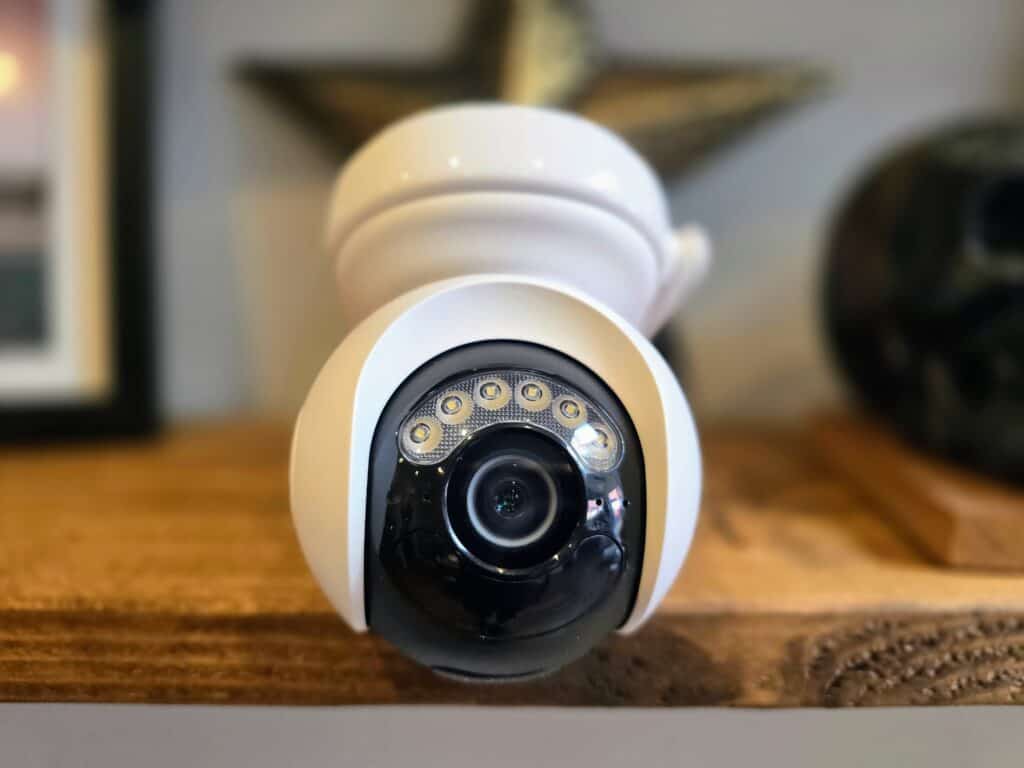
The other reality is the one every battery camera shares: your battery life is only as good as your motion tuning. The 500-day figure assumes a sensibly quiet scene and a sensor that isn’t tripping on every cat, fox, bin lorry and gust-blown branch. In a typical British back garden — foxes at night, next door’s washing on the line, a tree in the wind — you’ll want to spend an evening in the app dialling in detection zones and sensitivity, or that headline number evaporates. That’s not a flaw unique to Reolink; it’s the tax on every wireless camera, and anyone who tells you otherwise hasn’t lived with one through an autumn of leaf-fall.
So the honest framing is this. The Altas PT Ultra is a wireless, event-driven 4K camera with a pan-tilt head and a battery that, paired with solar and tuned with a bit of care, can run for the best part of two years between human interventions. Yahoo’s review landed in much the same place — strong on the fundamentals, with the usual battery-camera caveats around how aggressively you tune the motion detection.
Who this is for in a UK home
This camera makes most sense for the British house with a spot that mains power simply doesn’t reach: a side return, the end of a long garden, a detached garage, a gable end three metres up. No trailing cable, no electrician, no cloud bill — mount it, point it, walk away. For that buyer, at £200 (or £220 with the panel), it’s one of the more sensible things you can bolt to a wall this year, and it does it without signing you up to a subscription that outlives the camera itself.
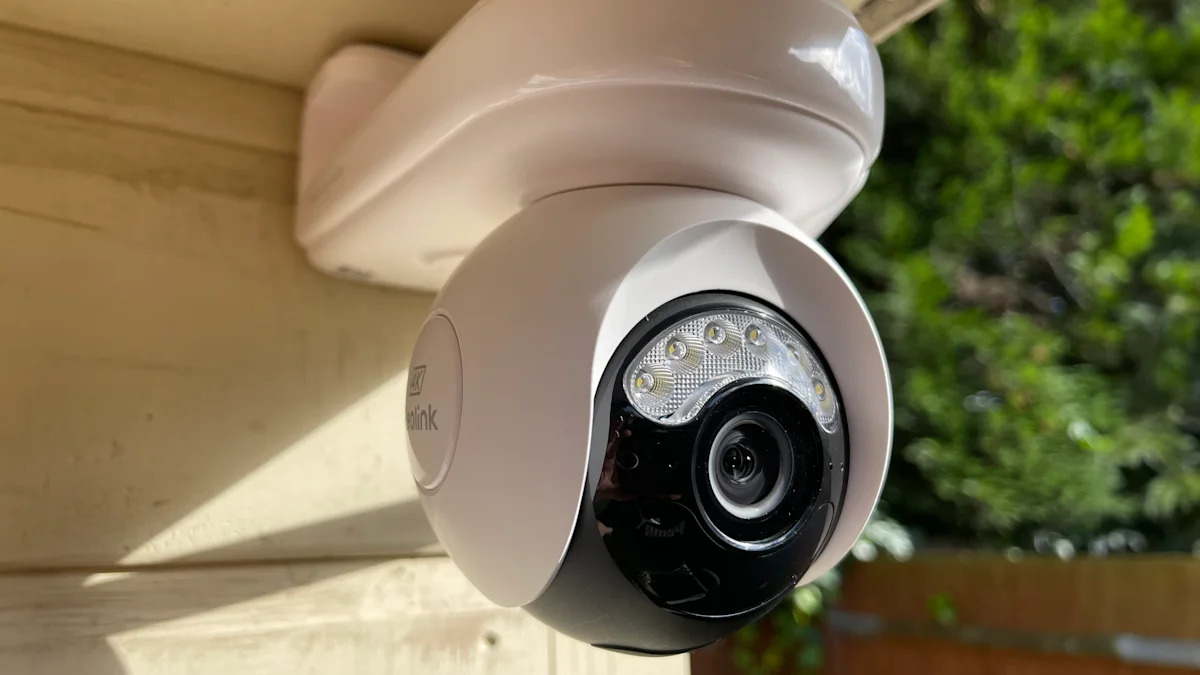
It’s the wrong buy for two people. If you want continuous, always-on recording, the 96-hour ceiling tells you everything — go wired. And if your chosen mounting spot faces constant motion — a roadside, an overhanging tree, a busy shared path — the 500-day battery fantasy collapses, and you’ll be charging it like any other camera, at which point the headline appeal thins considerably and you’d be as well served by something cheaper.
The bit that would actually win me over
What sells me on the Altas PT Ultra isn’t the 4K and it isn’t even the battery in isolation — it’s the combination of local 512GB storage and solar top-up. Together they kill the two recurring costs that quietly make most “cheap” security cameras expensive: the monthly cloud fee and your own time on a ladder. Buy the £220 solar bundle, drop a microSD card in it, aim it at a spot with a sensible amount of sky and a sensible amount of traffic, spend ten minutes setting detection zones, and you’ve got a camera that asks nothing of you again. That’s the version I’d recommend. The bare £200 unit, mounted somewhere you’ll have to unbolt to charge, is the one I’d steer people away from — not because the camera is any worse, but because you’ll have signed up for exactly the chore this thing was built to abolish.
How we test
Buyer action
Where to buy or check next
Use this as the final check before ordering a phone, changing network or trusting a headline monthly price.














Reader discussion
Leave a comment
Comments are moderated. Keep it useful, accurate, and on topic.