London Tech Week 2026 closed on 12 June with a number that did most of the talking: roughly £6bn in fresh AI investment commitments and 8,000 promised jobs, a figure the government trumpeted on gov.uk and London Daily News carried as its wrap-line. I have read enough of these press releases to know the headline is the easy part. The hard question, the one nobody on the Olympia main stage wanted to dwell on, is where any of this actually lands for a UK small business or an ordinary tech buyer this year. My answer, after a week of reading the small print: very little reaches you in 2026, and the parts that eventually will are precisely the parts being underplayed.
At a glance
- Around £6bn in AI investment commitments and 8,000 jobs were announced across the week, per gov.uk (12 June 2026).
- AMD committed up to £2bn over five years, backing high-performance computing with the University of Cambridge and a research partnership with Imperial College London (AMD newsroom, 8 June 2026).
- The separate £1.1bn UK AI Hardware Plan splits into £400m for chips, £120m for a chip design programme and £750m for a national supercomputer that is not due until 2030.
- Cloud firm Nebius pledged around £1.7bn and Amazon over £1bn, so the bulk of the money is infrastructure, not consumer products.
- Almost none of it changes what a UK SME can buy, pay or do before this time next year.

What the £6bn at London Tech Week 2026 is really buying
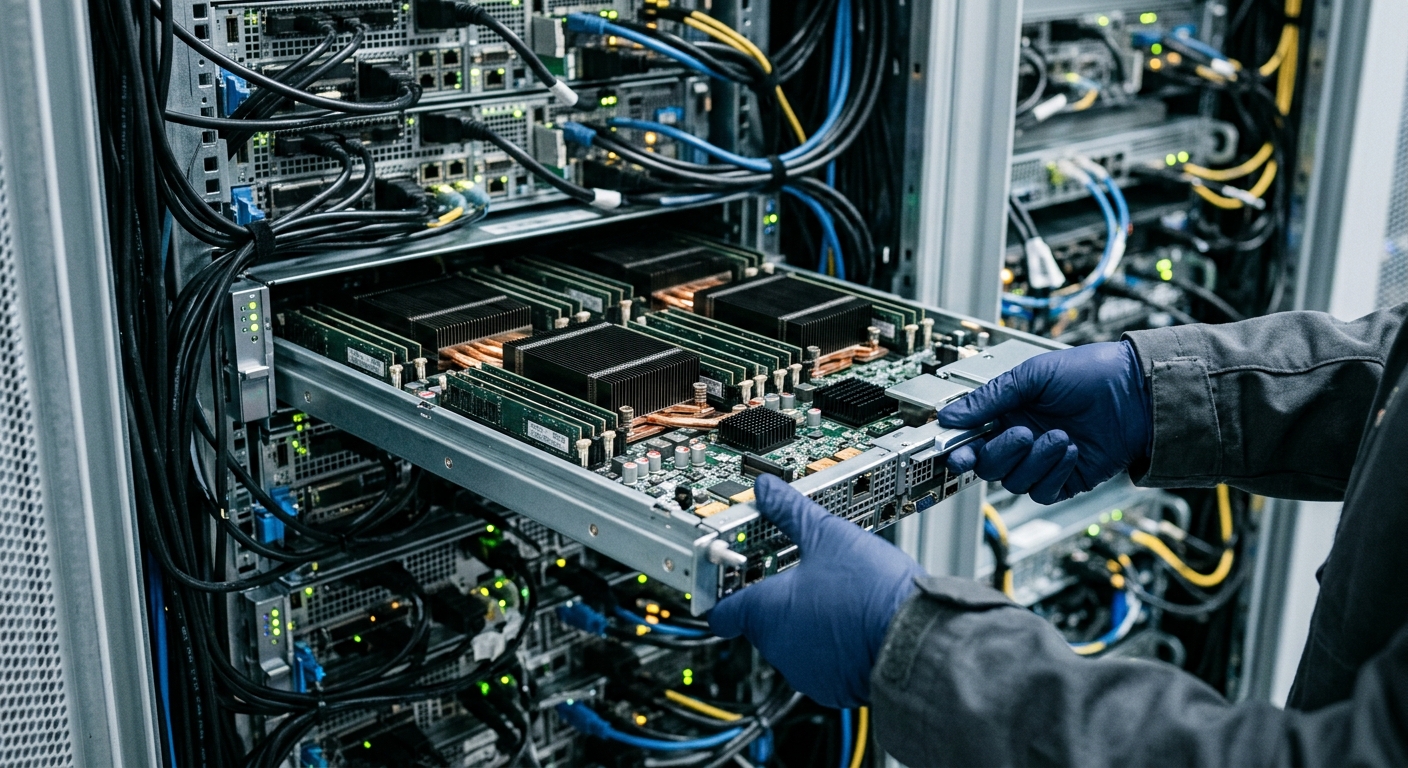
Read the breakdown and a pattern jumps out. The biggest single lines are AMD’s up-to-£2bn over five years, Nebius at around £1.7bn and Amazon at more than £1bn. These are commitments to build and supply compute: chips, data centres, the racks and cabling that sit behind the apps you actually use. That is not a criticism. Sovereign compute is the thing Britain has spent two years admitting it lacks, a thread I traced when the government first set out its £500m sovereign AI fund and the Isambard supercomputer. But it does mean the £6bn is overwhelmingly plumbing. You do not buy plumbing in John Lewis, and a three-person agency in Leeds does not feel a new data centre in its monthly bills for years.
The phrasing matters too. AMD’s own release says “up to” £2bn, spread over five years, and bundles direct stakes in UK startups in with the headline number. That is standard for these announcements, and it is why I always discount the top-line figure on instinct. A pledge with “up to” in front of it is a ceiling, not a cheque. The week’s real, bankable wins were narrower than the £6bn banner: a genuine Cambridge and Imperial research push, and a hardware plan with actual line items attached.

AMD, Cambridge and Imperial: the part that actually has substance
If one announcement deserved more attention than it got, it was AMD’s. Chair and chief executive Dr Lisa Su used the stage to say “the United Kingdom has the talent, research excellence and ambition to help lead the next era of AI”, and crucially she put institutions behind the slogan. AMD is backing the University of Cambridge’s Zenith AI supercomputer, a platform funded by the Department for Science, Innovation and Technology, and the Sunrise fusion AI system run with the UK Atomic Energy Authority. With Imperial College London it has formed a research collaboration aimed at computational science, healthcare and climate modelling. This is the kind of corporate-academic tie-up that, over a decade, actually seeds a domestic chip and software ecosystem. It is also the reason I take AMD’s pledge more seriously than a round number on a slide.
The honest caveat is Su’s own. She told the audience the industry is “still so so early in the process”, with enterprise adoption barely past the pilot stage. That candour is rare and useful. It is the same gap I keep returning to: the chasm between what gets announced in London and what a British business can switch on. The US giants opening UK offices have not closed it either, as I argued when picking apart the London AI boom and why the new offices will not speed up UK features. Research partnerships are a slow burn by design. Anyone selling them to you as a 2026 productivity boost is selling you something.
A pledge with “up to” in front of it is a ceiling, not a cheque. The £6bn headline is mostly plumbing, and you do not buy plumbing in John Lewis.
The £1.1bn hardware plan, and why 2030 is the date that matters
Sitting alongside the private money is the government’s own £1.1bn AI Hardware Plan, set out on gov.uk and detailed by outlets including Computer Weekly. It splits three ways: £400m to procure next-generation chips, with £150m of that earmarked this summer for inference chips and another £250m as technologies mature; a £120m AI Hardware Innovation Programme to help British firms design and test their own silicon; and £750m for a national supercomputer. I welcome the design programme most, because a chip-design capability is the one thing on the list that could create durable UK jobs rather than simply renting American hardware. It echoes the logic behind Britain’s bet on its own labs, which I covered in why DeepMind and home-grown AI matter now.
Then comes the date that the press releases bury: the national supercomputer is not expected to be operational until 2030. Four years away. For context, that is two general elections and several Budgets from now. The £400m chip procurement is more immediate, but it is aimed at startups and research bodies, not at the corner-shop accountant wondering whether to pay for an AI tool. When I wrote up the week the UK first bet £1.1bn on AI, the same tension was already visible: big strategic numbers, long timelines, thin near-term consumer payoff.
Here is the official record of the week, the Prime Minister’s London Tech Week address from the Downing Street channel, if you want the government framing in its own words.
What a UK small business should actually do with this news
So, practically, what reaches a UK SME from London Tech Week 2026 before next summer? Honestly, the investment news reaches you only as weather, not as rain on your own field. None of AMD’s £2bn, Nebius’s £1.7bn or the £750m supercomputer changes the price of the tools on your desk this year. What does matter to a small business is the software layer that already runs on this kind of infrastructure, and that has been quietly improving regardless of any conference. If you run a small team, the more useful question is whether a subscription such as Microsoft 365 Copilot at its UK pricing earns its keep, or whether you would get more from building a narrow workflow tool with something like Copilot Studio’s agents. Those decisions are real and live now. The £6bn is not.

There is a second-order benefit worth naming, because I do not want to sound purely sceptical. Public-sector AI buying, the kind behind the NHS Copilot rollout, sets a floor for the whole UK market: it forces vendors to meet British data and procurement rules, and that compliance work eventually trickles down to the contracts a smaller firm can sign. Sovereign compute is the same story one level up. Build the data centres and chip-design capacity in Britain, and over years the cost and the legal friction of running AI on UK soil should fall. That is a genuine win. It is just a slow, structural one, not a line item you will see on an invoice in 2026.
Where I come down on the week
My stance is unfussy. London Tech Week 2026 was a good week for Britain’s long-term AI position and a non-event for your shopping list. The AMD, Cambridge and Imperial partnership is the part I would actually bank on, because it has named institutions and real research attached rather than a rounded-up number with “up to” in front of it. The £1.1bn hardware plan is sound strategy whose payoff lands closer to 2030 than to Christmas. Everything else is the familiar choreography: a six-billion-pound banner, eight thousand promised jobs, ministers and chief executives sharing a stage, and a press pack hoping you will not read to the end of the page.
So treat the £6bn as a signal about where Britain is heading, not as money that touches you this year. If you run a small business, ignore the conference and keep your eyes on the software that already works, the subscriptions you already pay for and the tools you can switch on tomorrow. The investment will shape the decade. It will not shape your June. I would rather tell you that plainly than dress a press release up as a revolution.
MMTW Editorial
Buyer action
Where to buy or check next
Use this as the final check before ordering a phone, changing network or trusting a headline monthly price.

















Reader discussion
Leave a comment
Comments are moderated. Keep it useful, accurate, and on topic.