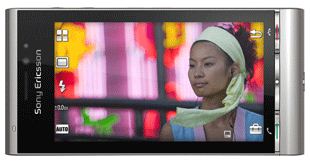
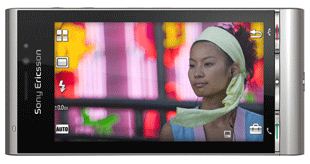
Sony Ericsson’s upcoming Satio smartphone is their first ever device running on the Symbian S60 5th Edition OS. It also is SE’s first OpenGL ES 2.0 phone thanks to the TI OMPA 3430 (which sports a PowerVR SGX GPU) chipset on board similar to Samsung’s Omnia HD’s S60 phone.
An interview with Mike Hopkins at Imagination Technologies was posted on SE’s developers website:
Which hardware does Satio™ use?
The Sony Ericsson Satio™ uses the OMAP3430 processor from Texas Instruments which includes a POWERVR SGX Family Graphics accelerator IP block licensed from Imagination Technologies.
How do I access the POWERVR SGX Accelerated Graphics?
Imagination Technologies enables developers to access its POWERVR SGX core through the industry standard OpenGL ES APIs defined by the Khronos Group.
Satio™ supports the latest OpenGL ES 2.0 as well as the existing OpenGL ES 1.1 API, which are designed to enable full-function 2D and 3D graphics on embedded systems. These APIs create a flexible and powerful low-level interface between software and graphics acceleration. OpenGL ES includes profiles for floating-point and fixed-point systems and the EGL™ specification for portably binding to native windowing systems.
Show me what OpenGL ES 2.0 can do on Satio
Here’s a video of Satio playing one of the demo presentations made by Imagination Technologies
What is the difference between OpenGL ES 1.1 and OpenGL ES 2.0?
OpenGL ES 1.1 limits graphics processing to a pre-defined set of fixed options for lighting and drawing objects. For example, there are a limited number of ways to apply an image to a 3D object to determine the overall look. With OpenGL ES 2.0 you have access to the full flexibility and programmability of shaders, which means a developer is no longer limited to a pre-defined set of fixed options. Shaders are small C-style programs, programmed using OpenGL Shading Language (GLSL), which tell the hardware in detail how to process geometry and pixels allowing the developer to give each application its own unique look and feel. With OpenGL ES 1.1 this was much more difficult and unique effects had to resort to the programmability of the CPU instead of the GPU, whereas with Open GL ES 2.0 the full power of the GPU is made available to developers.
You can read the rest here
Buyer action
Where to buy or check next
Use this as the final check before ordering a phone, changing network or trusting a headline monthly price.