Gemini vs GPT-5.5 is the fight Google has decided to settle on your phone, not in a benchmark table, as CNBC reported on 12 May 2026 that the company is racing to slot a new frontier Gemini model into the heart of Android ahead of Google I/O on 19 May. This is not an incremental update; it is a strategic gamble that the operating system, not the chatbot, is where the AI war is actually won — and on the early evidence, Google is right to bet that way.
- Google is expected to debut a new frontier Gemini model at I/O on 19 May 2026, pitched to rival OpenAI’s GPT-5.5, which shipped on 23 April 2026.
- Android president Sameer Samat framed the shift bluntly: “We’re transitioning from an operating system to an intelligence system.”
- Gemini Intelligence rolls out on Galaxy S26 and Pixel 10 this summer, expanding to watches, cars, glasses and laptops later in 2026.
- GPT-5.5 scored 84.9% on GDPval and 78.7% on OSWorld-Verified; Apple’s Gemini-powered Siri reboot is expected at WWDC on 8 June 2026.
Why Gemini vs GPT-5.5 is being fought on Android, not in the chatbot
Gemini vs GPT-5.5 looks, on paper, like a model-quality contest. It is not. OpenAI ships extraordinary models — GPT-5.5 landed on 23 April 2026 with 84.9% on GDPval and 78.7% on OSWorld-Verified, numbers that would have been science fiction two years ago — but, as we argued in our look at how GPT-5.5 is OpenAI’s bid to win the assistant war on your phone, OpenAI ships them into a chat box. Google is doing something structurally different: it is wiring its new frontier model into the layer beneath every app you already use. That is the entire thesis of Android president Sameer Samat’s line that Google is “transitioning from an operating system to an intelligence system.” Whoever owns the operating system owns the default, and the default is worth more than the leaderboard.
This is the same argument we made when we covered the Gemini Intelligence Android pivot: a model that can see your screen, move across your apps and complete a task is categorically more useful than a model you have to copy and paste into. GPT-5.5 is the better-scoring engine on several agentic benchmarks. It does not matter if it never gets to touch your calendar, your Instacart basket or your boarding pass without you doing the plumbing by hand. Distribution is the moat, and Android is three billion devices of distribution.
What the new Gemini model actually changes on the phone in your pocket
Strip away the I/O theatre and the practical change is concrete. Gemini Intelligence will read what is on your screen, accept a photo or screenshot as a command trigger, and chain actions across apps — Samat’s own example was handing Gemini a barbecue guest list and having it build a menu, fill an Instacart basket and return for approval before checkout. Chrome auto-browse arrives in late June. “Create My Widget” generates bespoke widgets from a plain-English prompt, on phones and Wear OS watches. Intelligent autofill pulls data from connected apps into forms. Rambler turns rambling speech into a clean message, switching languages mid-sentence.
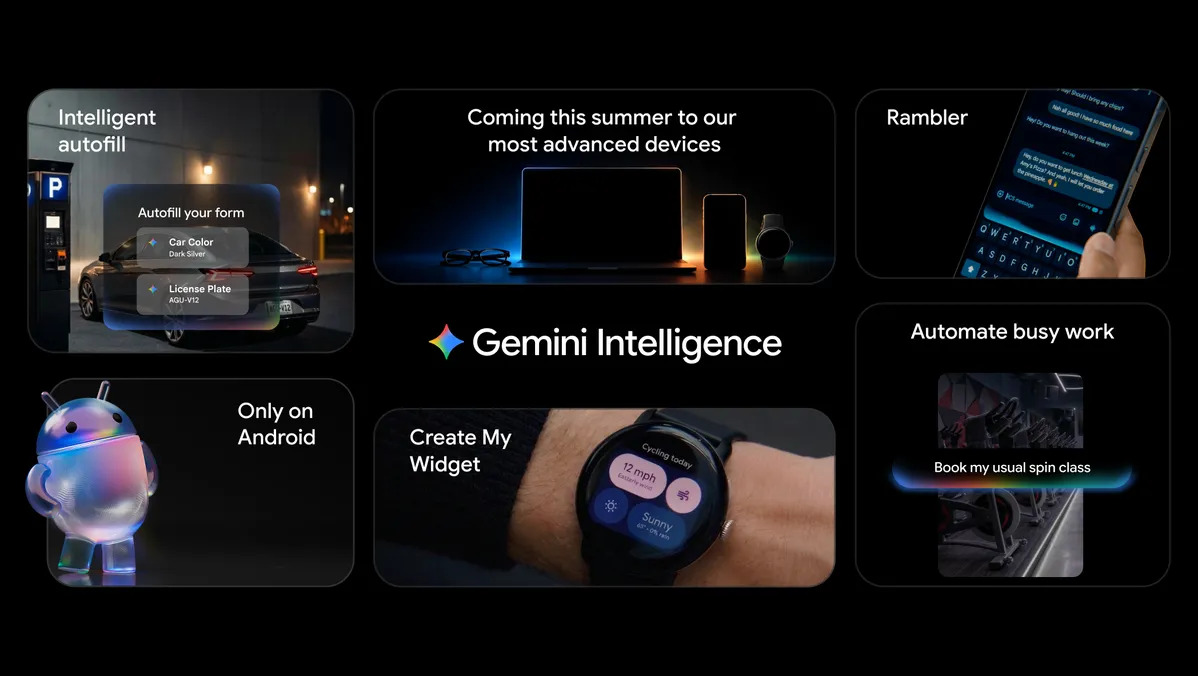
None of those features is a chatbot. Every one of them is the model acting as an operating layer, which is precisely the capability GPT-5.5 has the raw intelligence for but no privileged route to deliver. The phone in your pocket stops being a grid of apps you operate and starts being a surface an agent operates on your behalf. That is a genuine shift in what a smartphone is for — the biggest since the App Store — and it is happening by default, on the summer Galaxy S26 and Pixel 10 builds, whether or not you ever open the Gemini app.
The benchmark trap: why GPT-5.5’s scores are not the story
It would be lazy to pretend Google’s new Gemini will beat GPT-5.5 across the board. OpenAI’s own materials report higher scores for GPT-5.5 than for Gemini 3.1 Pro on the same agentic suites, and 84.9% on GDPval is a serious bar. But the benchmark obsession is exactly the trap Google is sidestepping. A model that scores two points higher on FrontierMath but lives behind a paste-box loses to a model that scores two points lower but already holds your screen context, your app permissions and your account graph. We made the same point about voice when we covered the OpenAI Realtime API voice models: the capability is dazzling, but capability without a default surface is a demo, not a product.
OpenAI knows this, which is why it keeps probing hardware and operating-system ambitions — reporting that OpenAI’s AI phone has been fast-tracked for 2027 points to exactly that gap. Until it has its own phone or its own OS layer, the GPT-5.5 advantage is an advantage in the wrong arena. Google’s frontier model only has to be good enough to be trusted with real actions on real data — not the best model on a chart. “Good enough plus default” beats “best plus optional” almost every time in consumer technology, and Google has spent twenty years proving it with Search.
Apple’s reboot is the deadline Google is racing against
The timing is not coincidental. Apple announced on 12 January 2026 that it would pay Google roughly £1 (about $1) billion a year for a custom 1.2-trillion-parameter Gemini model to power a rebuilt Siri, with the reboot expected at WWDC on 8 June 2026. That puts Google in an extraordinary position: it supplies the brains for its biggest rival’s AI assistant while racing to make its own Android implementation visibly better than the version Apple will demo three weeks after I/O. Google wants the narrative locked in before Apple gets on stage — “Gemini is the AI in your phone, and it is most powerful on Android” — so that the WWDC reboot reads as Apple catching up using Google’s own engine.
It is a clever, slightly ruthless play, and it carries a real risk. Powering Siri while out-shipping Siri invites exactly the antitrust scrutiny that the Search default payments already attract. If regulators decide Google is the indispensable AI supplier to both major mobile platforms, the Gemini-everywhere strategy becomes a legal liability as much as a competitive weapon. Google is racing the clock on product and the regulators on principle at the same time.
The catch: an agent with your permissions is only as good as its judgement
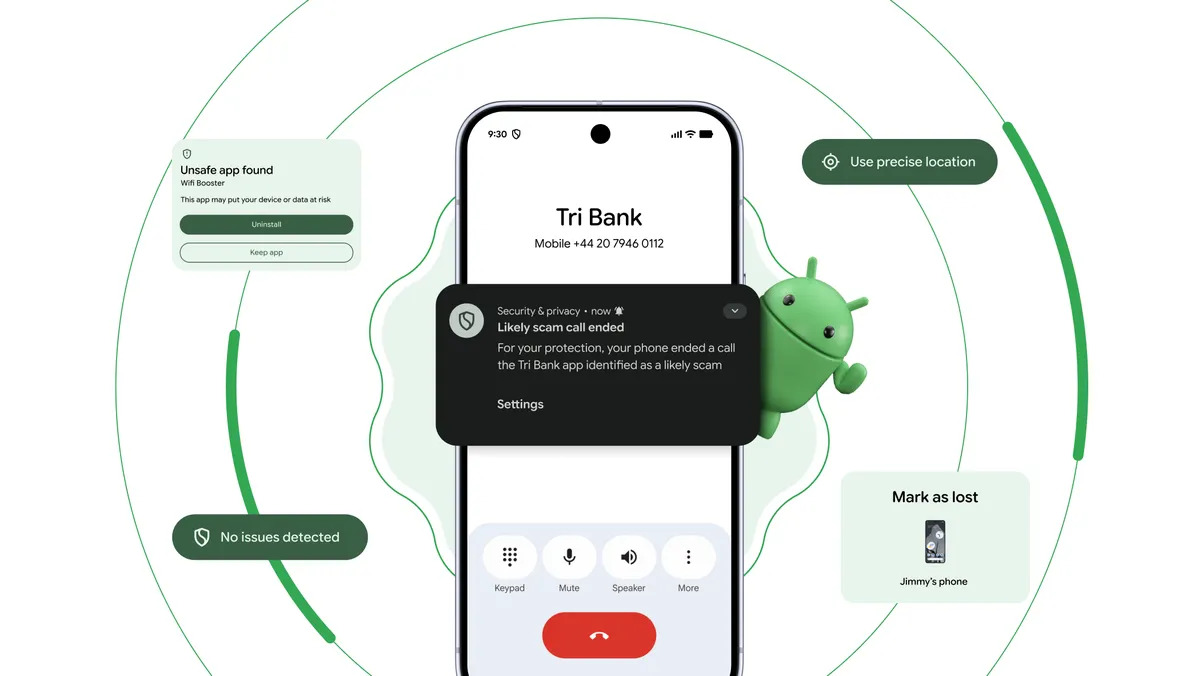
Here is the part Google’s I/O choreography will gloss over. An intelligence system that books rides, fills baskets and submits forms is only trustworthy if it is reliable, and frontier models still hallucinate. We have already seen this fail on Google’s own hardware — our piece on the Fitbit Air’s AI coach showed what a day-one hallucination costs when a model is given a real-world job. An agent with your Instacart credentials and your calendar write-access making a confident mistake is a different order of problem from a chatbot getting a date wrong. Samat’s “the human is always in the loop” approval step is the right instinct, but every approval prompt users learn to dismiss reflexively erodes the very safety it is meant to provide.
This is where GPT-5.5’s higher benchmark scores stop being trivia and start mattering. Reliability on agentic tasks is a safety property, not a leaderboard vanity metric, and Google’s new Gemini has to clear that bar before the convenience is worth the surrendered control. The model does not just need to be good enough to be the default; it needs to be good enough to be trusted with consequences. That is a far higher standard than winning a comparison table, and it is the one Google should be judged against on 19 May.
MTW verdict
Gemini vs GPT-5.5 is not the model-quality contest the benchmarks suggest — it is a distribution war, and Google is fighting it on the only battlefield that pays: the operating system. Putting a new frontier Gemini at the centre of Android before Apple’s 8 June reboot is the correct strategic move, and OpenAI’s superior scores do not change that, because a chat box cannot beat a default. But the verdict comes with a hard condition: an agent wielding your permissions has to be reliable, not just clever. If Google’s I/O model is good enough to be trusted with consequences, this is the most important Android shift in a decade. If it merely wins a slide, it is the most dangerous. Watch the reliability claims on 19 May, not the leaderboard.
MMTW Editorial
Buyer action
Where to buy or check next
Use this as the final check before ordering a phone, changing network or trusting a headline monthly price.













Reader discussion
Leave a comment
Comments are moderated. Keep it useful, accurate, and on topic.