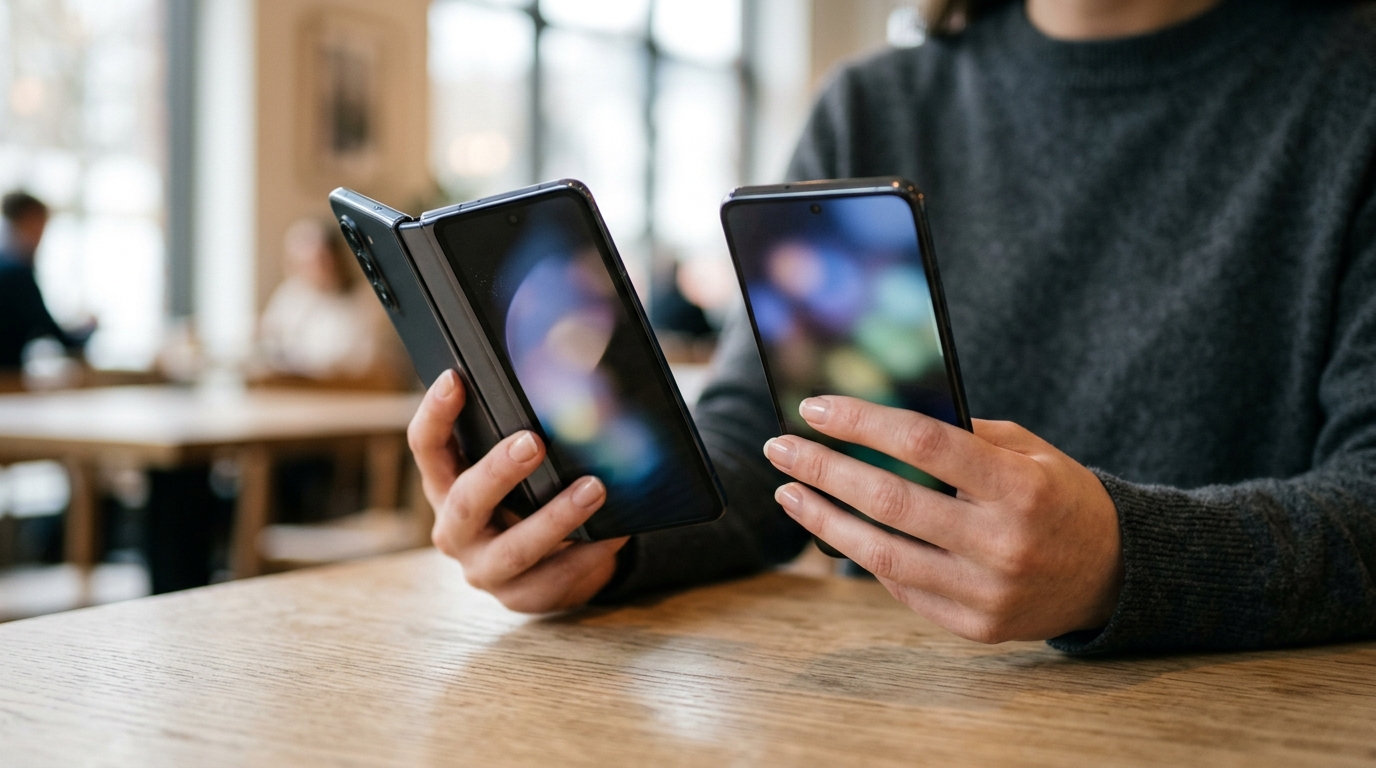
The foldable vs slab phone debate has matured significantly by 2026, but foldables still involve trade-offs that traditional slab phones do not. Whether a foldable is worth the premium depends on how you work, how you treat your devices, and how long you plan to keep the phone.
The Bigger Picture
- The current foldable options
- The slab comparison
- Where foldables win
- Where slab phones win
- The four-year question
- Who should buy which
- Related reading
The current foldable options
Samsung Galaxy Z Fold 7 (£1,799): 8.0-inch inner display, Snapdragon 8 Elite for Galaxy, 215g, 4.2mm open / 8.9mm folded, seven years of OS and security updates. Samsung Galaxy Z Flip 7 (£1,099 area): compact clamshell form factor with enlarged cover display. Google’s Pixel Fold lineage continues with the Pixel 10 Pro Fold on a Tensor G5, optimised for split-screen apps. OnePlus Open 2 is expected later in 2026 with a thinner profile and larger battery than the original.
The slab comparison
Samsung Galaxy S26 Ultra (£1,279 at 256 GB): 6.9-inch flat display, Snapdragon 8 Elite Gen 5 for Galaxy, 5,000 mAh battery with 60W Super Fast Charging 3.0, Armour Aluminium 2 frame and Corning Gorilla Armour 2 on the front. Google Pixel 10 Pro (£999): 6.3-inch Actua display, Tensor G5, 4,870 mAh cell and Google’s seven-year update promise.
Where foldables win
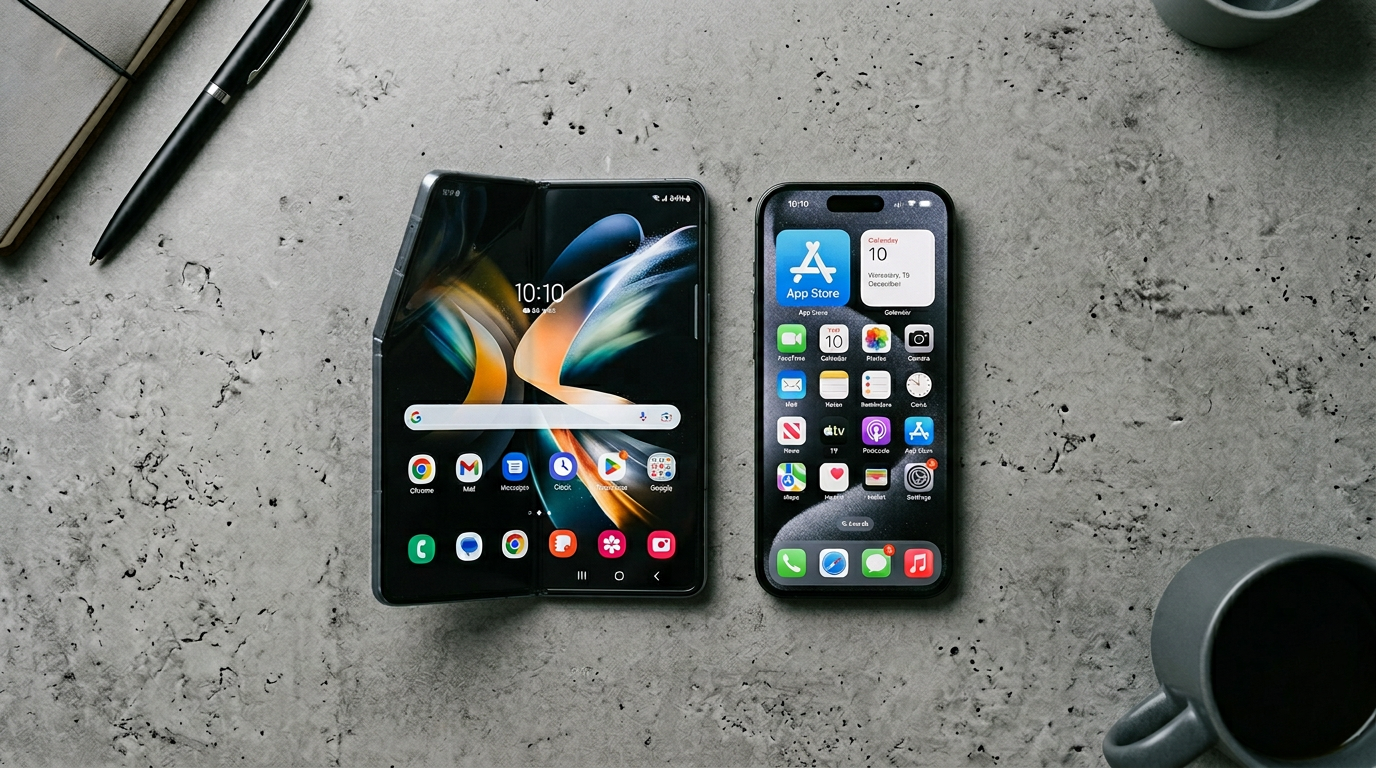
Multitasking on the large inner screen is the strongest foldable argument. Running email alongside a spreadsheet, video calling while taking notes, or reading a PDF at near-tablet size is genuinely more comfortable than on a 6.7-inch slab. For frequent travellers, a foldable can replace a phone plus a small tablet, saving bag space.
Where slab phones win
Durability: slab phones have no folding mechanism to fail, no crease in the display, and thicker glass over the display area. The Galaxy S26 Ultra’s Armour Aluminium 2 frame and Gorilla Armour 2 have survived Samsung’s 2m concrete drop test without the front display cracking. Battery: the S26 Ultra’s 5,000mAh cell plus 60W charging comfortably outlasts the Z Fold 7’s smaller cell under comparable workloads. Repairability: slab phone screen replacements cost £150 to £250, foldable inner screen replacements cost £400 to £600. Camera: slab flagships have larger camera modules with better telephoto lenses because they have more internal space.

The four-year question
A slab flagship bought in 2026 will still feel solid in 2030. A foldable’s hinge mechanism, inner screen crease, and thinner glass introduce long-term durability unknowns that slab phones simply do not have. Samsung’s hinge has improved enormously, and real-world failure rates are low, but the risk is non-zero, and the repair cost if something does go wrong is significant.
Foldable vs slab phone: who should buy which
Buy a foldable if you actively use split-screen apps for work, want to replace a phone plus tablet, and are comfortable with the higher repair risk. Buy a slab if you want maximum durability, the best camera, the longest battery, and the lowest total cost of ownership. When weighing a foldable vs slab phone, a slab flagship remains the safer and more practical choice for most people in 2026.
When the foldable vs slab phone choice is actually obvious
There is a clean decision tree for the foldable vs slab phone question that nobody publishes because it is bad for clicks. If you spend more than thirty minutes a day reading long-form text, watching video on the move, or referencing two apps side by side, the inner display of a book-style foldable is genuinely transformative. If you do none of those things, you are paying a 600 pound premium for a hinge.
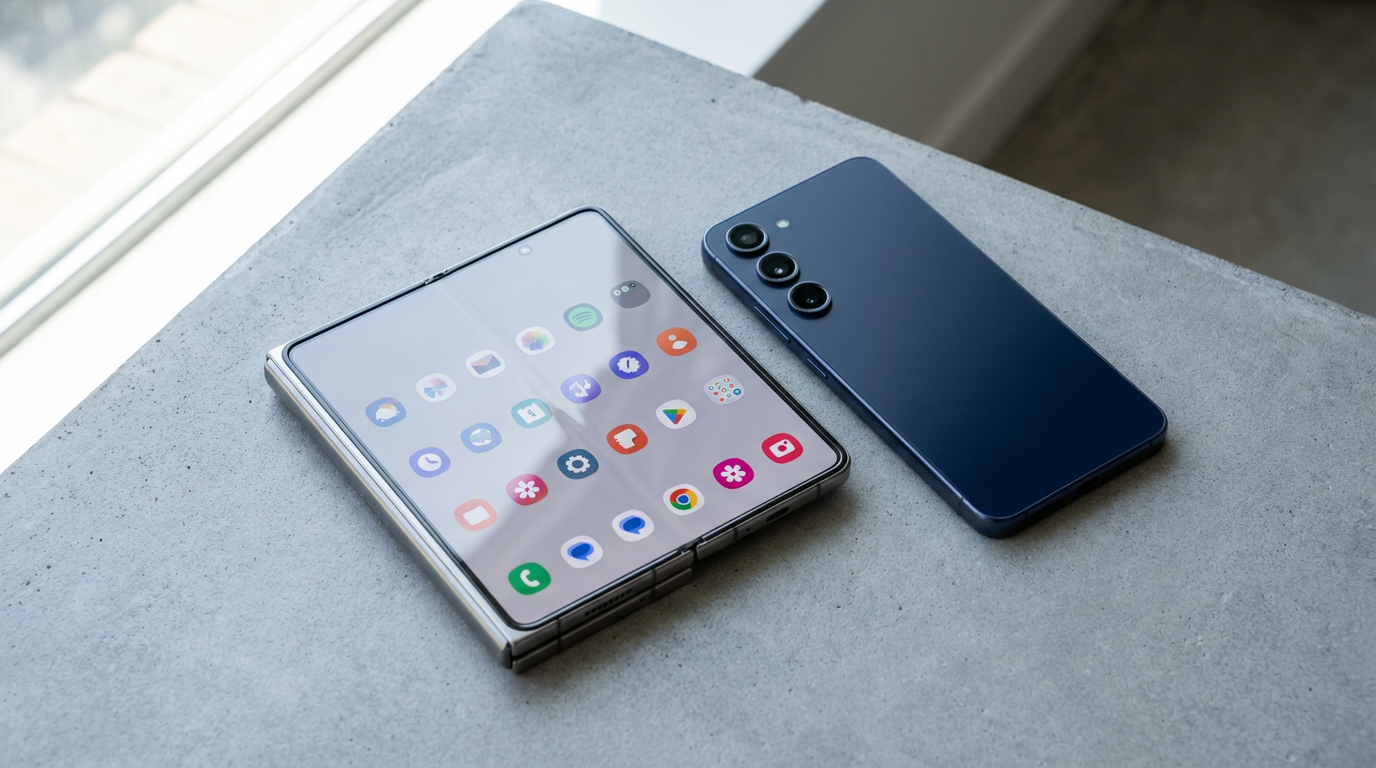
The clamshell foldables are a different argument entirely. The case for them is almost purely pocket footprint plus a passable cover screen for notifications. They are not productivity devices, they are fashion-led upgrades that happen to be slightly easier to live with than a 6.7-inch slab.
The honest 2026 verdict on foldable vs slab phone choices is that the durability gap is finally closed. Inner-screen failures are no longer the norm. Hinges are rated for hundreds of thousands of cycles. The only remaining gotcha is the crease, which is real and which the marketing departments still pretend is not, and which you should definitely see in a shop before spending 1,500 pounds.
Related reading
- Best Upgrade Paths for Four-Year Ownership
- Review: What Two Days of Heavy Use Reveal About Battery Reality
Sources: Samsung Galaxy Z Fold 7, Samsung Galaxy S26 Ultra.
Final verdict
A practical comparison of foldable and slab phones in 2026, weighing durability, cost, productivity, battery, and long-term ownership.
How we compare
Buyer action
Where to buy or check next
Use this as the final check before ordering a phone, changing network or trusting a headline monthly price.



Reader discussion
Leave a comment
Comments are moderated. Keep it useful, accurate, and on topic.