
Whether you fly for fun or have professional ambitions, Get Drone Pilot certification in the UK is one of the smartest investments you can make. With the Civil Aviation Authority (CAA) tightening regulations and more no-fly zones being enforced, having the right credentials means you can fly legally, confidently, and in places that uncertified pilots simply cannot access.
Drone Pilot Certification: Contents
- Why Certification Matters in 2026
- What the A2 CofC Allows You to Do
- Step 1: Get Your Flyer ID and Operator ID
- Step 2: Complete the A2 CofC Online Theory Course
- Step 3: Pass the Practical Flight Assessment
- How Much Does It Cost?
- Is It Worth It for Hobbyists?
- Beyond the A2 CofC: Commercial Operations
- Final Thoughts
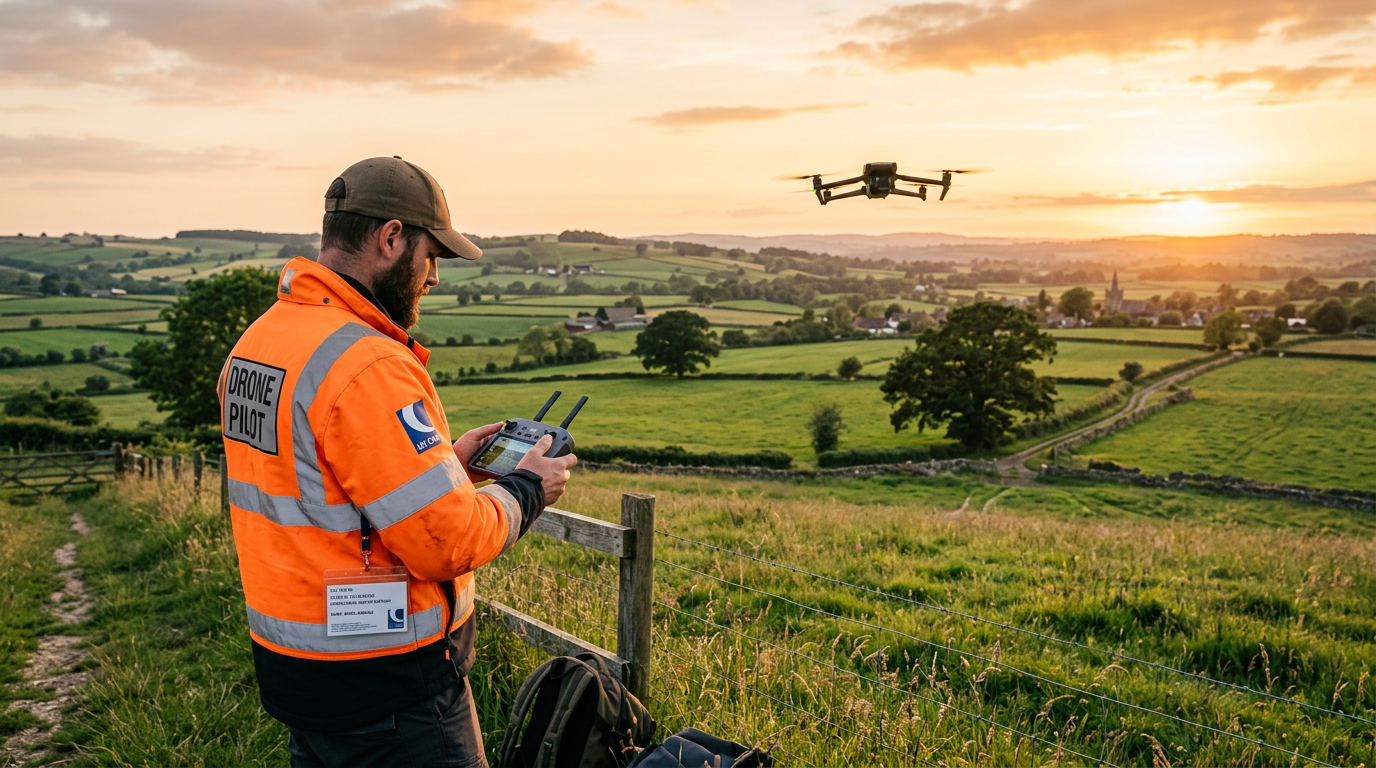
Why Certification Matters in 2026
Since January 2025, the CAA has been enforcing stricter rules under the UK’s UAS (Unmanned Aircraft Systems) regulations. If your drone weighs more than 250g — and most capable camera drones do — you need at least a Flyer ID to operate it. But the real unlock comes with the A2 Certificate of Competency (A2 CofC), which lets you fly closer to uninvolved people and use heavier aircraft in more locations.
Without the A2 CofC, you are limited to the Open A1 and A3 subcategories, which require you to keep a considerable distance from people and built-up areas. For anyone serious about getting usable drone footage, those restrictions can be frustrating.
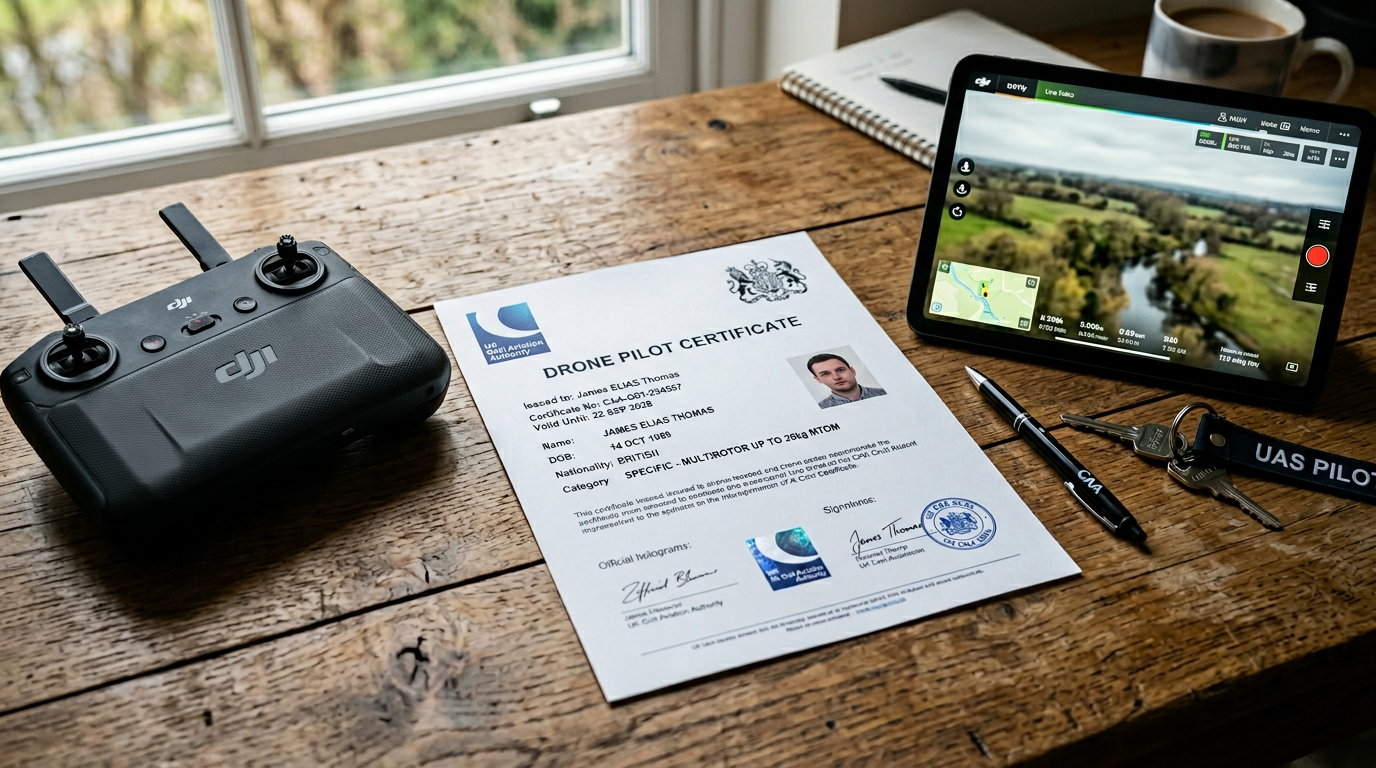
What the A2 CofC Allows You to Do
The A2 Certificate of Competency sits within the Open category of drone operations and permits you to fly drones under 4kg within 30 metres of uninvolved people — or as close as 5 metres in low-speed mode. This is a significant step up from the 150-metre distance requirement in the A3 subcategory, a development closely tied to Get Drone Pilot.
In practical terms, this means you can legally fly your DJI Mini 4 Pro or DJI Air 4 in parks, at events, near buildings, and in semi-urban environments without worrying about breaking the rules. For professional work — real estate photography, wedding videography, inspections — it is essentially a minimum requirement.

Step 1: Get Your Flyer ID and Operator ID
Before pursuing the A2 CofC, you need to register with the CAA. The Operator ID costs £10.33 per year and is required if you own a drone. The Flyer ID is free and involves a simple 40-question online theory test covering basic safety, airspace rules, and privacy laws. You can complete it on the CAA drone registration portal in about 30 minutes.
Step 2: Complete the A2 CofC Online Theory Course
Meteorology — understanding wind, visibility, and weather conditions that affect flight safety. UAS technical knowledge — how your drone’s sensors, GPS, and failsafe systems work. Operating procedures — pre-flight checks, risk assessments, and emergency protocols. Airspace and regulations — understanding restricted zones, NOTAMs, and altitude limits.
Step 3: Pass the Practical Flight Assessment
After passing the theory, you must complete a practical self-assessment of your flying competence. The CAA requires you to log a declaration confirming you have completed adequate practical training and are competent to fly within the A2 subcategory. Some training providers offer optional in-person practical sessions, which are worth considering if you are relatively new to flying.
The practical element focuses on demonstrating controlled flight, safe landing procedures, and the ability to maintain visual line of sight. If you have been flying drones for any length of time, this should be straightforward.
How Much Does It Cost?
The total cost for UK drone pilot certification breaks down roughly as follows:
Operator ID registration: £10.33 per year. Flyer ID: Free. A2 CofC course and exam: £150 to £250, depending on the provider. Some premium courses that include in-person practical training can reach £300 to £400.
For most hobbyists, a reputable online course in the £150 to £200 range is perfectly adequate. If you plan to pursue commercial work, investing in a more comprehensive course with practical training is worthwhile.
Is It Worth It for Hobbyists?

This depends on how and where you fly. If you own a sub-250g drone like the DJI Mini 4 Pro and primarily fly in open countryside, you may never strictly need the A2 CofC. However, even for hobbyists, the certification provides reassurance and opens up locations that would otherwise be off-limits.
If you are considering upgrading to a larger drone — or if you want to capture footage in more interesting locations — the investment pays for itself quickly. Our guide to the best drone accessories under £50 covers other affordable ways to improve your flying experience.
Beyond the A2 CofC: Commercial Operations
For those wanting to operate commercially in more complex scenarios — flying beyond visual line of sight, over crowds, or in controlled airspace — you will need to move into the Specific category of operations. This requires an Operational Authorisation (OA) from the CAA, which involves detailed risk assessments and more advanced training.
However, many commercial drone pilots find the A2 CofC sufficient for the majority of paid work, particularly in real estate, events, and landscape photography. The key is understanding your operational limits and planning flights accordingly.
Final Thoughts
Getting your UK drone pilot certification is a straightforward process that most people can complete within a week. The A2 CofC costs between £150 and £250, opens up significantly more flying opportunities, and demonstrates to clients and authorities that you take drone safety seriously. Whether you are a hobbyist looking to fly with more freedom or a professional building a drone services business, it is one of the most practical steps you can take in 2026. For more on getting started, check out our guide to the current state of the consumer drone market.
Buyer action
Where to buy or check next
Use this as the final check before ordering a phone, changing network or trusting a headline monthly price.











Reader discussion
Leave a comment
Comments are moderated. Keep it useful, accurate, and on topic.