
UPDATED · News · 10 Jun 2026 · Daniel Reid
The Dimensity 7400 Super inside the new OnePlus Turbo 6X Pro is not a chip MediaTek sells: check the company’s own product pages and you will find a Dimensity 7400 and a 7400X, but no Super variant anywhere. That has not stopped the suffix spreading across launch coverage this week as though MediaTek had quietly shipped new silicon. It has not, and the distinction matters more than it first appears. The phone launches in China today, 10 June, wearing a chip name that exists only in OnePlus marketing material, and every benchmark figure you will see attached to it was actually recorded on different phones running the standard chip. If you buy at this end of the market, the way these suffixes work is worth five minutes of your time, because the same trick keeps reappearing on spec sheets aimed at buyers spending under £300.
Key facts
- “Dimensity 7400 Super” appears on the OnePlus Turbo 6X Pro, launched in China on 10 June 2026; MediaTek’s product pages list only the Dimensity 7400 and 7400X (mediatek.com, GSMArena).
- The documented Dimensity 7400 arrived on 24 February 2025: four Cortex-A78 cores at up to 2.6GHz, four Cortex-A55 at 2.0GHz, a Mali-G615 MC2 GPU, built on TSMC’s 4nm process.
- Widely circulated proxy figures sit around 900,000 in AnTuTu 10 and roughly 3,000 in Geekbench 6 multi-core, varying by device and source; none were recorded on the Turbo 6X Pro.
- The Turbo 6X Pro’s global twin, the OnePlus Nord CE6, ships with a Snapdragon 7s Gen 4 instead, so UK buyers may never meet the “Super” chip at all (GSMArena, 2 June).
Where the Super suffix actually comes from
GSMArena’s 8 June coverage of the OnePlus Turbo 6X Pro lists the phone’s chipset as the “Dimensity 7400 Super”, and that wording comes straight from OnePlus’s own China launch material. Search MediaTek’s smartphone chipset catalogue, though, and the Super does not exist. The company’s announcement of 24 February 2025 introduced exactly two parts in this family: the Dimensity 7400 and the Dimensity 7400X, the latter a variant aimed at flip-style foldables. Nothing since then has added a third.
This is original equipment manufacturer co-branding, and it has form. OnePlus previously shipped a “Dimensity 7360 Super” on a China-market Turbo phone, a name that likewise never appeared in MediaTek’s catalogue. Realme has played the same game with “Dimensity 7400 Ultra” branding, presented as an overclocked tune of the standard part. In each case the manufacturer takes a catalogue chip, negotiates some unspecified tweak or simply a naming licence, and bolts on a superlative.
The crucial point is that whatever differences exist between a “7400 Super” and a plain 7400 are undocumented. Neither OnePlus nor MediaTek has published a clock speed delta, a binning note or a thermal specification that separates the two. The suffix could mean a modest frequency bump, a tuned scheduler, or nothing beyond the sticker. Until either company puts numbers against the name, the honest description is this: the Turbo 6X Pro runs a Dimensity 7400 with a marketing badge on it.
That has not stopped a wave of launch-day coverage reprinting “Dimensity 7400 Super” as though it were a fresh SoC announcement. It is an easy mistake to make on a deadline, but it hands the marketing department a win it has not earned. A chip name should map to a published specification you can hold a manufacturer to. This one does not, and readers deserve to know that before the benchmark charts start circulating.
What the real Dimensity 7400 actually offers
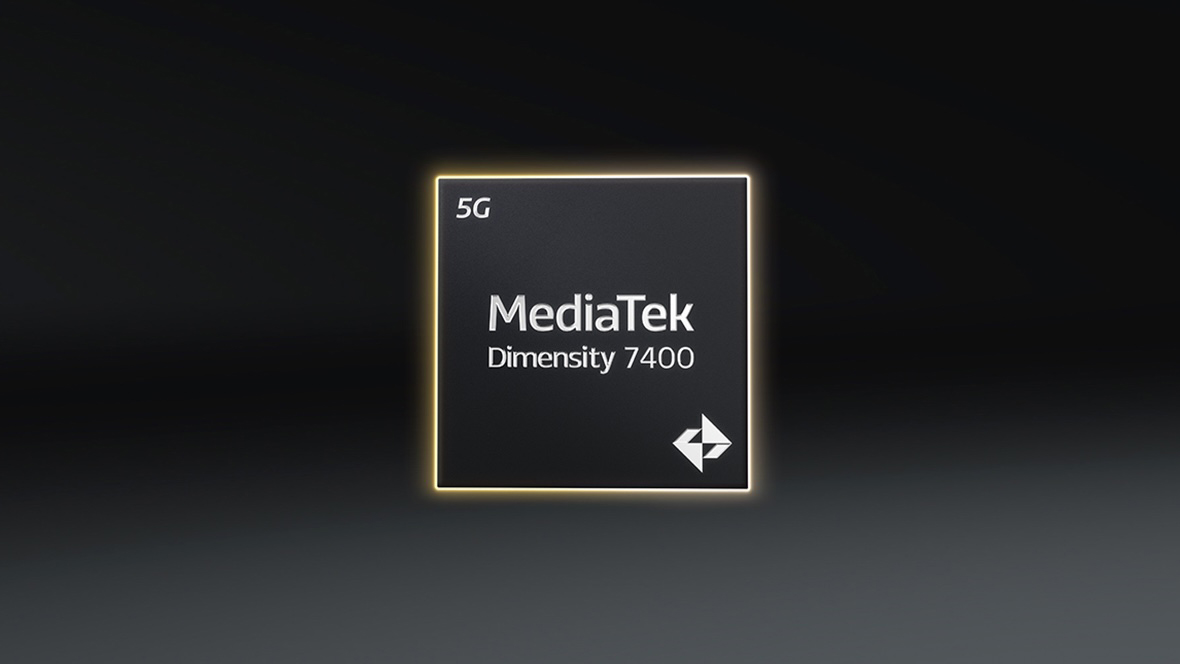
Strip away the suffix and the underlying part is a known quantity. According to MediaTek’s Dimensity 7400 product page and the accompanying press release of 24 February 2025, this is an octa-core design pairing four Cortex-A78 performance cores at up to 2.6GHz with four Cortex-A55 efficiency cores at 2.0GHz, all fabricated on TSMC’s 4nm process. Graphics come from an Arm Mali-G615 MC2, a two-core configuration of a GPU that first appeared in this segment a couple of generations back.
The supporting platform is where MediaTek has done most of the recent work. The chip carries the company’s NPU 6.0, which MediaTek rates at 15 percent better AI performance than the unit in the older Dimensity 7300. The integrated 5G modem supports 3GPP Release 16 features with three-carrier aggregation and a quoted peak downlink of 3.27Gbps, which is a genuinely strong modem specification for this tier. Memory support covers LPDDR5 at 6400Mbps and storage tops out at UFS 3.1.
On the camera side, the Imagiq 950 image signal processor handles sensors up to 200MP, which explains why so many mid-range phones in this class advertise enormous megapixel counts. MediaTek also claims the 7400 draws 14 to 36 percent less power than competing chips in gaming workloads, a figure from its own lab testing that we would treat as a directional claim rather than a guarantee, since the company does not name the competitors or the test conditions in its public material.
Taken together, this is a sensible, efficiency-led mid-range chip. The CPU cores are older Arm designs, and that is the spec line OnePlus’s Super branding cannot paper over. The Cortex-A78 dates from 2020, and rival chips at the same price now ship with newer core generations. The modem and the ISP are the 7400’s strongest cards; the CPU island is its weakest.
How it moves on from last year’s 7300
The clearest way to read the 7400 is as a tightened version of the Dimensity 7300, the chip that powered a long list of 2024 and 2025 mid-rangers including Motorola Edge and CMF by Nothing devices. Both chips use the same four-plus-four arrangement of Cortex-A78 and Cortex-A55 cores, the same Mali-G615 MC2 GPU and the same TSMC 4nm process. The 7400 lifts the peak performance clock from 2.5GHz to 2.6GHz and swaps in the newer NPU 6.0, which carries that 15 percent AI uplift on MediaTek’s own figures.
That makes the generational gap small by any honest reading. A 100MHz bump on the performance cores is the sort of change that shows up in synthetic benchmarks as a low single-digit percentage and in day-to-day use as nothing you would notice. The meaningful improvements are in the AI block and in efficiency tuning, which is precisely the kind of incremental refresh that invites manufacturers to add their own suffixes to manufacture a sense of novelty.
| Specification | Dimensity 7400 | Dimensity 7300 |
|---|---|---|
| CPU | 4x Cortex-A78 up to 2.6GHz + 4x Cortex-A55 2.0GHz | 4x Cortex-A78 up to 2.5GHz + 4x Cortex-A55 |
| GPU | Arm Mali-G615 MC2 | Arm Mali-G615 MC2 |
| Process | TSMC 4nm | TSMC 4nm |
| NPU | MediaTek NPU 6.0 (+15% vs 7300, MediaTek figure) | Previous-generation MediaTek NPU |
| Modem | 5G R16, 3CC-CA, up to 3.27Gbps downlink | 5G R16 class |
| Memory / storage | LPDDR5-6400 / UFS 3.1 | LPDDR5 / UFS 3.1 |
| ISP | Imagiq 950, up to 200MP | Imagiq, up to 200MP |
None of this is a criticism of the silicon itself. Iterating on a proven efficient design is how the mid-range works, and the 7300 earned a good reputation for battery life in the phones that carried it. MediaTek’s own launch video for that predecessor chip is a useful watch here, because the 7400 is its direct successor and inherits almost everything the company highlights in it, from the efficiency pitch to the camera pipeline.
What the proxy benchmarks tell us, and what they cannot
Here is where launch-week coverage tends to go wrong. Because the Turbo 6X Pro is brand new, every benchmark number currently attached to its chip was recorded on other devices running the standard Dimensity 7400. Those figures also vary considerably depending on who measured them and on what phone. The widely circulated numbers attributed to NanoReview put the chip at around 922,000 in AnTuTu 10, with Geekbench 6 multi-core results in the 2,949 to 3,062 range. Cputronic, by contrast, lists Geekbench 6 scores of 1,058 single-core and 3,255 multi-core alongside a much lower AnTuTu figure of 724,293.
The sensible summary is that the Dimensity 7400 lands around 900,000 in AnTuTu and roughly 3,000 in Geekbench 6 multi-core, with real spread either side of those figures depending on the device’s cooling, memory configuration and software tune. A 200,000-point gap between two aggregator sites for the same chip should tell you everything about how much weight a single AnTuTu number deserves.
What none of these numbers are, and we want to be precise about this, is a measured result from the OnePlus Turbo 6X Pro. The phone launched today and no independent outlet has published verified benchmark runs of the “Super” variant at the time of writing. If the Super branding does denote a small overclock, the Turbo 6X Pro might score a few percent higher than the proxy band; if it denotes nothing, it will land inside it. Either way, treat any chart you see this week with the chip’s name on it as describing the standard part until reviewers get hardware on a bench.
This is also why suffix branding is mildly corrosive. When a chip’s name no longer maps to a documented specification, benchmark databases fill the gap with whatever entries get submitted, and buyers end up comparing numbers that were never generated on comparable hardware. The fix is simple discipline: label proxy figures as proxies, which is what we have done here.
How it compares with Snapdragon rivals under £300
For UK buyers the relevant question is not how the 7400 fares in a Chinese launch deck, but how it stacks up against the Qualcomm silicon that actually ships in phones sold here for £250 to £350. That bracket is dominated by the Snapdragon 6 Gen 3 and the Snapdragon 7s Gen 3 and Gen 4, the chips you will find across Galaxy A-series, Redmi Note and Nord CE class hardware, the same field we mapped in our guide to the best budget phones under £300.
On paper the contest is closer than the brand names suggest. The Snapdragon 6 Gen 3 is also a 4nm part built on Cortex-A78 class performance cores at up to 2.4GHz, so the Dimensity 7400 actually edges it on peak CPU clocks and matches it on process node. The Snapdragon 7s Gen 3, found in phones like the Redmi Note 14 Pro and the Nothing Phone (3a) family, moves to newer Cortex-A720 class cores at up to 2.5GHz, and that newer core generation gives it a real architectural advantage in sustained and single-threaded work even where headline clocks look similar. The 7s Gen 4 in the Nord CE6 extends that same newer-core advantage.
Where MediaTek claws back ground is connectivity and efficiency. The 7400’s modem, with Release 16 features, three-carrier aggregation and that 3.27Gbps peak, is specified above what most phones in this bracket deliver in practice, and MediaTek’s gaming power claims, while self-reported, fit the 7300 family’s established reputation for frugality. For a buyer who cares about battery life and signal hold on a busy network more than about loading screens, that trade can genuinely favour the MediaTek option.
The practical reading for the UK market: a Dimensity 7400 phone and a Snapdragon 7s Gen 3 phone at the same price are close enough that the chip should not decide the purchase on its own. RAM, storage class, screen and update policy will shape the ownership experience far more, which is the running theme of our mid-range Android round-up and of comparisons like our Galaxy A57 versus A56 verdict, where the silicon was never the deciding line.
Will the Super version ever reach the UK?
Quite possibly never, and that is the part of this story most coverage has skipped. Per GSMArena’s 2 June reporting, the Turbo 6X Pro is essentially the same hardware as the global OnePlus Nord CE6, the phone we covered at its India launch with its 8,000mAh battery. But the Nord CE6 ships with a Snapdragon 7s Gen 4, not with any Dimensity at all. OnePlus has split the platform by market: MediaTek with a Super badge for China, Qualcomm for the global version.
OnePlus has announced nothing about bringing the Turbo 6X Pro itself to the UK or Europe, and we are not going to pretend otherwise. The realistic scenario for British buyers is that the “Dimensity 7400 Super” remains a China-market curiosity while the same body, battery and screen arrive here wearing Qualcomm silicon. If that pattern holds, the entire Super debate becomes academic for anyone shopping at Currys or on a carrier deal.
It is still worth understanding, though, because the suffix habit travels even when specific phones do not. Realme sells in the UK and has already used Ultra branding on MediaTek parts; other brands will follow wherever it helps a spec sheet stand out. The pattern of regional chip swaps also cuts both ways: a phone reviewed glowingly abroad can arrive in Britain with different silicon, as we have seen across the Galaxy A-series, where Samsung mixes Exynos and Snapdragon by region, something to watch in the upcoming Galaxy A27 too. Reading past the model name to the actual platform is a skill UK buyers increasingly need.
How to check the silicon before you buy
When a spec sheet shows a chip name with a Super, Ultra, Max or similar suffix, a few minutes of verification will tell you what you are actually getting. These are the checks we would run on any sub-£350 purchase, all current as of today.
- Search the base chip name on MediaTek’s smartphone chipset pages at mediatek.com. If the suffixed version is not listed there, it is manufacturer branding, and you should assume base-chip performance (last checked: 2026-06-10).
- Pull up the phone’s GSMArena spec sheet and read the chipset line exactly as written; GSMArena records the marketing name, which itself flags when a SKU is OEM-specific.
- Check the modem and 5G line. At this tier a Release 16 modem with carrier aggregation, like the 7400’s, is a better long-term buy than a marginal CPU clock difference.
- Samsung Galaxy A56 5G (Exynos 1580, the same class): listed at Samsung’s UK store and Currys (last checked: 2026-06-10).
- Xiaomi Redmi Note 14 Pro 5G (Snapdragon 7s Gen 3): listed at Xiaomi’s UK store and Amazon UK (last checked: 2026-06-10).
- Nothing Phone (3a) (Snapdragon 7s Gen 3): listed at nothing.tech UK (last checked: 2026-06-10).
- Confirm the update commitment on the manufacturer’s own support pages rather than the retailer listing; at this price, years of patches matter more than 100MHz.
That last point deserves emphasis. Software support now varies more between £300 phones than raw chip speed does, and the gap compounds over an ownership period. Our breakdown of which Android 17 features UK owners actually receive shows how unevenly platform updates land across this segment, and if your budget can stretch towards £499, the long support window is a large part of the case we made for the Pixel 10a in our UK assessment.
Should a Super suffix affect your buying decision? No. Not this one, and not the next one either. Until a manufacturer publishes what the suffix changes, a “Dimensity 7400 Super” should be evaluated as a Dimensity 7400, which is a competent, efficiency-focused mid-range chip with an excellent modem, an ageing CPU core design and proxy benchmarks of around 900,000 AnTuTu, varying by device and source. That is a perfectly good platform for a £250 to £300 phone. It is not a new chip, and nobody should price it as one.
For UK buyers the advice is concrete. If the OnePlus Turbo 6X Pro stays in China, the decision never arises; the OnePlus Nord CE6 with its Snapdragon 7s Gen 4 is the version to watch here. If you are choosing between a Dimensity 7400 phone and a Snapdragon 7s Gen 3 or Gen 4 rival at the same price, let the modem, the RAM and storage class, and the update policy decide, in that order of scrutiny. What would change our view: OnePlus or MediaTek publishing an actual specification for the Super variant, or independent reviews showing the Turbo 6X Pro meaningfully outrunning standard 7400 devices. Neither exists today.
| What we like | What we’d watch |
|---|---|
| Strong 5G R16 modem with 3CC-CA and 3.27Gbps peak for the tier | “Super” suffix has no published specification from OnePlus or MediaTek |
| TSMC 4nm process and MediaTek’s credible efficiency record in this family | Cortex-A78 cores trail the A720-class designs in Snapdragon 7s rivals |
| Imagiq 950 ISP and NPU 6.0 are real upgrades over the Dimensity 7300 | All current benchmarks are proxy figures from other devices, not the Turbo 6X Pro |
Buyer action
Where to buy or check next
Use this as the final check before ordering a phone, changing network or trusting a headline monthly price.













Reader discussion
Leave a comment
Comments are moderated. Keep it useful, accurate, and on topic.