
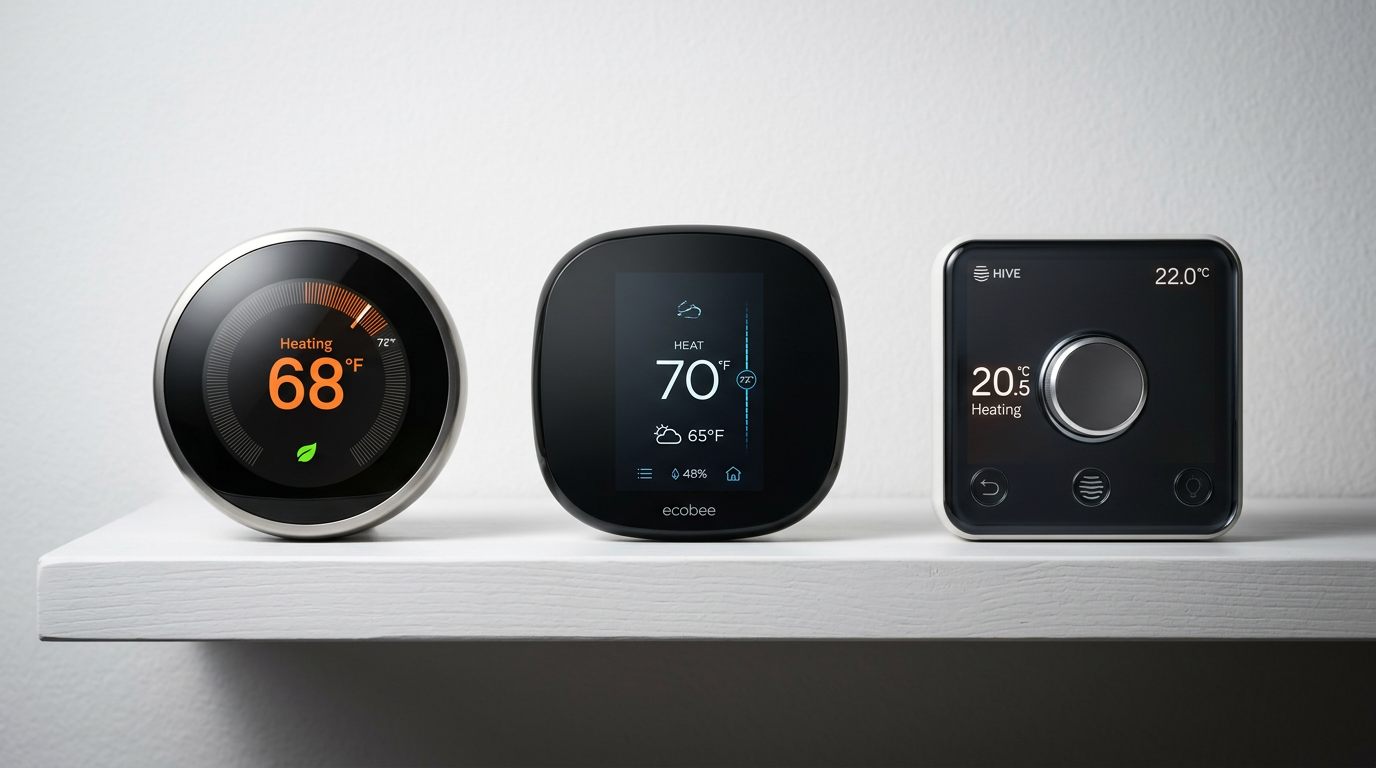
Choosing one of the best smart thermostats in 2026 is no longer a question of whether it will save you money, because it almost certainly will. The real question is which one fits your home, your habits, and whatever smart speaker ecosystem you have already committed to. We have spent time with three of the strongest options on the UK market right now: the Google Nest Learning Thermostat (3rd generation with Heat Link), the Ecobee Smart Thermostat Premium, and the Hive Thermostat Mini. Here is how they compare.
Best Smart Thermostats: Contents
- Google Nest Learning Thermostat
- Ecobee Smart Thermostat Premium
- Hive Thermostat Mini
- Energy Savings: What to Realistically Expect
- Compatibility and Installation
- Which Smart Thermostat Should You Buy?
Google Nest Learning Thermostat
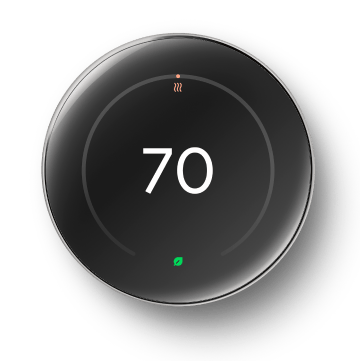
Important context first: Google confirmed in 2025 that no new Nest thermostats will launch in Europe. The fourth-generation Nest Learning Thermostat was designed for US heating systems and is not compatible with UK boilers. In the UK, the relevant product is the Nest Learning Thermostat (3rd generation) with Heat Link, which continues to be sold and supported while existing stock lasts.
Underneath the ageing industrial design sits the same core intelligence that made Nest famous: it learns your schedule within a week, adjusts temperatures based on occupancy, and uses outside weather data to optimise energy usage. The Google Home app remains one of the better smart thermostat apps available, with clear energy reports and voice control through any Google or Nest speaker.
The 3rd-gen UK model sells via the Google Store UK and Amazon, and a Heat Link wired to your boiler handles the actual switching. Where it falls short is multi-room sensing: Nest relies on its built-in presence sensor and any Nest cameras you have to detect occupancy, and extra room sensors are no longer sold alongside it in Europe. If you are building a new UK smart home from scratch, buying into Nest now means buying into a platform that will not receive new hardware.
Ecobee Smart Thermostat Premium
The Ecobee Smart Thermostat Premium is the feature-rich option, with a 2.9-inch square LCD, radar-based occupancy sensing, indoor air-quality monitoring, a built-in smart speaker, and a SmartSensor in the box to start multi-room temperature management on day one. It works with Alexa, Google Assistant, Apple HomeKit, Matter and SmartThings, making it the most ecosystem-agnostic option in this group.
The app is clean and informative, offering detailed energy reports and a Home/Away Assist feature that adjusts the schedule based on your phone’s location. Ecobee’s UK availability has been patchy, and UK pricing can vary widely depending on importer; budget in the £200 to £250 range for a current-stock unit. The included sensor and built-in speaker arguably justify the premium. If you are already running a whole-home smart speaker setup, Ecobee slots in effortlessly.
Hive Thermostat Mini
Hive is the most UK-specific option here, built by British Gas owner Centrica and designed specifically around UK combi, system, and heat-only boilers. The Thermostat Mini sells from around £119 for the self-install kit, with professional installation available as a paid add-on, and a hot-water control module for boilers with a tank.
You set your schedule manually, and the thermostat follows it. There is geofencing to turn the heating off when everyone leaves, but it will not learn your patterns over time. For many households this is perfectly fine, because not everyone wants an algorithm deciding when to turn the heating on. The optional professional installation is a genuine selling point, especially in older UK homes where boiler compatibility can be a concern.
Energy Savings: What to Realistically Expect
All three manufacturers claim energy savings, but the numbers depend heavily on your starting point. If you are upgrading from a basic timer thermostat, a smart thermostat can realistically save 10 to 15 per cent on heating bills. The biggest savings come from geofencing and occupancy detection, features that all three offer in some form. Nest’s adaptive learning can squeeze out a few extra percentage points over time, but the difference between the three on pure energy savings is marginal. The real value lies in convenience and comfort.

Compatibility and Installation
Before buying any smart thermostat, check boiler compatibility. The UK Nest 3rd gen works with most combi, system, and heat-only boilers but requires a Heat Link wired to your boiler. Ecobee in the UK typically requires a C-wire or the included Power Extender Kit, and not every installer is familiar with it. Hive sidesteps the entire issue by offering professional installation. If your smart home setup is already well-established, compatibility with your existing ecosystem matters more than any single feature.
Which Smart Thermostat Should You Buy?
Choose the Nest Learning Thermostat 3rd gen if you are already invested in the Google ecosystem, want adaptive learning that improves over time, and can live with the fact that Google is not launching new European Nest hardware. It is the set-and-forget option for Google households while stocks last.
Choose the Ecobee Smart Thermostat Premium if you have a multi-room home and want proper room-by-room temperature management out of the box. The included sensor, built-in Alexa, and broad ecosystem support, including HomeKit and Matter, make it the most versatile option.

Choose the Hive Thermostat Mini if you want something affordable, simple, and (optionally) professionally installed without any fuss. It is the best option for anyone who wants smart heating control without a steep learning curve or a weekend spent rewiring.
All three are solid choices, and any of them will be a meaningful upgrade over a basic thermostat. The right one depends on how deep into the smart home you want to go, and how much you trust an algorithm to manage your heating bill.
How we pick
Buyer action
Where to buy or check next
Use this as the final check before ordering a phone, changing network or trusting a headline monthly price.














Reader discussion
Leave a comment
Comments are moderated. Keep it useful, accurate, and on topic.