
Yes, you can really run Affinity free under Canva now, the whole professional design suite, for the grand total of nothing. Canva announced it in its newsroom piece “Introducing the all-new Affinity” on 30 October 2025, and the headline is exactly as blunt as it sounds: a pro-grade Adobe alternative that used to cost real money now costs you £0.
If you have spent years quietly resenting your Adobe Creative Cloud direct debit, this is the most interesting thing to happen to creative software in ages. But “free” always comes with small print, so let me walk you through what you actually get, what still costs money, and whether it can genuinely replace your Adobe workflow.
- Canva relaunched Affinity as a single free app on 30 October 2025, merging the former Photo, Designer and Publisher (Canva newsroom).
- The core suite is free with no payment details needed; a free Canva account is required to activate it.
- Local creative features are free forever; cloud AI features need a paid Canva plan.
- Available on Mac and Windows at launch, with iPad “coming soon”.
- “There is no catch. We don’t sell your data. We don’t train AI features on your files.” – Cameron Adams, Canva (Digital Camera World, 6 November 2025).
Here is the short version first. Affinity is now a single app that merges the old trio (Photo, Designer and Publisher) into one tool, and the core of it is free forever. The catch, if there is one, is narrow and worth understanding before you cancel anything.
What exactly landed on 30 October
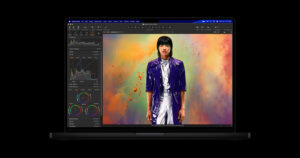
Canva bought Serif, the British company behind Affinity, back in 2024. On 30 October 2025 it relaunched the lot as one free application that folds photo editing, vector design and page layout into a single workspace. No three separate licences, no perpetual-licence upsell, no trial countdown.
You do need a free Canva account to switch it on, but you do not need to hand over any payment details to use the core app. It runs on Mac and Windows from launch, with an iPad version listed as “coming soon”. If you have read our piece on how the desktop-class tools are catching up, like the Asus ProArt P16, this is more grist for that mill: serious creative software is decoupling from monthly fees.
What is free, and what still needs a paid plan
This is the bit people get wrong, so read it twice. The local, on-device creative features (the actual editing, designing and laying out) are free. That covers the vast majority of what a freelancer does day to day.
What is not free are the cloud-connected AI features, which require a paid Canva plan. So the generative, server-side cleverness sits behind Canva’s subscription, while the craft tools do not. If you never touch AI generation, you may genuinely never pay a penny. If your workflow leans on AI fill and similar tricks, budget for a Canva plan on top.
Can it replace your full Adobe setup?
Honestly, for a lot of people, most of the way. For some studios, not yet, and I want to be straight about the gaps rather than sell you a fantasy.
Affinity is strong on photo editing, vector illustration and layout. It opens PSD files, so you are not locked out of existing Photoshop work. But there are real holes if your day depends on the whole Adobe machine. There is no Lightroom-style digital asset manager or catalogue, so if you organise thousands of shots in Lightroom, that habit does not port over cleanly; our Capture One vs Lightroom comparison is worth a look if cataloguing is your sticking point.
There is also no After Effects or Premiere equivalent: Affinity does photo, vector and page layout, not video or motion graphics. If you cut video, you keep that elsewhere, and the DaVinci Resolve Studio’s one-off licence is the obvious place to look. And some studios are wired into Adobe-specific file interchange and third-party plugins that simply will not exist here.
So the honest test is this: list the Adobe apps you opened this month. If they are Photoshop, Illustrator and InDesign, Affinity covers that ground. If the list includes Premiere, After Effects or a Lightroom catalogue you cannot live without, you are looking at a partial switch, not a clean break.
The data and privacy question
This is the part that made everyone suspicious, and fairly so. When a polished professional tool suddenly goes free, the reasonable assumption is that you are the product. Canva’s co-founder addressed it head on.
“There is no catch. We don’t sell your data. We don’t train AI features on your files.”
Cameron Adams, Co-founder and Chief Product Officer, Canva (Digital Camera World, 6 November 2025)
That is a clear, on-record commitment, and it is the right thing to ask for. I would still read the terms yourself before moving sensitive client work, because a statement to the press and a clause in a contract are not the same document. If you want to understand what leverage you have either way, our guide to your UK data rights spells out what you can demand from any company holding your files.
What you actually save per year
Here is where the maths gets fun for a UK freelancer. Adobe’s published UK Creative Cloud pricing puts the all-apps plan well over £50 a month at the time of writing, which is roughly £600 or more a year, every year, forever. Single-app plans for Photoshop or Lightroom cost less, but they are still a recurring bill that never ends.
Put concrete numbers on it. Stay on the all-apps bundle for three years and you will have handed Adobe somewhere north of £1,800; stretch that to five years and you are past £3,000, and you never own a thing at the end of it. A single-app plan halves the monthly figure but not the principle: you are renting, and the meter never stops. That is the real comparison Affinity is asking you to make, not month-to-month but over the working life of a freelance career.
Affinity, by contrast, is a one-off install at £0. If you were paying for the all-apps bundle and Affinity covers your real work, you are looking at saving several hundred pounds a year, indefinitely. Even dropping a single-app subscription adds up fast over a few years. That is not a rounding error: that is a holiday, or a chunk of new kit, like the difference between a MacBook Pro M5 Max vs M4 Max when you finally upgrade.
The catch, to be fair, is the AI plan if you want it. But the floor price is genuinely zero, and that floor is what changes the calculation. The trap to avoid is cancelling Adobe in a hurry and then quietly resubscribing a month later because one job needed a feature you forgot you relied on — so run the switch as a test, not a leap.
How to actually get it
It is refreshingly simple. Go to the official Canva newsroom announcement at the all-new Affinity page and follow the download link, or search “Affinity” from Canva directly. Create a free Canva account if you do not have one, sign in to activate the app, and install the Mac or Windows version. No card required for the core tool.
Here is where people get tripped up, and it is worth flagging early: out of old habit you will go hunting for three separate downloads. There is only one app now. Download it once and the photo, vector and layout tools are all inside. If you want the AI extras, that is when a paid Canva plan enters the picture, and you can read Canva’s own framing in the Digital Camera World interview before you decide. If your work is more about documents and admin than design, you might also weigh whether something like Microsoft Copilot in Windows 11 fits your day better than a creative suite at all.
Would I switch? Honestly, mostly yes
If I were a freelancer running Photoshop, Illustrator and InDesign, I would install Affinity today, rebuild a couple of real jobs in it, and see whether anything breaks before I touched my Adobe subscription. The privacy commitment is on the record, the price is zero, and the feature set covers the bulk of everyday design.
But I would not cancel Adobe on day one if I cut video, lean on a Lightroom catalogue, or work inside a studio that lives on Adobe interchange and plugins. Those gaps are real, and a smaller monthly bill is no bargain if it costs you a day a week in workarounds. For a solo small business weighing tools more broadly, our look at how a UK small business can use Claude shows the same principle: pick the tool that fits the work, not the one with the loudest launch.
My take: treat Affinity going free as the strongest reason in years to audit what you actually pay Adobe for. Most of you will find you are renting more than you use.
Buyer action
Where to buy or check next
Use this as the final check before ordering a phone, changing network or trusting a headline monthly price.










Reader discussion
Leave a comment
Comments are moderated. Keep it useful, accurate, and on topic.