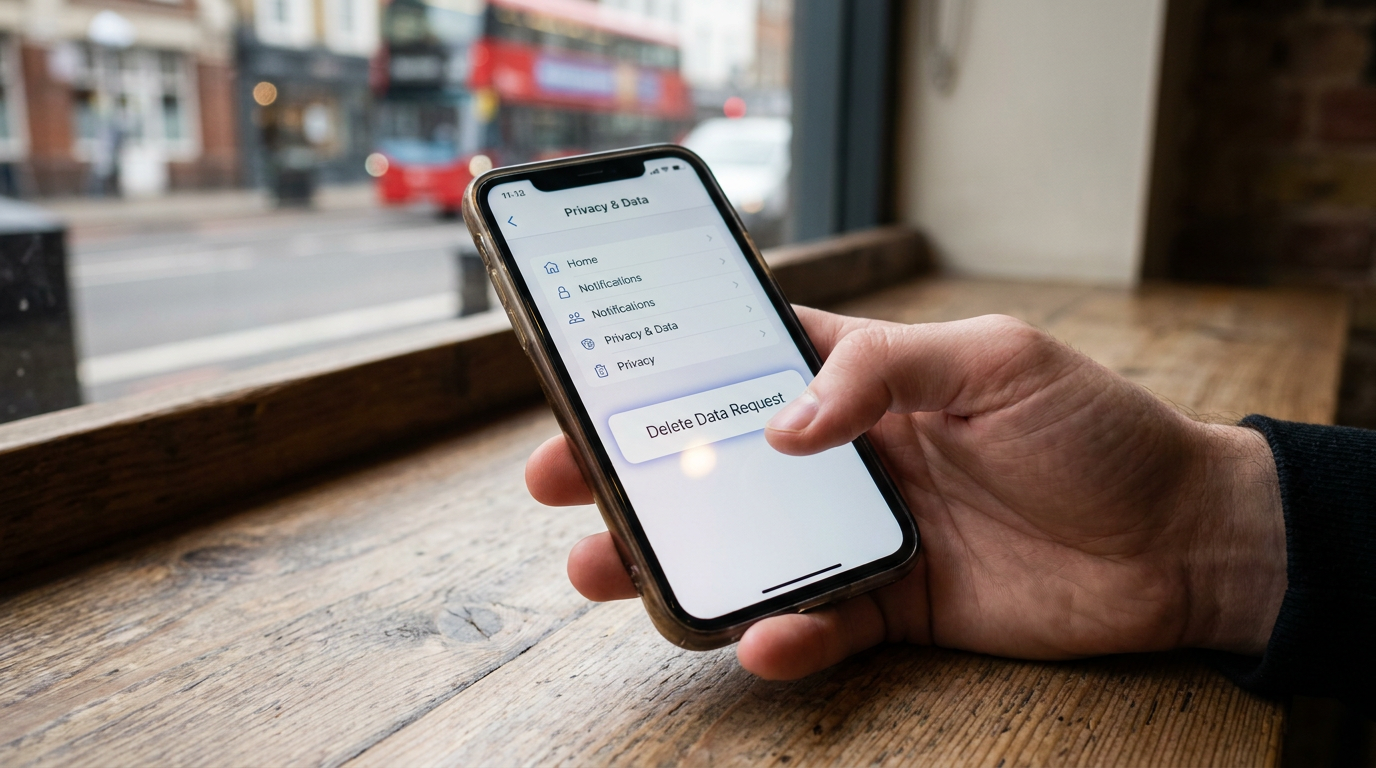
You can turn off an AI feature in thirty seconds, but that does nothing about the data a company has already collected from you. That is the question I kept hitting this week: not “how do I stop it”, but “how do I get back what they already have”. As of June 2026 the UK rules on this are clearer than most people realise, and the regulator has spelled out exactly what an AI company has to let you do. Here is how to actually use those rights, in plain steps, without needing a solicitor.
The three rights you already have
Start here, because everything else follows from it. The Information Commissioner’s Office, in its guidance on building individual rights into generative AI, says companies must give you the tools to exercise your rights: the right of access (ask what they hold about you), the right to erasure (ask them to delete it), and the right to object (tell them to stop using it). The same guidance says they must explain all this in a way that is meaningful, concise and easy to find. So if a service buries these controls or makes them confusing, that is the company falling short of what the ICO expects, not you being awkward.
Delete what an AI assistant already saved
The most common place your conversations pile up is your AI assistant’s activity history. Take Gemini as the worked example, because Google documents it clearly. On Google’s Gemini Apps Help page, you can open the app, go to your activity, and delete past conversations there, either individual chats or the lot. Here is the detail worth knowing: Google says that even after you delete and switch saving off, copies can be kept for up to 72 hours so the service can finish handling them. So “deleted” is not quite instant, but it does mean those chats stop being tied to your account going forward. Do the deletion first, then turn the saving off, so you are not leaving a fresh trail behind you.
How to send an actual erasure request
For data that is not sitting in a tidy “delete” button, say, information a service used to train or personalise its AI, you make a formal request. You do not need a special form. An email to the company’s privacy or data-protection contact saying you want to exercise your right to erasure under UK data protection law is enough to start the clock. Be specific about what you mean: your account data, your past conversations, anything used to personalise the model to you. The ICO’s framing is that the company must give you the means to do this; if they ignore you or stall, the ICO is the body you escalate to. Here is where I got stuck the first time: I assumed I needed to quote chapter and verse of the law. You do not. Plain English, clearly stating you want your data erased, is a valid request.
What to do if they say no
Companies can refuse parts of a request in narrow cases, but they have to tell you why, and “it is too much hassle” is not a lawful reason. If you get silence, a runaround, or a flat no with no explanation, that is your cue to complain to the ICO directly. You do not pay for this, and you do not need the company’s permission. The mere fact that the ICO has published detailed expectations for how AI firms must handle your rights tells you which way the regulator leans. That backing is the whole point: you are not negotiating a favour, you are using a right the law already gives you.
Was it worth the effort?
For the easy stuff, clearing your assistant’s saved chats, absolutely, and it takes minutes. For a full erasure request, it is more of a slow burn: you send the email, then you wait, and you may have to chase. But the value is not just the data that gets deleted. It is knowing that on a phone stuffed with AI you did not ask for, you are not stuck with whatever the default was. You can ask what they hold, you can tell them to delete it, and you can say no to it being used. Most people never do, which is exactly why it is worth being one of the people who does.
Buyer action
Where to buy or check next
Use this as the final check before ordering a phone, changing network or trusting a headline monthly price.













Reader discussion
Leave a comment
Comments are moderated. Keep it useful, accurate, and on topic.