

News · 6 Jun 2026 · Daniel Reid
Microsoft 365 Copilot has a credibility problem in regulated industries, so a real rollout at a 125-year-old insurer is worth more than any vendor slide. Microsoft has published a detailed account of how Slovenia’s Zavarovalnica Triglav put the assistant in front of more than 5,000 staff, and the lessons travel straight to UK insurers and FCA-regulated firms weighing the same move. The headline is not a productivity miracle. It is governance, training and the unglamorous work of getting people to trust the tool.
- Zavarovalnica Triglav, a 125-year-old insurer with 5,000-plus employees, rolled Microsoft 365 Copilot out across the business (source: Microsoft, 27 May 2026).
- The insurer runs 40 internal “digital mentors” who support colleagues on Copilot and on building Copilot agents.
- Chief Digital Officer Klemen Ramoveš says adoption is deliberately not owned by IT alone: “AI should be used by everyone, not just by the chief digital officer.”
- In the UK, Microsoft 365 Copilot Business lists at £19.32 per user per month on a monthly commitment, with a global price update landing on 1 July 2026.
Why a Slovenian insurer matters to UK firms
Triglav is not a tech startup. It is an insurance group in a tightly regulated sector, the kind of organisation that usually moves last on new software because the compliance cost of a mistake is high. That is exactly why its experience reads across to Britain. UK insurers, banks and brokers sit under the same pressure: prove a tool helps before you scale it, and prove it cannot leak client data or make an unaccountable decision. The Triglav account is useful because it does not pretend any of that away. It treats Copilot as a change-management problem first and a software licence second, which is the order most UK boards get wrong.

The parallels are concrete. If you have already read our look at Microsoft Copilot at Accenture, you will recognise the pattern: the firms that get value are the ones that invest in people, not just seats. The same logic applies whether you are a Lloyd’s syndicate, a high-street bank or a 30-person FCA-authorised brokerage. Microsoft’s own Work Trend Index 2026 points the same way on hybrid teams, but the Triglav story is the rare case study with a named executive and a regulated balance sheet behind it.
The digital mentor model that made adoption stick
The single most transferable idea is the mentor network. Triglav runs 40 “digital mentors” across the business, colleagues who get first access to support and knowledge and then coach their own teams on how to use the assistant at different levels of maturity. Ramoveš is blunt about why: “We really believe that these digital mentors are the key.” The point is that adoption is distributed, not dictated. “It’s not centralized by IT only,” he says, and the assistant succeeds because real users in real departments show their peers how it fits their actual work.

For UK firms, this is the line in the budget most often missed. A licence count is easy to approve; a network of trained internal champions takes time and political will. Yet without it, Copilot lands as another underused app, and the procurement team starts asking why the renewal exists. Ramoveš sums the philosophy up neatly: “It’s ‘Copilot’, it’s not a pilot, so we need to have a lot of pilots on board.” That is the whole adoption strategy in one sentence, and it costs far less than the software. If you are still weighing platforms, our Copilot versus Gemini comparison for UK business sets out where each tool earns its keep before you commit to a mentor programme around either.
Governance UK regulators will actually ask about
Triglav does not let staff build and ship AI agents in an uncontrolled way. Employees can create an agent for themselves, for their team, or for the whole enterprise, but each tier sits inside a governance structure rather than a free-for-all. That layered model is precisely what a UK compliance function needs to see before signing off. The FCA has confirmed it will not write bespoke AI rules and instead expects firms to apply existing principles, including the Consumer Duty and the Senior Managers regime, to AI deployments. That means an audit trail showing who built an agent, what data it touches, and who is accountable for its output.
The Information Commissioner’s Office adds the data-protection layer: any agent that processes personal data needs a lawful basis and, in many cases, a data protection impact assessment. Triglav keeps Copilot to internal use cases and does not expose it to external partners, which is a sensible default for a regulated firm and a model UK insurers can copy on day one. We set out the regulator-facing checklist in more depth in our guide to what FCA firms should check before deploying AI assistants, and the same questions apply to Copilot agents built in Copilot Studio, which is now generally available.
Where the time savings are real, and where they are not
Triglav names specific use cases rather than vague productivity claims, which is the right way to read any AI pitch. The most striking is legal drafting: preparing a draft of a complaint response that used to take a few hours now takes five to 10 minutes in most cases, according to the insurer. Other live uses include summarising claims documents and turning Teams meeting transcripts into tracked tasks. Ramoveš describes his own habit plainly: “I will use the transcript and the task in Copilot right after Teams calls.”

The caveat a UK insurer must hold onto is that a faster draft still needs a human reviewer before it reaches a customer. Ramoveš himself frames the discipline of a regulated business clearly: “In insurance, there are many policies and procedures people need to follow.” The time saving is real on the first draft and the summary; it is not a licence to remove the qualified person who signs off the final wording. That distinction is exactly what the Consumer Duty’s “good outcomes” test will probe, and it is where the human-in-the-loop requirement earns its place. The early Triglav internal chatbot tackled HR onboarding, answering routine questions about internal rules, which is a low-risk starting point any UK firm can mirror before touching anything customer-facing.
UK pricing, data residency and the 1 July change
The numbers a UK finance director needs are specific. Microsoft’s UK pricing page lists Microsoft 365 Copilot Business at £19.32 per user per month on a monthly commitment, or from £13.80 per user per month on an annual plan during a discount window that runs to 30 June 2026, on top of a qualifying Microsoft 365 licence. From 1 July 2026, Microsoft applies a global price update across its commercial suites, so renewing before the end of June is the obvious way to lock current rates for up to 36 months. We track the detail in our note on the Microsoft 365 Copilot UK price rise and in the wider Copilot UK pricing breakdown.

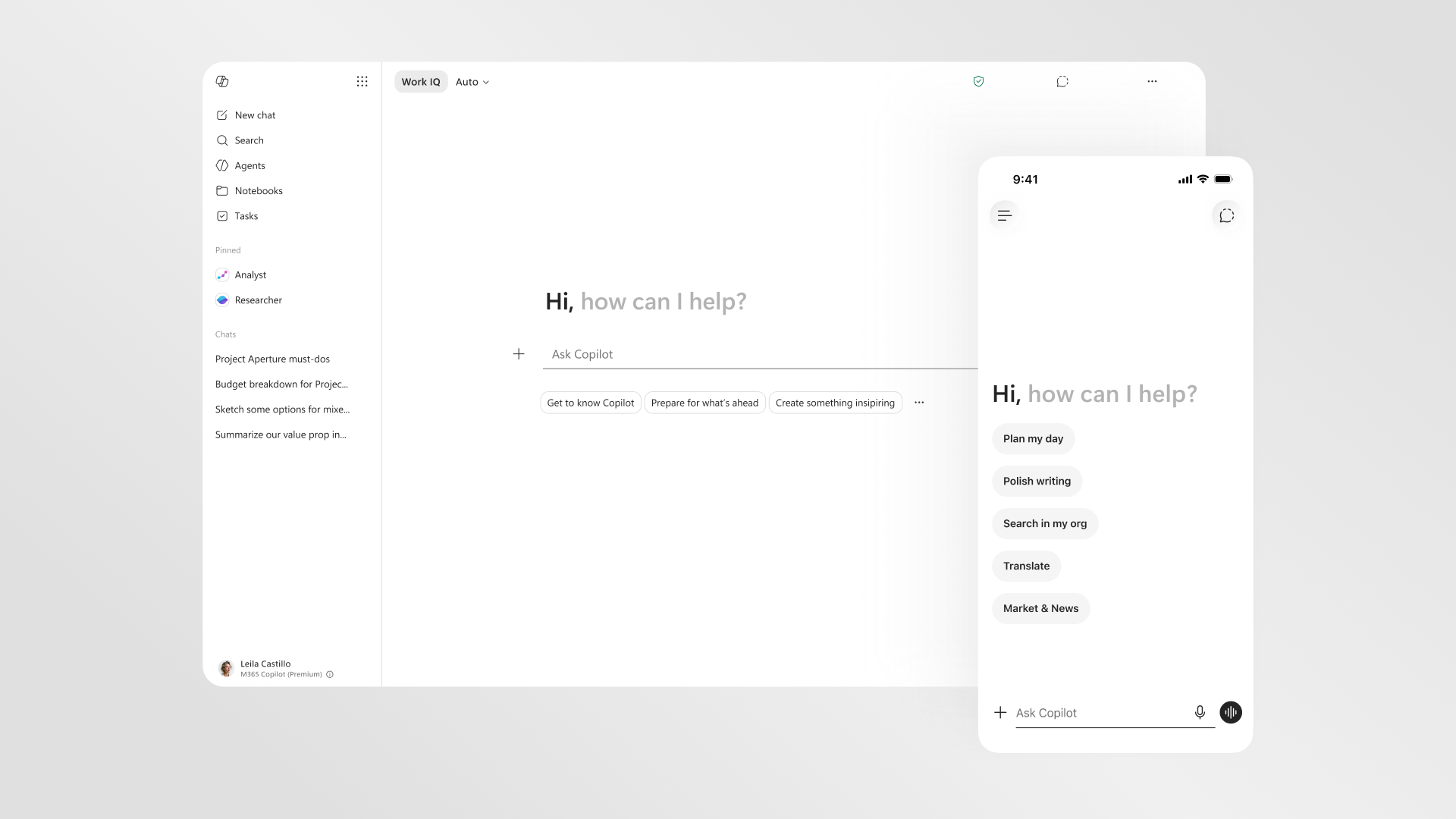
Data residency is the other line UK compliance teams must confirm, because where client and policyholder data is stored and processed shapes both UK GDPR compliance and FCA operational-resilience expectations. Microsoft offers data residency commitments through the Microsoft 365 multi-geo and Advanced Data Residency options, and the question to put to your account manager is simple: can Copilot processing and the resulting data stay within the UK or EU boundary your policies require? The recent Microsoft 365 Copilot redesign changes the interface, not these underlying governance settings, so the contractual checks remain the same regardless of how the app now looks.
What UK firms should do before they sign
A practical sequence beats a big-bang rollout. Start with named UK Microsoft partners and the brand directly: Microsoft UK for enterprise agreements, and resellers such as Bytes, Softcat or Phoenix for licensing and a renewal date check before 30 June 2026. Run a tightly scoped pilot on a low-risk workflow first, the way Triglav began with HR onboarding rather than claims decisions. Insist on a data protection impact assessment with your DPO, and map each proposed Copilot agent to a Senior Manager who owns its output. Recruit your own mentor cohort early, even if it is five people rather than 40, because that network is what turns a paid licence into adopted software.
Hold the vendor to specifics rather than slideware. Ask for the exact data-residency boundary in writing, the audit logging available for agent activity, and how Copilot’s outputs are excluded from training. UK firms in legal-adjacent work should also read our guides for UK solicitors and UK accountants, because the professional-conduct duties they describe apply identically when the assistant happens to be Copilot rather than a rival.
Our verdict
Our view is that the Triglav rollout is the most useful Microsoft 365 Copilot reference a UK regulated firm has to work with right now, precisely because it is honest about effort. Firms that should move are those that can fund a mentor network and a proper DPIA, and that have a genuine low-risk workflow, drafting, summarising, onboarding, to pilot. Firms that should wait are those tempted to buy 500 seats and hope, because that is how the tool becomes shelfware and the FCA’s accountability questions go unanswered. The thing that would flip our caution to a clear recommendation is a documented governance pack: data-residency boundary confirmed in the contract, agent audit trail in place, and a Senior Manager named against each deployment. Get those three down on paper, copy Triglav’s start-small mentor approach, and renew before the 1 July price change. Skip any of them and the licence cost is the least of your worries.
Microsoft 365 Copilot for UK insurers: frequently asked questions
Related reading on MTW
Buyer action
Where to buy or check next
Use this as the final check before ordering a phone, changing network or trusting a headline monthly price.













Reader discussion
Leave a comment
Comments are moderated. Keep it useful, accurate, and on topic.