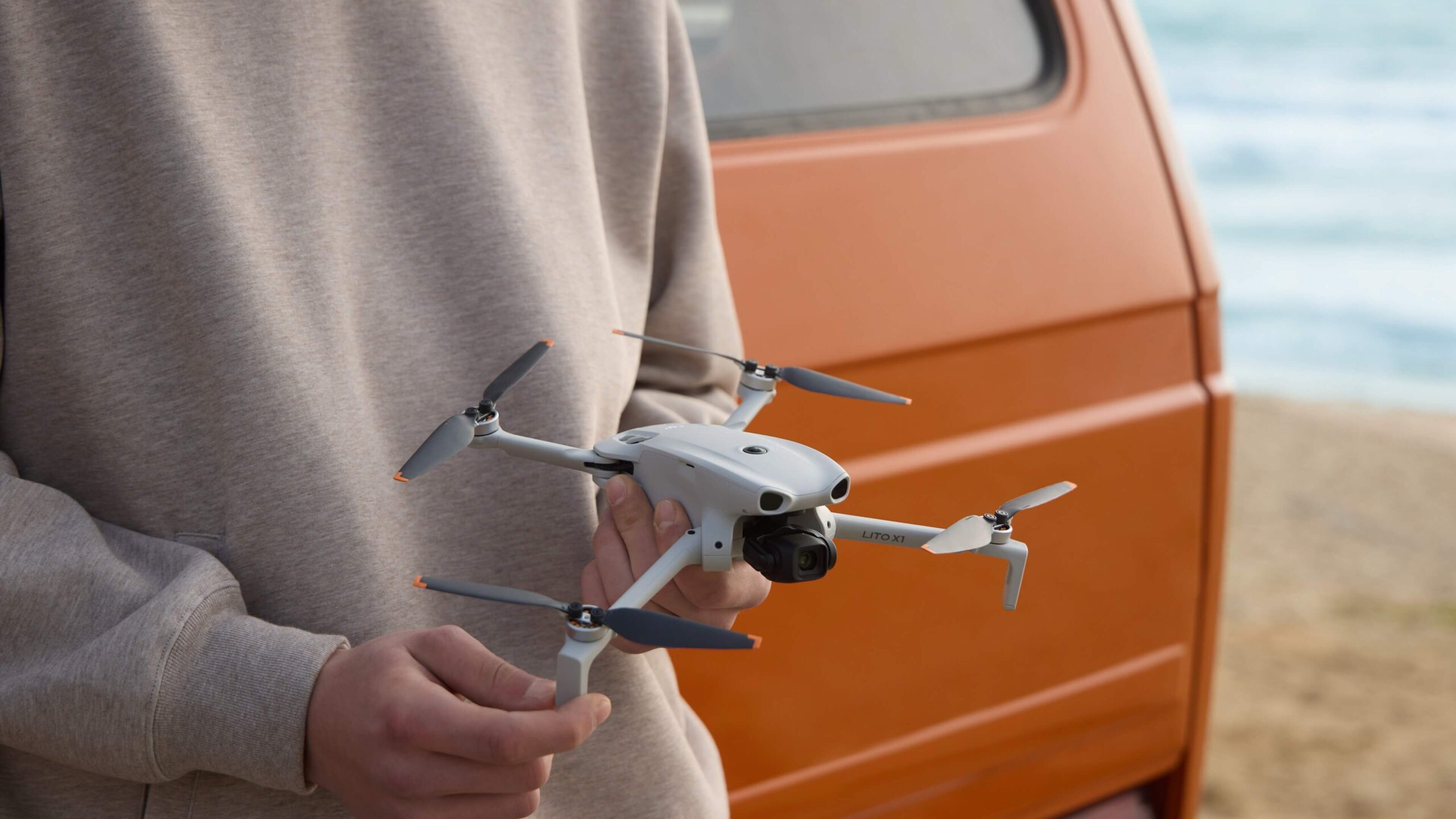
The DJI Lito X1 UK price lands at £369 on the DJI UK store, and that single figure is what makes this the most interesting sub-£400 drone of 2026 for British buyers. DJI positions the Lito X1 as a premium camera drone for beginners, weighing under 249g with forward-facing LiDAR and omnidirectional obstacle sensing. This guide picks the right model for your use case, sets the Lito X1 against the cheaper Lito 1 and an existing DJI Mini, and flags the UK rules and stock checks worth settling before you pay.
Updated on 30 May 2026.
- DJI announced the Lito 1 and Lito X1 on 23 April 2026; orders opened the same day across Europe and the UK.
- Lito X1: about £369 on the DJI UK store, with the Fly More Combo and DJI RC 2 touchscreen controller at roughly £499.
- 1/1.3-inch CMOS sensor, 14 stops of dynamic range in HDR video, 42GB internal storage, under 249g.
- Forward-facing LiDAR plus omnidirectional obstacle sensing; not sold in the US while DJI authorisation is pending.
The quick picks: which Lito suits which buyer
If you want the short version, here is how the range splits. The DJI Lito X1 at £369 is the one to buy if you care about footage quality and want the safety net of LiDAR and all-round sensing on a first drone. The DJI Lito 1 is the budget entry, sharing the same sub-249g class but dropping the LiDAR and trimming the camera, so it suits a buyer who simply wants to learn to fly cheaply. If you already own a DJI Mini 4 Pro, the Lito X1 is not an upgrade so much as a lighter, cheaper second body, and we explain why below.

The point of this range is that DJI has finally pushed real obstacle sensing into the price bracket that beginners actually shop in. For years that £350 to £450 band meant a stripped-back drone you flew nervously. The Lito X1 changes the calculation, and that is the thread running through every pick here.
Best overall sub-249g drone: DJI Lito X1 at £369
The DJI Lito X1 is our overall pick because it is the only drone at this price that pairs a 1/1.3-inch sensor with forward-facing LiDAR and omnidirectional obstacle sensing. The sensor matters: it is the same size class DJI uses on its mainstream Mini line, so the Lito X1 captures genuinely usable footage rather than the smeary results cheaper toy drones produce. DJI quotes 14 stops of dynamic range in HDR video, which is the figure that decides whether a bright sky blows out behind your subject. With 42GB of internal storage built in, you can fly without buying a microSD card on day one.

Great for: a first proper camera drone, travel and holiday footage, and anyone nervous about crashing, since the LiDAR and all-round sensing do most of the worrying for you. Not so great for: a buyer who wants the absolute lowest price, because the Lito 1 undercuts it. On the DJI UK store the Lito X1 lists at about £369, and we would check stock there first before the high-street alternatives, since DJI tends to hold launch inventory direct. Key specs: under 249g, 1/1.3-inch CMOS, 14 stops HDR, 42GB internal storage, forward LiDAR, omnidirectional sensing.
Best on a budget: DJI Lito 1
The DJI Lito 1 is the value pick of the pair. As New Atlas reported at launch, it arrived alongside the X1 on 23 April 2026 and keeps the same headline advantage, a take-off weight under 249g, which is the number that keeps you out of the heavier UK regulatory categories. Where it gives ground is the camera and the sensing suite. The Lito 1 does without the forward-facing LiDAR that defines the X1, and it leans on a microSD card rather than the X1’s 42GB of internal storage. For a buyer whose goal is to learn the sticks and shoot occasional clips, none of that is a dealbreaker.
Great for: a true beginner on a strict budget, a second drone you will not cry over, or a gift for a teenager learning to fly. Not so great for: anyone who wants the cleaner low-light footage and the crash protection the X1’s LiDAR provides. The honest read is that the £369 X1 is worth the stretch for most buyers, but the Lito 1 exists precisely so the cheapest route into DJI flight is still a real DJI drone, not a toy. If outright price is your only filter, our best beginner drone UK 2026 guide sets it against the wider field.
How the Lito X1 sits against an existing DJI Mini
This is the question most current DJI owners will ask, and the answer is not the one DJI’s marketing implies. If you already fly a DJI Mini 4 Pro, the Lito X1 is not a straight upgrade. The Mini 4 Pro already carries omnidirectional sensing and a comparable sensor class, and it has a longer track record of firmware support. What the Lito X1 adds is forward-facing LiDAR, which reads obstacles more precisely in low contrast and low light than the vision sensors a Mini relies on, and it does so at a launch price well under what a new Mini 4 Pro commands.
So the verdict for Mini owners is straightforward. Do not trade in a working Mini 4 Pro for a Lito X1 expecting a leap in image quality, because you will not get one. Do consider the Lito X1 as a cheaper, lighter second body for travel, where the LiDAR earns its keep flying tighter to terrain and structures. For a sense of how DJI keeps spreading these features down its range, our look at how DJI dominates the consumer drone market sets the context, and the DJI Mini 4 Pro versus Air 3S comparison shows where the Mini line still pulls ahead.
UK rules: the sub-249g weight is the headline
The reason the under-249g figure appears in every sentence is that it changes your legal obligations. Under the UK Civil Aviation Authority rules, a drone below 250g flown in the Open category A1 subcategory does not require you to pass the flyer ID test, so there is no online theory exam to sit before you launch the Lito X1 or the Lito 1. That is the single biggest barrier this weight class removes for a nervous first-time buyer.
What the weight does not remove is operator registration. Because both Lito drones carry a camera, you still need a CAA operator ID, which costs a small annual fee and must be displayed on the aircraft, regardless of the sub-250g weight. That distinction trips up plenty of buyers: no flyer ID test, but yes to operator registration. Our full walkthrough on how to fly a drone legally in the UK under the 2026 rules covers the registration steps and the no-fly zones around airports and crowds.
Camera, sensing and the low-light question
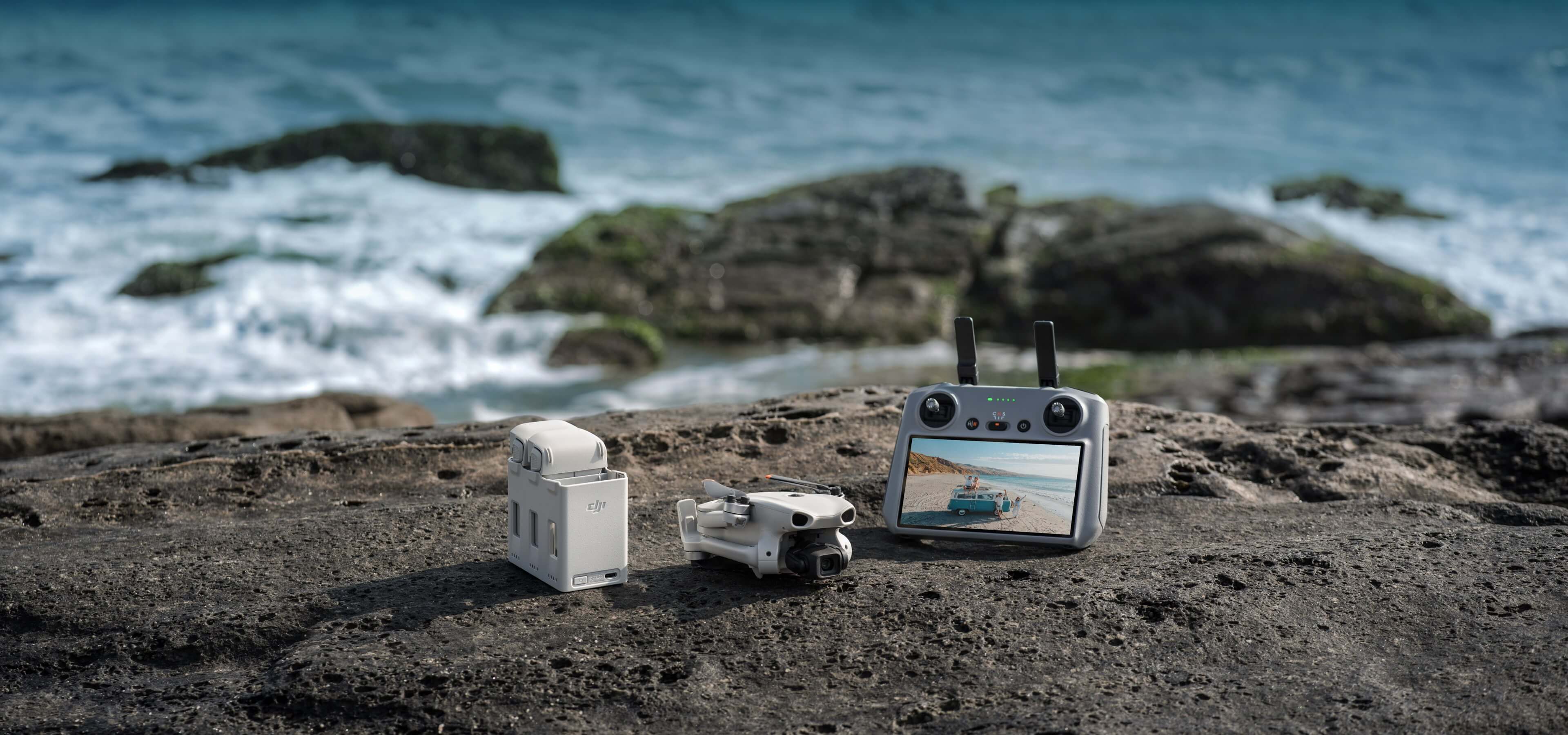
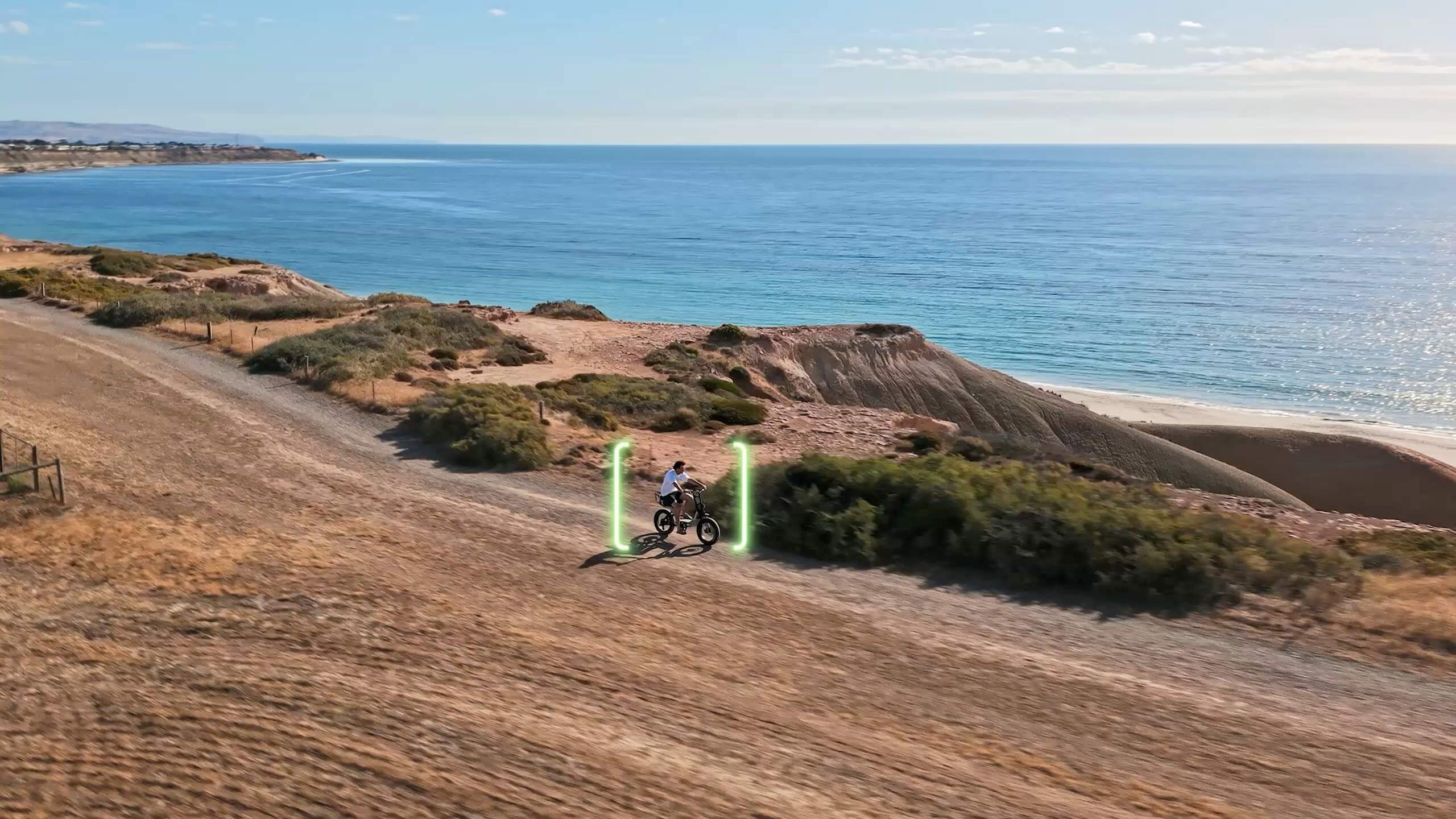
The camera is where the Lito X1 justifies its premium over the Lito 1. The 1/1.3-inch CMOS sensor and DJI’s quoted 14 stops of dynamic range are the specs that decide whether your footage holds detail in a bright sky or a shadowed valley. In practical terms, the larger sensor and the HDR pipeline are what let the X1 hold highlight and shadow at the same time, which is exactly the trade-off cheaper drones lose. DJI also lists smart tracking modes that keep a moving subject framed, useful for following a cyclist or a car along a coast road.

The forward-facing LiDAR is the other half of the story. Vision-based sensing struggles as the light fades, because the cameras need contrast to read depth. LiDAR fires its own light and measures the return, so it keeps reading obstacles into dusk when a Mini’s vision system would start backing off. That is the feature DJI is genuinely bringing down-market here. If your shooting is mostly video, our DJI vlogging camera guide and the best camera drones under £500 round-up both put the Lito X1’s footage in wider company.
Where to buy and the stock check before you pay
The DJI UK store at store.dji.com/uk is the first place to check, both for the £369 standalone price and the Fly More Combo with the DJI RC 2 touchscreen controller at around £499. The combo is the better value if you want the brighter screen-controller rather than flying from your phone, and it bundles spare batteries. Beyond DJI direct, check Currys, Argos, Wex Photo Video and Park Cameras for UK stock, since drone availability at launch swings week to week and a model can show as in stock on one retailer and back-ordered on another the same day.
One supply caveat worth knowing: the Lito series is a Europe-and-UK launch, and DJI has confirmed it is not selling these models in the US while its authorisation there is pending. That has no direct effect on UK stock, but it does mean grey-import units and US-focused reviews will be thin, so lean on the DJI UK store and UK retailers rather than chasing American pricing. For the wider regulatory backdrop, our coverage of the FCC firmware waiver that extends DJI updates to 2029 explains why the US picture is so different from ours.
Our verdict
For most UK buyers shopping under £400, the DJI Lito X1 at £369 on the DJI UK store is the drone we would buy. It is the only model in its price class that pairs a 1/1.3-inch sensor and 14 stops of HDR with forward-facing LiDAR and omnidirectional sensing, and at under 249g it spares you the CAA flyer ID test, though you still need operator registration. Buy the Lito 1 only if price is your single hard limit, and skip both if you already own a DJI Mini 4 Pro, where the upgrade does not justify the spend. The risk that would flip this call is stock and support: this is a Europe-and-UK launch with no US presence yet, so if DJI UK store inventory slips or firmware updates stall, the safer money moves to the proven Mini line. On launch evidence, our view is that the Lito X1 is the strongest first camera drone DJI has shipped at this price.
DJI Lito X1 UK: frequently asked questions
How much is the DJI Lito X1 in the UK?
The DJI Lito X1 lists at about £369 on the DJI UK store as a standalone drone. The Fly More Combo, which adds the DJI RC 2 touchscreen controller and spare batteries, costs roughly £499. Check store.dji.com/uk for the live price and stock status, and compare Currys, Argos, Wex Photo Video and Park Cameras, since launch availability shifts week to week across UK retailers.
Do I need a licence to fly the Lito X1 in the UK?
Because the Lito X1 weighs under 249g, you do not need to pass the CAA flyer ID test to fly it in the Open category A1 subcategory. You do still need a CAA operator ID, because the drone has a camera. The operator ID carries a small annual fee and must be labelled on the aircraft. Registration is quick and done online through the Civil Aviation Authority before your first flight.
What is the difference between the Lito X1 and the Lito 1?
Both weigh under 249g, but the Lito X1 adds forward-facing LiDAR, a 1/1.3-inch sensor with 14 stops of HDR dynamic range, and 42GB of internal storage. The Lito 1 drops the LiDAR, trims the camera, and relies on a microSD card instead of internal storage. The X1 is the better camera drone; the Lito 1 is the cheaper way into DJI flight for a true beginner.
Is the Lito X1 better than a DJI Mini 4 Pro?
Not as a straight upgrade. The DJI Mini 4 Pro already has omnidirectional sensing, a comparable sensor and a longer firmware history. The Lito X1’s edge is its forward-facing LiDAR and a lower launch price. If you own a working Mini 4 Pro, the Lito X1 only makes sense as a cheaper, lighter second body for travel, not as a replacement that improves your footage.
Is the DJI Lito X1 available in the US?
No. DJI announced the Lito 1 and Lito X1 on 23 April 2026 for Europe and the UK, and has confirmed the series is not coming to the US while its authorisation there is pending. UK buyers are unaffected and should order through the DJI UK store or UK retailers. It does mean US-focused reviews and grey-import stock will be scarce, so price the drone in pounds rather than chasing dollar figures.
Does the Lito X1 have enough storage without an SD card?
Yes, for short sessions. The Lito X1 ships with 42GB of internal storage, so you can fly and record on day one without buying a microSD card. For longer trips or higher-bitrate video you will still want to offload footage regularly or add a card if the drone supports one, but the internal capacity is a genuine convenience the cheaper Lito 1 does not match.












Reader discussion
Leave a comment
Comments are moderated. Keep it useful, accurate, and on topic.