

News · 14 Jun 2026 · Daniel Reid
The Microsoft NHS Copilot rollout has just turned the National Health Service into the single largest test of workplace artificial intelligence ever attempted in Britain, with NHS England confirming that 505,000 clinicians and support staff will be given Microsoft 365 Copilot by October 2026 (Microsoft UK Stories, June 2026). The headline number that should make every UK employer pay attention is smaller and more human: in the trial that led to this decision, staff saved an average of 43 minutes a day on administration, the equivalent of roughly five working weeks per person each year. That figure, reported alongside London Tech Week 2026 as the event closed on 12 June (TechTimes, 12 June 2026), is the clearest signal yet of where AI at work is heading, and the NHS is now the proving ground.
- NHS England is rolling out Microsoft 365 Copilot to 505,000 clinicians and support staff by October 2026 (Microsoft UK Stories, June 2026).
- The trial behind the decision involved 30,000 users across 90 organisations and saved an average of 43 minutes per person per day on admin (Digital Health, circa 8 June 2026; TechTimes, 12 June 2026).
- Microsoft pledged 30bn dollars, around £23bn, as its largest-ever UK investment, split roughly £11.5bn capital and £11.5bn operating spend (TechTimes, 12 June 2026; Microsoft UK Stories).
- The spend funds new data centres in Acton and Newport plus an AI supercomputer in Loughton, Essex, with 23,040 NVIDIA GB300 GPUs delivered with UK firm Nscale in early 2027 (Microsoft UK Stories, June 2026).
- The UK government separately committed around £400m to sovereign AI chip procurement at the event (TechTimes, 12 June 2026).
Why the Microsoft NHS Copilot deal matters more than any pilot
Most corporate AI announcements describe a pilot: a few hundred licences handed to a willing team, a quarter of measurement, then a cautious decision about whether to scale. The NHS has skipped that hesitation. By committing to put Microsoft 365 Copilot in front of half a million people, NHS England has created a deployment larger than the entire workforce of most FTSE 100 companies combined. When a public body of that size moves, it changes the reference point for every chief executive and IT director in the country who has been waiting to see whether generative AI actually pays back at scale.
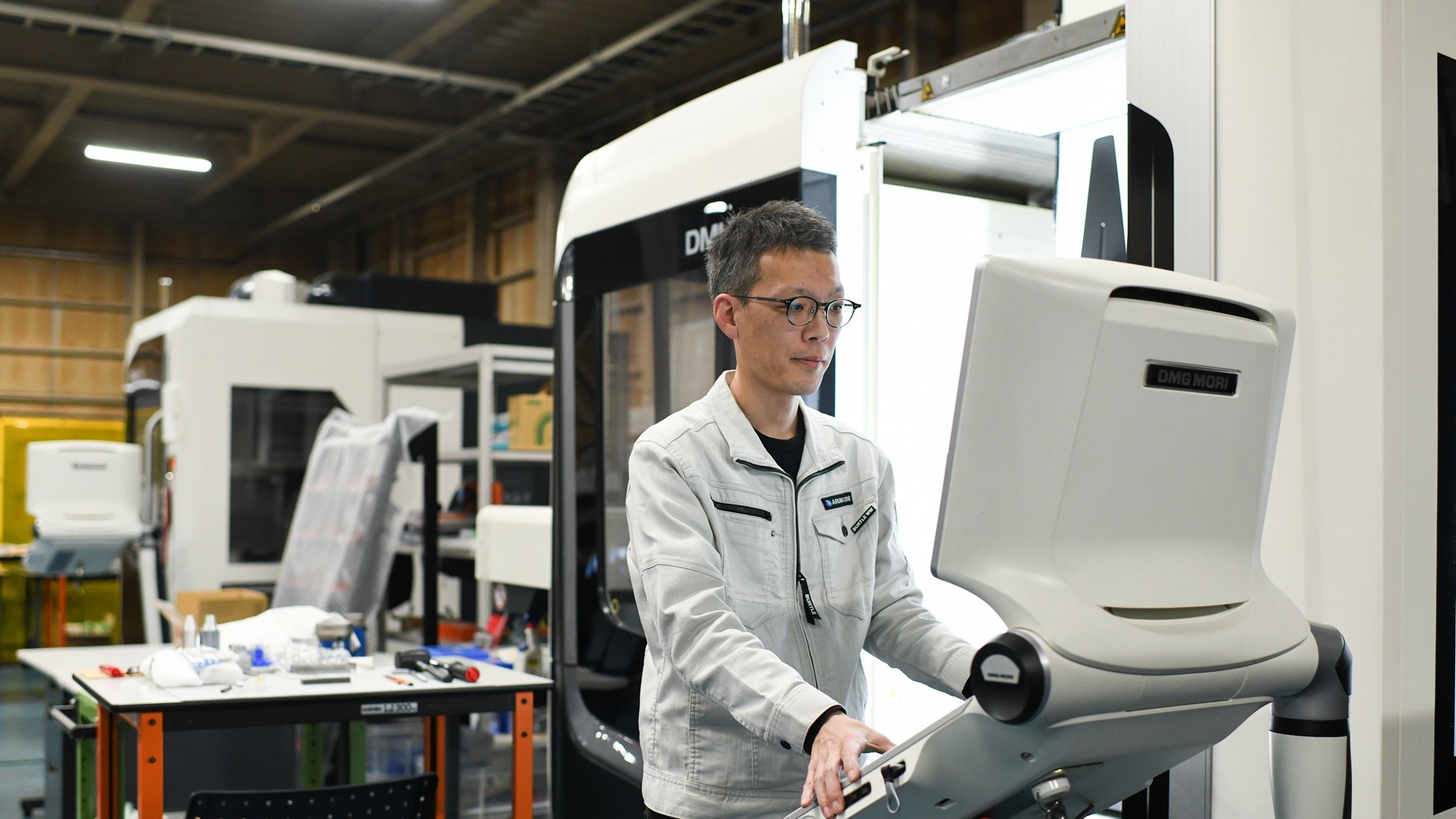
The detail that lifts this above a procurement story is the size of the evidence base. According to Microsoft’s UK newsroom, the rollout follows the largest AI trial of its kind in global healthcare, involving 30,000 users across 90 organisations. That is not a focus group. It is a working sample big enough to survive sceptical scrutiny, and the headline result, an average of 43 minutes saved per person per day, is specific enough to model against payroll. For context on how the same software is being pitched to private firms, our guide to Microsoft 365 Copilot UK pricing for small businesses walks through what the same licence costs a company paying commercial rates.
The 43-minute number, and what it really measures
A daily saving of 43 minutes sounds almost too neat, so it is worth being precise about what it does and does not prove. The figure is an average self-reported by trial participants, measured against the administrative load they carried before Copilot arrived: drafting referral letters, summarising long email threads, writing up meeting notes, searching for the right policy document inside Teams and SharePoint. Multiply 43 minutes across roughly 230 working days and you reach the five-weeks-a-year claim that Microsoft and the NHS have both used. For a clinician, that time is meant to translate into more patient contact rather than more output for its own sake.
The caveat every employer should hold onto is that time saved is not the same as time well spent. A saving only becomes a benefit if the recovered minutes flow into work that matters, and that depends on management, not software. The NHS has framed the goal in plainly human terms. Darren Hardman, Microsoft’s UK and Ireland chief executive, summarised the intended outcome in the NHS Copilot coverage as “less admin, more eye contact, more listening, more time focused on the patient” (Microsoft, June 2026). That sentence is a good test for any organisation: if the freed-up time does not show up as better service or less burnout, the licence is just a cost. Our explainer on the wider Microsoft Work Trend Index 2026 and hybrid work digs into how those minutes tend to get reabsorbed.

The £23bn bet sitting underneath the rollout
The NHS deployment did not arrive in isolation. It landed in the same week that Microsoft pledged 30bn dollars, around £23bn, as its largest-ever investment in the UK (TechTimes, 12 June 2026; Microsoft UK Stories). The structure of that commitment matters. It splits roughly into £11.5bn of capital spending and £11.5bn of operating spending across cloud and AI infrastructure, which tells you Microsoft is not just building, it is committing to run what it builds for years. The hardware list is concrete: new data centres in Acton and Newport, and a major AI supercomputer in Loughton, Essex.
The Loughton site is the part that reveals the ambition. It is being built with the UK firm Nscale and is specified at 23,040 NVIDIA GB300 GPUs, with 50 megawatts of power scalable to 90 megawatts, and delivery targeted for the first quarter of 2027. Those are the kind of numbers that decide whether services like Copilot run on infrastructure inside the UK or somewhere else, which in turn shapes the data-residency questions that public bodies and regulated firms have to answer. The same logic drove the government’s own announcement at the event, a roughly £400m commitment to sovereign AI chip procurement (TechTimes, 12 June 2026). We covered the compute side of that in detail in our piece on the UK sovereign AI push and the Isambard supercomputer.

From an information economy to an intelligence economy
Darren Hardman used London Tech Week to frame the shift in a phrase worth examining. He described Britain moving from an “information work” economy to an “intelligence work” economy, and called the next 18 months decisive for the country’s AI competitiveness (London Tech Week coverage, 12 June 2026). Strip away the slogan and the argument is straightforward: for two decades, knowledge work meant finding, organising and moving information. The bet now is that software can do a growing share of that, leaving people to do the judgement, relationships and decisions that machines still handle poorly.
This is where the watch-the-vendor instinct should kick in, because Microsoft has an obvious commercial interest in that story being true. The corrective is to test the claim against independent evidence rather than launch slides, and to remember that Microsoft is one of three big assistants competing for the same desks. If you want the comparison without the marketing, our head-to-head on Gemini versus Claude versus Copilot in the UK sets out where each one actually leads. The video below, from Microsoft’s official channel, is the company’s own framing of how organisations adapt to this shift.
What it signals for every UK employer
If the largest, most cost-conscious and most heavily scrutinised employer in the country has decided that an AI assistant is worth half a million seats, the burden of proof has shifted for everyone else. Private firms that have been running indefinite pilots now have a public benchmark to point to, and a public benchmark to be measured against. That cuts both ways. It makes the business case easier to argue in a board meeting, and it makes “we are still evaluating” a harder line to hold when a hospital trust down the road has already rolled the software out to thousands of staff.

The practical lessons travel well beyond healthcare. The trial worked because it was big enough to produce a credible number, it targeted a specific pain (administrative overhead) rather than a vague promise of transformation, and it tied success to a metric people could feel. Any UK employer can copy that method: pick a measurable task, run a sample large enough to mean something, and judge the result against the wage bill rather than the brochure. Microsoft is not the only firm being measured this way, and the wider influx of US AI giants into UK offices means the competition for those deployments is only intensifying. Smaller teams looking at alternatives can compare notes in our piece on how UK small businesses use Claude.
The data, governance and skills questions to ask first
A rollout this size also concentrates the risks. Putting a generative assistant inside Word, Outlook, Teams and Excel means giving it reach across an organisation’s most sensitive documents, and in the NHS that means patient data. The governance work that makes a deployment safe (clear data-handling rules, tight permissions, a record of what the assistant can see) is exactly the work that gets skipped when a project is rushed. The Information Commissioner’s Office has been consistent that automated tools handling personal data need a lawful basis and a documented impact assessment, and that obligation does not soften because a tool is fashionable.

Skills are the quieter risk. The 43-minute saving assumes staff know how to prompt the tool well, check its output and spot when it is wrong, none of which is automatic. A licence handed out without training tends to produce a fortnight of curiosity followed by quiet disuse, which is the most expensive way to fail with software. For staff getting started on Windows machines, our walkthrough on using Microsoft Copilot in Windows 11 covers the basics, and the broader UK research context sits in our look at why Google DeepMind’s UK presence matters.
What to watch next
The interesting part starts after the licences land. Three things are worth tracking over the coming months. First, whether the NHS publishes hard outcome data rather than self-reported minutes, because a saving that holds up in audited figures is far more persuasive than one that lives in a survey. Second, whether the Loughton supercomputer hits its early-2027 delivery target, since the credibility of the whole UK-residency pitch rests on that compute existing on British soil. Third, whether the 43-minute figure survives contact with a year of real use, or whether it fades once the novelty wears off and the harder workflows reassert themselves.
For employers weighing their own move, the service question is simpler than the politics. Decide on one task you can measure, run a trial large enough to produce a number you trust, and write down in advance what result would justify the spend. If you cannot describe the win before you start, you are buying a story rather than a saving. Keep an eye on how the broader event shaped UK policy too, which we tracked in our round-up of the London Tech Week 2026 announcements.
Our verdict
The NHS rollout is the most important AI-at-work decision Britain has made, not because Copilot is uniquely clever, but because of who is buying it and at what scale. Half a million seats backed by a 30,000-person trial gives the technology a credibility that no vendor demo could buy, and the £23bn of infrastructure behind it signals that Microsoft intends to run this in the UK rather than treat the country as a sales territory. That combination is genuinely significant, and UK employers who keep dismissing AI assistants as hype are running out of cover.
Our position is to treat the rollout as a benchmark, not a verdict. The 43-minute number is promising and worth taking seriously, but it is an average from a survey, not an audited result, and the real test is whether the freed-up time becomes better care, better service or less burnout rather than just more meetings. Employers should move, but move with a measurable task, a real governance plan and the discipline to judge the outcome against the wage bill. If the NHS publishes hard figures that hold up, the case for following will be hard to argue with. Until then, the honest stance is interested, prepared and watching the numbers closely.
Buyer action
Where to buy or check next
Use this as the final check before ordering a phone, changing network or trusting a headline monthly price.
















Reader discussion
Leave a comment
Comments are moderated. Keep it useful, accurate, and on topic.