

Meta teen safety tools have moved from a US trial to a working part of family life on Instagram, Facebook and Messenger in Britain, and UK parents now have real controls worth understanding. Over the past two years Meta has rebuilt the way under-18s use its apps around Teen Accounts, parental supervision, AI age checks and new limits on how teenagers talk to Meta AI. Meta first introduced Instagram Teen Accounts in September 2024, and the changes since then matter because they arrive at the same moment the UK’s child-safety rules are biting. This guide explains, in plain terms, what these tools actually do, what you as a parent can and cannot see, and how the Online Safety Act and the ICO Children’s Code shape what Meta has to deliver here.
- Teen Accounts put under-18s into private, restricted settings by default, and under-16s need a parent’s permission to loosen them, per Meta’s own product pages.
- Parents who supervise a Teen Account can see the topics a teen has asked Meta AI about in the last seven days, and can turn off one-to-one chats with AI characters, but they do not get full message transcripts.
- Meta is using AI age-assurance to move suspected under-18s into teen settings even when an account lists an adult birthday, and is rolling this to Facebook in the UK from June 2026.
- For UK parents this lands alongside the Online Safety Act’s child-safety duties, where Ofcom’s age-assurance and protection-of-children rules took effect through 2025.
What Teen Accounts actually change by default
The foundation of Meta teen safety tools is the Teen Account: a set of protections applied automatically to under-18s rather than something a parent has to switch on. According to Meta, teens are placed in private accounts by default, so they have to accept new followers, and they are put in the strictest messaging settings so they can only be messaged by people they already follow or are connected to. Sensitive-content controls are set to the most restrictive level, limiting recommendations of mature material, and the Hidden Words anti-bullying filter runs automatically. Teens also get a reminder to leave the app after 60 minutes a day, and a sleep mode mutes notifications between 10pm and 7am.
The crucial detail for parents is the permission layer. Meta says under-16s cannot make these protections less restrictive without a parent’s approval, which is what turns a default into something closer to a guardrail. Meta has since extended the same model from Instagram to Facebook and Messenger, with the company confirming the expansion reached teens in the US, UK, Australia and Canada. If your teenager mainly uses Messenger to talk to school friends, those accounts now inherit the same contact and content limits rather than sitting outside the system. We think this default-on design is the single most important shift, because it does not rely on a busy parent finding a buried settings menu. For the wider picture of how Meta is pushing AI into its consumer apps, our look at Meta AI in the UK across WhatsApp and smart glasses is a useful companion.
How UK parents set up supervision on Instagram, Facebook and Messenger
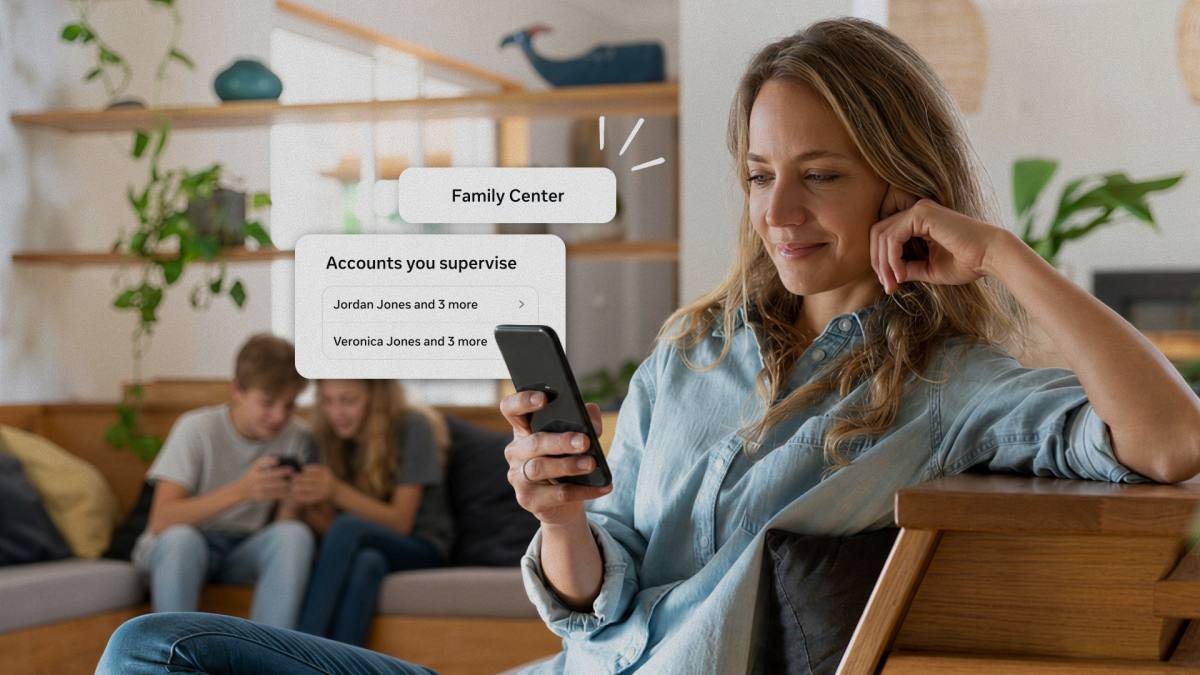
Supervision is the layer parents have to opt into, and it is worth doing because it unlocks the controls and insights that a default Teen Account does not surface on its own. On Instagram you set it up through the Family Centre, reached from the menu on either the parent’s or the teen’s account, then send or accept an invitation to link the accounts. The same Family Centre hub now covers Facebook and Messenger supervision as well, so a single parent account can oversee a teen across Meta’s apps rather than juggling three separate flows. Both sides have to agree to the link, which means you cannot set this up secretly, and that is by design.
Once linked, Meta says supervising parents can see who their teen has messaged in the past seven days (though not the content of those messages), set daily time limits, schedule periods when the apps are blocked, and view the broad content topics their teen is engaging with. What you cannot do is read private messages or browse your teen’s feed as if it were yours: the design deliberately gives oversight without full surveillance, which mirrors the proportionate approach the ICO’s Children’s Code expects. If you are also managing AI assistants elsewhere in the household, our guide to the WhatsApp Meta AI privacy settings to check covers the adult-facing controls that sit alongside these teen tools. For families weighing how much AI they actually want in daily life, our piece on whether you need a paid AI subscription in 2026 is a sensible reality check.

Teen interactions with Meta AI, and what parents can see
The newest and arguably most sensitive area is how teenagers talk to Meta AI, and here Meta has added insights rather than full visibility. Meta announced in April 2026 that supervising parents can see the topics their teen has been asking Meta AI about in the last seven days, grouped into categories such as school, entertainment, lifestyle, travel, writing, and health and wellbeing, with sub-categories like fitness, physical health and mental health inside them. Importantly, this is a summary of themes, not a transcript: parents get the shape of the conversation, not the words. Meta says these insights launched in the US, UK, Australia, Canada and Brazil.
Alongside the insights, Meta has given parents a switch to turn off their teen’s one-to-one chats with AI characters entirely, and it says the AI experiences for teens are now guided by a 13+ standard so the assistant should not give responses that would feel out of place in an age-appropriate film. Meta states that its AI is designed not to engage with teens in conversations that encourage self-harm, suicide or disordered eating, and to point teens toward expert resources instead. The company has also said a stricter Limited Content setting will, from later in 2026, further restrict the AI conversations teens can have. Our broader coverage of the real cost of AI subscriptions for UK households shows how quickly these assistants are becoming part of everyday family spending, which makes the teen guardrails more than a niche concern.
AI age assurance: how Meta works out who is really a teen
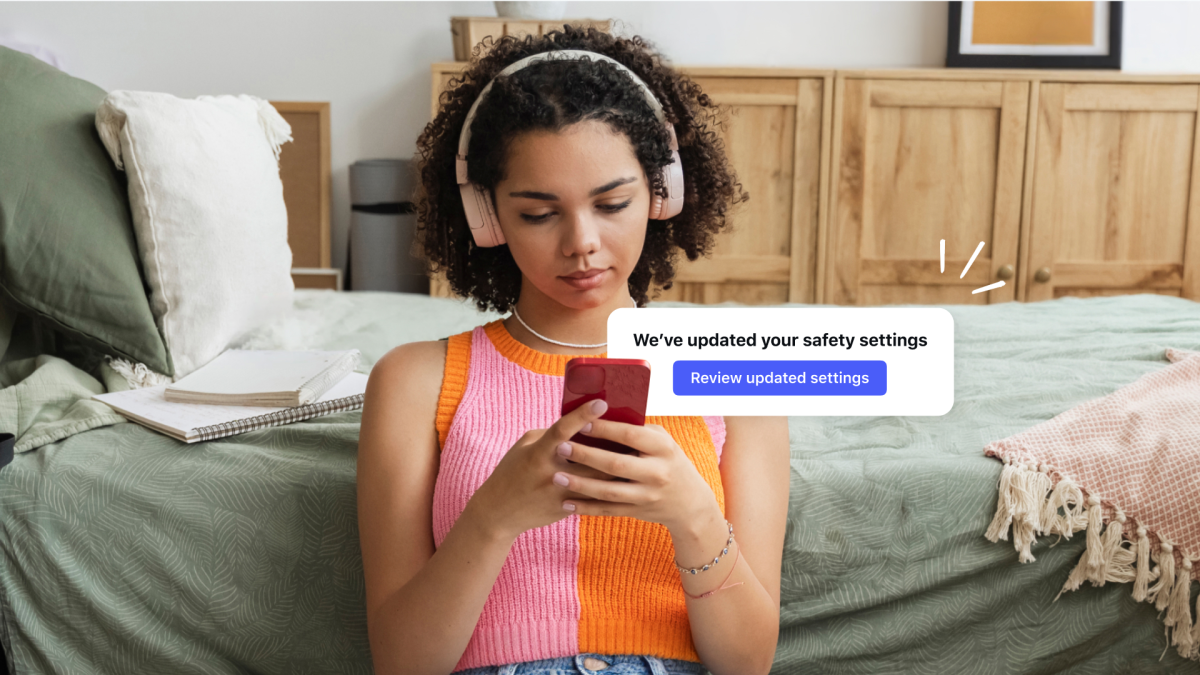
One of the oldest weaknesses in any teen-safety system is the child who simply lies about their date of birth, and this is where Meta’s AI age-assurance comes in. Meta says it uses AI to spot accounts that list an adult birthday but show signs of belonging to a teenager, by reading contextual clues across a profile such as birthday messages or mentions of school grades in posts, comments and captions. Meta is explicit that the photo-and-video element is not facial recognition: it says the system looks at general themes and visual cues, for example height or bone structure, to estimate a general age band, and does not identify the specific person in an image. When the system concludes an account is likely under-age, Meta says it is moved into teen settings, and accounts judged to be under 13 can be deactivated until the holder proves their age.
Mistakes are inevitable with any estimation system, so Meta provides an appeal: users can confirm their age with an ID document or through Yoti’s facial age-estimation tool to restore an account. The geography matters for UK readers. Meta says the technology already runs on Instagram in the UK, alongside the US, Australia and Canada, and is expanding to Facebook in the UK and EU from June 2026. The direction of travel across the industry is the same, and our reporting on RCS end-to-end encryption in the UK shows how messaging platforms are being pushed to balance privacy with safety duties at once.
Meta says its photo-based age estimation is not facial recognition: it reads general cues like height or bone structure, not the identity of the person.
Why the Meta teen safety tools matter under UK law
None of this is happening in a vacuum. The UK’s Online Safety Act 2023 places duties on services likely to be accessed by children to assess the risks they pose and to keep age-inappropriate material away from under-18s. Government guidance sets out that platforms must prevent children from seeing what it calls primary priority content, including pornography and material encouraging self-harm, suicide or eating disorders, and give age-appropriate handling of priority content such as bullying and violent material. The Government’s own explainer confirms an age-verification duty commenced on 17 January 2025, that Ofcom’s protection-of-children codes were laid before Parliament on 24 April 2025, and that services faced a 24 July 2025 deadline to complete children’s risk assessments.
Ofcom, as the regulator, expects what it calls highly effective age assurance for the riskiest content, which is precisely the territory Meta’s AI age checks are trying to occupy. Sitting underneath the Act is the ICO’s Children’s Code, the Age Appropriate Design Code, which has for several years required services to default to high privacy for under-18s and to act in the best interests of the child. Read together, the UK regime is why Teen Accounts ship as default-on and high-privacy rather than as opt-in extras: it is the behaviour British law was already steering platforms towards. For a sense of how UK regulators are scrutinising big-tech AI more widely, see our coverage of the CMA’s Google AI search ruling.
It helps to remember that Meta’s apps are no longer just feeds and messages. The company is pushing AI assistants and AI-enabled glasses into the same accounts that teenagers may eventually use, which widens the surface area parents need to think about. That is why the supervision controls and AI age checks described above are not a one-off announcement but part of a steady, sometimes uneven, programme of changes.
Meta’s wider ecosystem: glasses, assistants and the teen overlap
Meta AI glasses are the clearest example of how the company’s hardware ambitions intersect with teen safety. The glasses pair a camera, microphone and an on-board assistant, which raises obvious questions about consent and recording in places like schools. Meta positions these as adult products, but families with older teenagers will want to understand how an assistant that can see and hear surroundings fits with the protections built into the apps. The controls that govern Meta AI in chat, including the ability to switch off AI-character conversations for a supervised teen, are the same controls that will shape how younger users encounter AI on newer devices over time.
Our practical view is that the glasses are not a teen purchase today, but the underlying assistant policies are worth watching because they set the tone for the whole ecosystem. The same privacy instincts that lead us to recommend checking AI settings on WhatsApp apply here: the safest assumption is that any always-listening device records and processes more than a casual user expects, so household rules should be agreed before, not after, a device arrives. For the consumer-facing detail on the range, our guide to Meta AI smart glasses in the UK is the place to start, and it sits naturally beside the teen controls because both are governed by the same account-level AI settings.

Platform integrity: scams, strangers and the limits of the tools
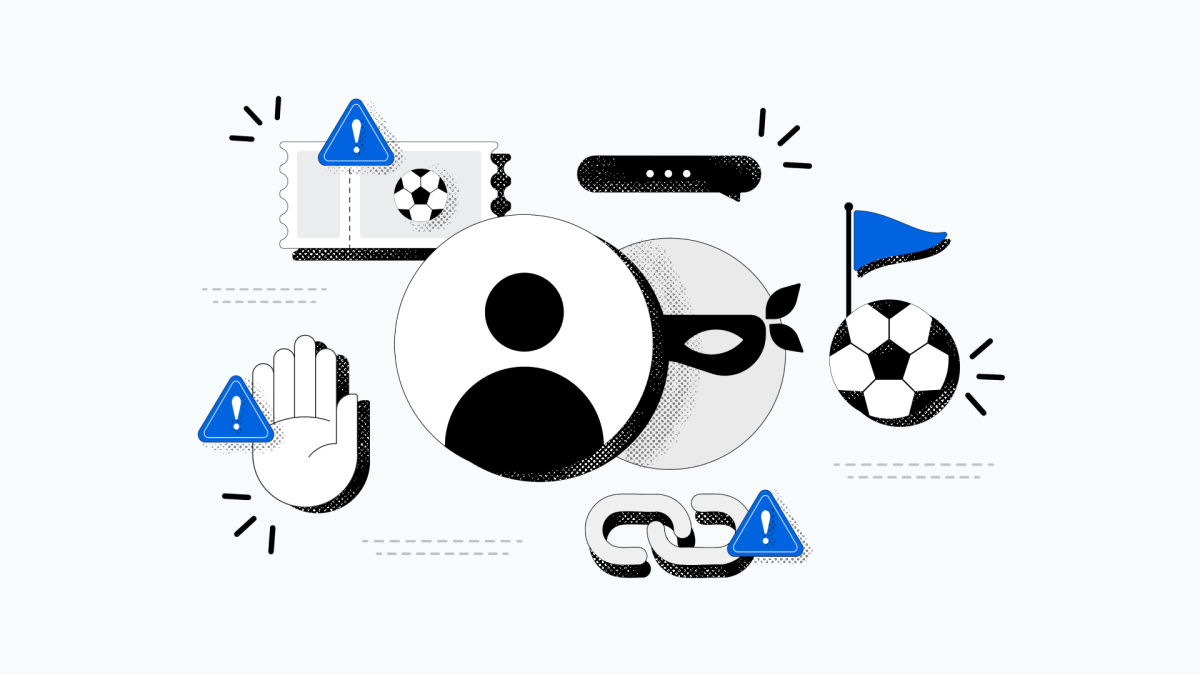
Teen Accounts reduce unwanted contact, but no setting eliminates it, and parents should treat the tools as one layer rather than a complete shield. Meta runs broader integrity programmes around large public events, scams and coordinated abuse, and these matter because teenagers are frequent targets of impersonation and prize scams that ride on whatever topic is trending, from a major football tournament to a viral game. The messaging restrictions in a Teen Account cut down cold approaches from strangers, but a determined scammer often works through a compromised friend’s account or a public comment thread, neither of which a contact filter fully blocks.
That is why the supervision insights are useful as a conversation prompt rather than a verdict. Seeing that a teen has been messaging a new contact, or asking Meta AI about a sensitive topic, is a cue to talk, not evidence of harm. The honest limit of these tools is that they are designed to make the safe path the default and the risky path visible, not to make poor judgement impossible. UK parents who want to keep up with how these platforms change week to week can follow our regular UK tech news round-up, which tracks the policy and product shifts that affect families.
Our verdict
Our view is that Meta’s teen-safety system is now genuinely worth setting up if you have a child on Instagram, Facebook or Messenger, and the strongest parts are the default-on Teen Account protections and the AI conversation insights. Link supervision through the Family Centre today, set a time limit and a blocked overnight window, and use the AI topic insights as a starting point for conversations rather than a monitoring dashboard. We would temper expectations on age assurance: AI age estimation will misfire in both directions, and the appeal route through ID or Yoti is a friction point worth knowing about before it happens. The tools also lean on parents opting into supervision, so the experience is only as strong as the setup. For most UK families the right move is to enable everything available now, treat the glasses and AI characters as areas to watch rather than buy into, and revisit the settings each time Meta ships another change, because it will.
Are Instagram Teen Accounts switched on automatically in the UK?
Can I read my teenager’s private messages?
What can I actually see about my teen’s chats with Meta AI?
How does Meta’s AI age check work, and is it facial recognition?
What happens if Meta wrongly thinks I am a teenager?
How does the UK Online Safety Act affect these tools?
Related reading on MTW
Buyer action
Where to buy or check next
Use this as the final check before ordering a phone, changing network or trusting a headline monthly price.











Reader discussion
Leave a comment
Comments are moderated. Keep it useful, accurate, and on topic.