

News · 6 Jun 2026 · Hannah Foster
ASOS AI is no longer a side project at the London-headquartered fashion retailer: in a new Microsoft case study published on 30 April 2026, ASOS sets out how Microsoft 365 Copilot, Azure and a bespoke AI Stylist are being used to redesign the way Britain shops for clothes online. Chief executive Jose Antonio Ramos frames it bluntly: online shopping has been transactional, and the company wants AI to make it inspirational instead. For UK e-commerce, this is the clearest enterprise blueprint we have seen in months.
- Around 3,000 ASOS employees now use Microsoft 365 Copilot to cut repetitive admin (source: Microsoft, 30 April 2026).
- ASOS says AI agents handle roughly half of customer enquiries and write about 15 per cent of its code.
- The retailer has mapped 93 potential agentic use cases across the business.
- ASOS goes from design idea to shelf in about three weeks, with AI speeding up trend scouting and design.
What ASOS actually built with Microsoft
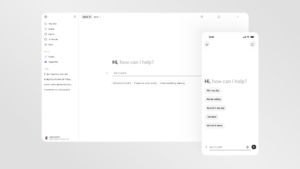
The headline product for shoppers is the AI Stylist, a conversational tool that replaces blunt filter-and-scroll browsing with a dialogue. Chief technology officer Przemek Czarnecki describes it as a conversation where “you explain your needs, the context of the purchase,” which he argues is “much closer to what happens in a physical store.” Behind that sits Microsoft’s stack: data consolidated in a Datalake on Azure, Power BI for reporting, and Dynamics 365 Finance and Operations underneath the business. ASOS also says it works with Microsoft on fine-tuning large language models specifically for fashion, which is the part most UK retailers cannot replicate alone.

None of this is a single bought-in app. Ramos is explicit that “this is not about buying software. We need partners who are willing to invest with us,” which signals a multi-year platform relationship rather than a licence purchase. That distinction matters for any UK business weighing AI: the value ASOS reports comes from joining its own data, its catalogue and its trend signals to the model, not from the assistant in isolation. If you want the consumer-facing comparison, our guide to Microsoft Copilot versus Google Gemini for UK small business sets out where each assistant fits.
How Copilot changes the working day inside ASOS
The operational story is the one most UK firms can copy. Around 3,000 ASOS staff use Microsoft 365 Copilot to strip out repetitive admin and reinvest the saved time into design and buying decisions. ASOS calls its data-led process “trend scouting”: social and internal data is analysed to spot emerging looks, and those insights feed designers who already work to a three-week idea-to-shelf cycle. Czarnecki stresses that “velocity and speed are essential for us. Fashion trends can change in a few weeks,” which is exactly why the company is willing to push automation hard.

The harder numbers are where this gets interesting. ASOS says AI agents now handle roughly 50 per cent of customer enquiries and write about 15 per cent of its code, and the company has identified 93 potential agentic use cases across the business. Those are claims from the retailer, not independently audited, so we treat them as direction-of-travel rather than gospel. UK analysts teams chasing similar gains should read our explainer on Microsoft Data Formulator and the wider Microsoft Work Trend Index 2026 for context on how Copilot adoption is landing in real workplaces.
What the AI Stylist signals for UK online shopping
Ramos argues that “personalisation has existed, but it was very basic. AI allows us to move much further than that,” and his ambition is striking: a different store for every customer that adapts moment by moment. For UK shoppers, the practical upshot is a shift away from endless grids toward a stylist that asks what an outfit is for. Whether that genuinely beats human curation is unproven, and we would watch closely for the moment conversational shopping starts steering people toward higher-margin stock rather than the best look.

There is a guardrail worth quoting. Czarnecki says ASOS “put agents in well constrained contexts, and you always keep humans in the loop,” which is the responsible framing UK regulators want to hear. It also matches the model many British firms are adopting for AI assistants at work, the trade-offs of which we cover in our guide to choosing Claude, Copilot or Gemini for UK work.
The data governance question British retailers must answer
Consolidating customer behaviour, catalogue and trend data into one Azure Datalake is what makes the ASOS model work, and it is also where the risk concentrates. For UK businesses, that means UK GDPR and the Information Commissioner’s Office sit squarely in scope: lawful basis for profiling, transparency about automated decisions, and a clear line on where model fine-tuning data comes from. Under Article 22 of the UK GDPR, a customer has the right not to be subject to a decision based solely on automated processing where it produces legal or similarly significant effects, so keeping a human in the loop is not just good practice but part of the compliance picture. The ICO’s guidance on AI and data protection also asks organisations to complete a data protection impact assessment before deploying high-risk profiling, and to be able to explain, in plain terms, the logic a model uses. An AI stylist that learns from purchase history is a profiling system, and the ICO expects that to be explainable. We would want any retailer copying this to publish how the assistant uses personal data, name a lawful basis, and run that impact assessment before switching it on.

Scale also changes the cost calculus. Copilot is not free, and Microsoft’s UK pricing has been moving, as we set out in our Copilot UK pricing breakdown and the recent Microsoft 365 Copilot price rise. Microsoft 365 Copilot is sold as a per-user, per-month add-on on top of an existing Microsoft 365 business or enterprise licence, and it is billed annually, so the headline figure understates the true commitment for a finance team modelling a year. A 3,000-seat deployment is a serious annual line item that runs comfortably into seven figures before you count the Azure consumption, the Datalake storage and the engineering time to join your own data, so the productivity gains have to be real and measured, not assumed. The practical advice for a UK buyer is to pilot Copilot with a defined cohort, measure the hours genuinely saved against a baseline, and only then size the rollout; data residency in Microsoft’s UK South Azure region is worth confirming in the same conversation, because where fine-tuning and inference happen matters for both compliance and latency. The pattern is recognisable from other large rollouts; our look at Accenture’s Copilot programme covers what enterprise-scale adoption demands.
What UK SMEs can take from a 3,000-seat rollout
You do not need ASOS’s budget to use its playbook. The transferable lessons are concrete: start with admin-heavy tasks where Copilot saves obvious hours, keep a human reviewing every agent output, and join your own data to the assistant rather than relying on the generic model. A 10-person UK retailer can apply the “trend scouting” idea on a smaller scale by feeding Power BI dashboards into buying decisions. Smaller firms exploring this should also weigh dedicated tools such as Claude for Small Business, which bundles accounting and payments integrations that ASOS-style data joins would otherwise require custom engineering to match.

Ramos sums up the cultural point well: “this industry is about newness and excitement. That is created by humans, but enabled by technology.” For an SME, that is the safe order of operations. Let people make the creative calls and let the AI remove the friction, not the other way round. ASOS reaching idea-to-shelf in three weeks is a target a focused UK brand can chase with a fraction of the headcount if the data plumbing is right.
Where UK retailers can check the detail next
If you are scoping a similar build, three places give you the real detail. Microsoft’s UK case study is the primary source for the ASOS figures and quotes, and the ASOS plc investor announcement of the three-year Microsoft collaboration sets out the commercial framing from the retailer’s side. For compliance, the Information Commissioner’s Office guidance on AI and automated decision-making is the document your legal team needs before any profiling feature ships. Microsoft UK, the Microsoft for Startups programme and Azure’s UK South region are the practical entry points for pricing and data-residency questions; ask specifically where fine-tuning data is stored and processed.
| ASOS AI element | What it does | MTW read |
|---|---|---|
| AI Stylist | Conversational shopping that asks the context of a purchase | The genuine differentiator; watch for margin-led nudging |
| Microsoft 365 Copilot | Cuts admin for around 3,000 staff | The most copyable lesson for UK SMEs |
| AI agents | Handle about 50% of enquiries, write about 15% of code | Impressive if independently verified; treat as ASOS’s own figures |
| Azure Datalake | Consolidates data for trend scouting and Power BI | Where the ICO and UK GDPR risk concentrates |
| What we like | What we would watch |
|---|---|
| Clear, multi-year partnership model, not a bolt-on app | Outcome figures are ASOS’s own and not independently audited |
| Humans kept in the loop on every agent | Profiling at this depth raises real UK GDPR questions |
| Transferable lessons for UK SMEs on a smaller budget | Copilot seat costs are rising and add up fast at scale |
Our verdict
Our view is that ASOS has produced the most useful UK e-commerce AI case study of the year so far, precisely because it names the tools, the scale and the guardrails rather than trading in slogans. If you run a UK retailer, treat the operational side as a template you can start on this quarter: Copilot for admin, Power BI feeding buying decisions, and a human signing off every agent action. We would hold off copying the customer-facing AI Stylist until you have your data governance and ICO position written down, because a profiling system that gets personalisation wrong erodes trust faster than it builds sales. The figures ASOS quotes are encouraging but unaudited, so set your own measured baselines before you spend. What would flip our caution to enthusiasm is independent verification of the agent and code numbers, and clear evidence that the stylist recommends the best look rather than the best margin.
ASOS AI and Microsoft: frequently asked questions
Related reading on MTW
Buyer action
Where to buy or check next
Use this as the final check before ordering a phone, changing network or trusting a headline monthly price.













Reader discussion
Leave a comment
Comments are moderated. Keep it useful, accurate, and on topic.