News · 3 Jun 2026 · MTW Editorial Team
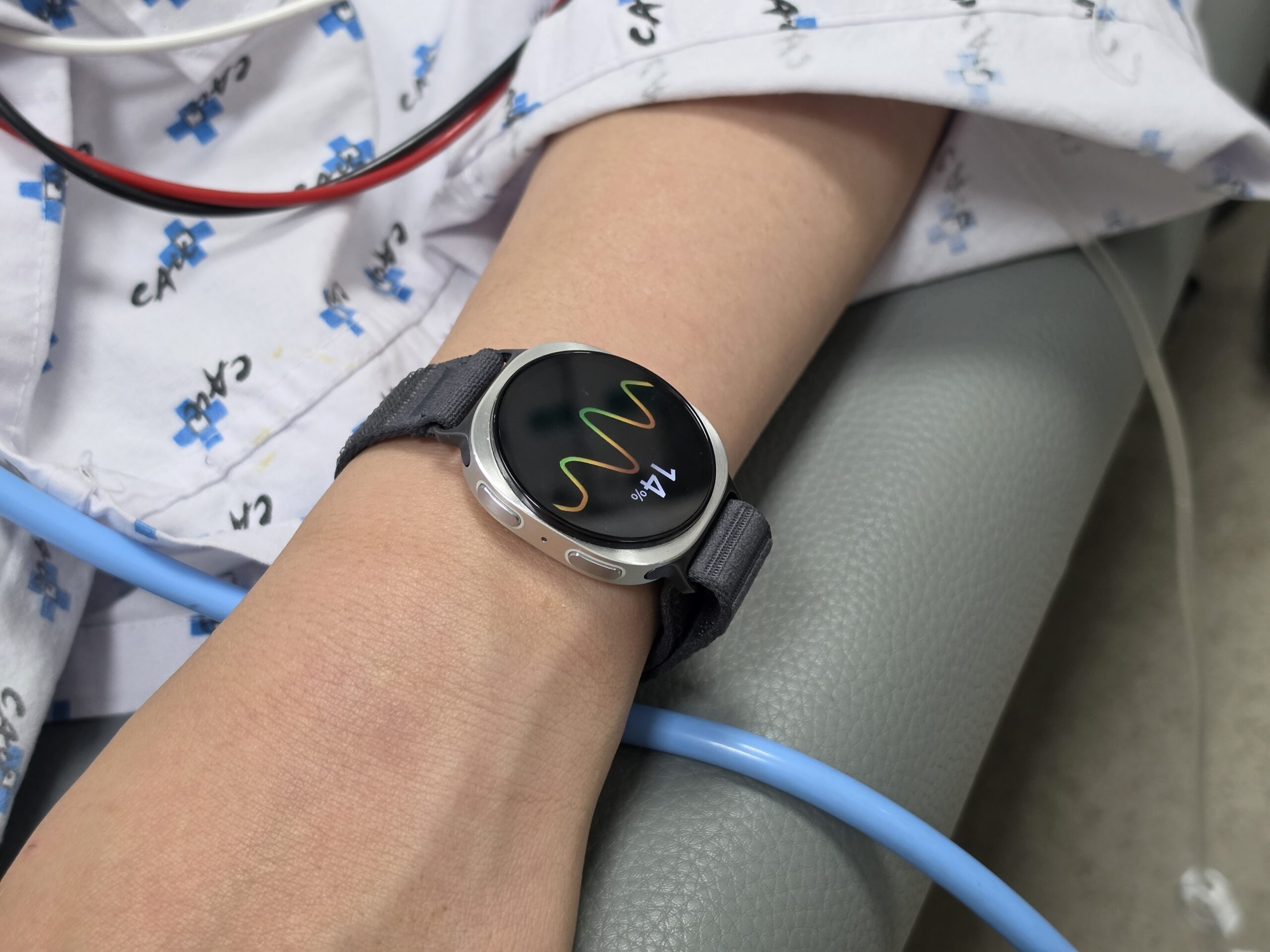
Samsung Galaxy Watch fainting detection is the headline that has put a Korean cardiology study in front of British wearable buyers, and it deserves a careful read rather than a breathless one. Samsung has announced what it calls a world-first breakthrough in predicting vasovagal syncope, the most common cause of fainting, using sensor data from a Galaxy Watch. The work is real and peer reviewed, but it is a research result rather than a feature you can switch on today, and that distinction matters for anyone weighing up a health-focused smartwatch in 2026.
This explainer sets out exactly what Samsung announced, which Galaxy Watch hardware was used, how accurate the prediction was in the trial, and where the line sits between a wellness signal and a regulated medical device. It also covers what the announcement means for health-data privacy in the UK, how the approach compares with Apple Watch and other fitness wearables, and who stands to benefit if the research turns into a shipping feature.
Key facts: what Samsung actually announced
The core claim is specific. Samsung says researchers built an algorithm that can predict an episode of vasovagal syncope up to five minutes before it happens, using signals captured by a Galaxy Watch. Vasovagal syncope, abbreviated to VVS, occurs when a person’s heart rate and blood pressure drop abruptly, briefly starving the brain of blood and causing a faint. It is common, often harmless in isolation, but genuinely dangerous when it strikes while someone is driving, climbing stairs or standing at the top of an escalator.
The study evaluated 132 patients who had suspected VVS symptoms, using induced fainting tests in a controlled clinical setting. Across that group the model reached 84.6 percent accuracy, with a sensitivity of 90 percent and a specificity of 64 percent. In plain terms, the system was good at catching genuine impending faints and less precise at avoiding false alarms, which is a familiar trade-off in early-warning health tools. The findings were published in the European Heart Journal Digital Health, volume 7, issue 4, which gives the result a level of independent scrutiny that a marketing slide alone never carries.

The research was led by Professor Junhwan Cho of the Department of Cardiology at Chung-Ang University Gwangmyeong Hospital in Korea, working with Samsung’s health team. On Samsung’s side, Jongmin Choi, Head of the Health R&D Group within the Mobile eXperience business, is the named executive behind the programme. The device used in the clinical work was the Galaxy Watch6, which is worth holding onto, because it tells you the prediction relies on sensors that already exist on shipping watches rather than some unreleased hardware. If you are still mapping the wider Samsung wearables and AI picture, our look at the way the company is pushing health and assistance features across devices in the Samsung Google AI eyewear UK guide gives useful context.
Is this a Galaxy Watch feature you can use today?
No, and this is the single most important caveat. Samsung has announced a research breakthrough, not a consumer feature with a release date. There is no toggle in Samsung Health that you can enable right now to receive a faint warning, and Samsung has not committed to a model, a market or a launch window for any future product based on this work. Treating the announcement as a shipping capability would be a mistake, and any retailer or third-party page that implies otherwise is getting ahead of what Samsung has said.

What the result does signal is direction. Samsung has been talking openly about AI-powered connected care, and a syncope-prediction algorithm fits neatly into that roadmap alongside existing tools such as irregular heart rhythm notifications, sleep apnoea detection and the broader Energy Score system. The honest read for a buyer is that the Galaxy Watch line is being positioned to do more clinically interesting things over time, but you should buy the watch in front of you for the features it has now, not for a faint-warning function that may or may not arrive. The same discipline applies to any wearable, and our advice on not buying hardware purely for a promised software upgrade in the Gemini Intelligence Android UK rollout piece travels well to smartwatches.
Is it a medical device, and what about MHRA approval?
There is no UK regulatory clearance for a Galaxy Watch fainting-prediction feature, because there is no such product to clear. Samsung’s announcement references the clinical study and the journal publication, not a CE mark, a UKCA mark or Medicines and Healthcare products Regulatory Agency approval. Anyone who tells you the watch is an MHRA-approved syncope monitor is wrong on the facts as they stand in June 2026.
This matters because the line between a wellness feature and a regulated medical device is exactly where these tools get interesting and contentious. In the UK, software that is intended to diagnose, prevent, monitor or predict a disease can fall under medical device rules, which is why features like ECG and irregular rhythm notifications on smartwatches have gone through formal clearance routes before launch. If Samsung ever ships a faint-prediction feature aimed at a clinical claim, it would reasonably be expected to seek the appropriate UK clearance first. Until that happens, treat the current Galaxy Watch as a wellness and fitness device that can flag patterns, not as a diagnostic instrument.
Samsung’s own framing in the research is measured, presenting the model as a predictor evaluated for accuracy, sensitivity and specificity rather than as a guaranteed personal alarm. That restraint is the right posture, and readers should hold any future feature to the same standard. A 90 percent sensitivity is impressive in a lab, but a wearable on a real wrist, moving through a real day, is a harder test. If you want a phone and watch pairing built around the latest Galaxy hardware, our practical Galaxy S26 Ultra UK camera tips guide covers the flagship side of the ecosystem these health features will eventually plug into.
How the prediction works on the wrist
The Galaxy Watch6 used in the study carries the optical heart-rate and bioelectrical sensors that Samsung groups under its BioActive sensor system. Vasovagal syncope produces a recognisable physiological cascade in the moments before a faint, including changes in heart rate and the autonomic signals that govern blood pressure. The algorithm’s job is to spot that cascade early enough to be useful, which the researchers report it could do up to five minutes ahead in the trial conditions.
Five minutes of warning is the kind of window that could genuinely change an outcome. It is long enough for someone to sit down, get off a ladder, pull over or move away from a road, which is the practical value a faint warning would offer over simply recording that a faint happened after the fact. That said, the specificity of 64 percent means false alarms would be a real design challenge. A watch that cries wolf too often gets ignored, so any consumer version would need careful tuning and clear, calm prompts rather than alarming red alerts. Samsung’s wider connected-care messaging suggests it understands that a health nudge has to be trusted to be useful.
Health-data privacy for UK users
Any feature that reads the run-up to a faint is, by definition, processing sensitive health data, and that puts UK data-protection rules front and centre. Health information is a special category of personal data under UK GDPR, which means it carries extra protection and requires a clear lawful basis to process. For a wearable, that usually means explicit consent, transparent explanations of what is collected, and meaningful control over whether the data leaves the device or syncs to Samsung’s servers.
The sensible checks for any UK buyer are the same ones we recommend across connected health and wearable tech. Read what Samsung Health stores locally versus in the cloud, confirm whether health metrics are shared with third parties, and look for granular toggles rather than a single all-or-nothing consent. The privacy discipline we set out for connected wearables in the Oura subscription UK buyers guide applies cleanly here, and our broader Oura Ring 5 UK coverage shows how rival health platforms handle the same sensitive data. A predictive faint feature would raise the stakes, because it implies continuous monitoring of cardiovascular signals rather than occasional spot checks.
How it compares with Apple Watch and other wearables
Apple Watch already ships several clinically cleared features, including ECG and irregular rhythm notifications, plus fall detection that can call emergency services after a hard fall. What Apple does not currently offer is a published, peer-reviewed model that predicts vasovagal syncope minutes before it happens, which is the specific ground Samsung is claiming here. Fall detection reacts to an event; faint prediction tries to get ahead of one, and that is a meaningfully different proposition.
Dedicated health rings and bands from the likes of Oura, Xiaomi and others lean heavily on heart-rate variability, sleep and recovery scoring, but they are not positioned as syncope predictors either. So on paper Samsung’s research puts it ahead on this single, narrow capability, with the heavy caveat that being first to publish a study is not the same as being first to ship a safe, regulated feature. Buyers cross-shopping platforms should still weigh the whole package, and if you are choosing between ecosystems our best iPhone alternative UK 2026 comparison frames where Samsung sits against Apple and Google more broadly.

Who would benefit most
If this research becomes a feature, the clearest beneficiaries are people who experience recurrent vasovagal syncope and live with the anxiety of not knowing when the next episode might come. A reliable few-minutes warning could let them sit or lie down safely, avoiding the falls and injuries that make fainting dangerous. Carers and clinicians might also value a record of near-events to inform treatment, provided the data is accurate and clearly presented.
Who should skip the hype for now is almost everyone else. If you do not have a history of fainting, this is not a reason to buy a Galaxy Watch today, because the feature does not exist as a product and your day-to-day benefit would be nil. Buy a Galaxy Watch for its current sleep, fitness, heart-rate and Galaxy AI features, and treat the syncope research as a promising signal about where Samsung Health is heading rather than a box to tick now. The same patience pays off across the Samsung range, including the TV side covered in our Samsung 2026 TV lineup UK guide.
Key takeaways at a glance
| Detail | What Samsung has confirmed |
|---|---|
| What it is | A research model that predicts vasovagal syncope (fainting) from Galaxy Watch sensor data |
| Lead warning time | Up to five minutes before an episode in the study |
| Accuracy | 84.6 percent accuracy, 90 percent sensitivity, 64 percent specificity |
| Study size | 132 patients with suspected VVS, using induced fainting tests |
| Device used | Galaxy Watch6 |
| Published in | European Heart Journal Digital Health, volume 7, issue 4 |
| Consumer feature? | No shipping feature, model or launch date announced |
| UK regulatory status | No MHRA, UKCA or CE clearance for any such feature |
Where to buy or check next in the UK
Because the fainting prediction is research rather than a buyable feature, the practical question is simply which Galaxy Watch to buy for the health and fitness tools that already exist. Samsung’s own UK store is the place to confirm current Galaxy Watch pricing, trade-in offers and the warranty terms, and it is worth checking delivery windows and returns there before committing. Currys, John Lewis and Argos all stock the Galaxy Watch range, with John Lewis frequently adding a longer guarantee that can be worth the slightly higher ticket.
Amazon UK and Very are useful for price comparison and instalment options, while AO.com sometimes bundles accessories. If you want the watch on a contract alongside a phone, EE, Vodafone and Three all carry Galaxy hardware, so compare the total cost over the term rather than the upfront figure. Whatever the retailer, check the exact model and connectivity option, confirm the delivery date, read the returns window and note the warranty length, since those four details decide the real value far more than any headline discount.
Our verdict
Our view is that this is genuinely good science wrapped in a headline that will tempt people to read too much into it. Predicting vasovagal syncope minutes ahead from a consumer watch is a real achievement, the peer-reviewed publication gives it credibility, and the use of the existing Galaxy Watch6 hardware suggests the path to a shipping feature is plausible rather than fanciful. We are impressed by the direction.
| What we like | What we would watch |
|---|---|
| Peer-reviewed result in a recognised cardiology journal | No shipping feature, model or UK launch date confirmed |
| Up to five minutes of warning could prevent real injuries | 64 percent specificity means false alarms need careful handling |
| Runs on existing Galaxy Watch6 sensors, not unreleased hardware | No MHRA or UKCA clearance, so it is not a medical device yet |
Our recommendation is straightforward. If you have a Galaxy Watch or are buying one, enjoy the health features it has today and treat faint prediction as a future maybe. If you specifically need a fainting-prevention tool now, this announcement does not change your options, and you should speak to a clinician rather than a smartwatch. What would shift our recommendation is a clear, regulated, clinically cleared consumer feature with transparent privacy controls and sensible false-alarm handling. If Samsung delivers that, the Galaxy Watch becomes meaningfully more compelling for at-risk users. Until then, our position is patient optimism.






Reader discussion
Leave a comment
Comments are moderated. Keep it useful, accurate, and on topic.