

The Snapdragon X2 Elite is the first Arm-on-Windows chip I have looked at and not immediately reached for the caveats, and that alone tells you how far this platform has travelled. When Qualcomm took the wraps off the Snapdragon X2 Elite and the punchier X2 Elite Extreme at its Snapdragon Summit on 25 September 2025, then rolled the first laptops onto shelves around CES in January 2026, the headline numbers read like a victory lap. I have watched the Arm-on-Windows promise slip for the best part of a decade, so I am not going to take a victory lap on Qualcomm’s behalf. The question I actually care about, and the one most launch coverage politely skirts, is narrower and more useful: if you cut video for a living in the UK, is this finally the laptop you can buy without an asterisk?
My short answer is that the silicon is no longer the problem. The software, in the specific corners that matter to professional video, has quietly closed most of the gap that used to make me steer creative buyers back towards Apple or x86. Most, not all. So let me lay out where I would happily put a UK editor on one of these machines today, and the one workflow where I would still tell you to wait.
What Qualcomm is actually claiming with the Snapdragon X2 Elite
Start with the spec sheet, treated as marketing until proven otherwise. Qualcomm says the top X2 Elite Extreme carries up to 18 of its new third-generation Oryon cores, peaks at 5.0GHz, and packs an 80 TOPS Hexagon NPU, which the company frames as the fastest NPU in any laptop. It claims roughly 75% faster CPU performance and about twice the performance-per-watt from the Adreno GPU against the previous generation, all on a 3nm process. Those are Qualcomm’s figures, measured by Qualcomm, and I would treat the GPU and NPU claims in particular as best-case until independent UK reviewers have hammered them through real timelines. The independent reporting, including Tom’s Hardware’s breakdown of the 5.0GHz Oryon Prime design, broadly corroborates the architecture even where it is sceptical of the headline percentages. You can read the company’s own framing on the Snapdragon X2 Elite newsroom release.
What I find more persuasive than any TOPS figure is that the hardware has finally crossed the line where the bottleneck stops being the chip. Eighteen cores and a fast GPU are plenty to scrub a 4K timeline. We have watched Arm laptops stumble not because they were slow on paper but because the apps did not run natively, the codecs were not accelerated, and the plugins simply did not exist. That is the real test, and it is a software test. If you want the broader platform context, my colleagues’ look at the Surface Pro 12 on the same X2 Elite silicon shows how quickly Microsoft has standardised on this part across its own hardware.
The codec and hardware decode question that decides everything
Here is the part the SERP dodges. For a video editor, the make-or-break detail is not core count, it is whether the GPU can hardware-decode the codecs you actually shoot, and whether your non-linear editor talks to that hardware. Through 2024 and most of 2025, that was where Arm Windows fell apart: editors ran under emulation, leaned on the CPU to decode H.264 and HEVC, and watched battery and timeline performance collapse the moment you stacked a couple of streams.

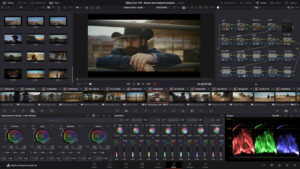
That picture has changed. DaVinci Resolve went native on Windows on Arm well before Adobe did, which matters because the non-linear editor question sits at the centre of whether this platform is ready at all. Adobe has since caught up: from version 26, Premiere Pro, After Effects and Media Encoder run natively on Arm64, and hardware decoding of H.264 and HEVC on Qualcomm GPUs is in beta, with ProRes support in public beta on the same path. Read that carefully. Native editor: yes. Accelerated decode of the everyday codecs: yes, but with the word “beta” still attached on the Adobe side. If you are weighing the editing software itself rather than the laptop, today’s companion piece on where creative apps land across platforms is the natural place to go deeper on the NLE choice.
So my codec verdict splits cleanly. If you cut H.264 and HEVC, which is most YouTubers, most corporate and event shooters, and a large share of UK freelance editors, the X2 Elite is ready. Resolve in particular gives you a fully native, colour-aware pipeline with GPU decode that holds up. If your day revolves around camera-original formats with thin Arm support, or a plugin chain that was never compiled for Arm64, you are still in emulation territory, and emulation is where the magic ends.
Where plugins and colour-managed workflows still bite
The plugin ecosystem is the soft underbelly, and it is worth being honest about it. A colour-managed grade lives or dies on a stack of third-party tools: OFX plugins in Resolve, noise reduction, film-emulation looks, OCIO-aware utilities, panel drivers for hardware control surfaces. Plenty of these are still x86-only, which means they either run under translation, with a performance and stability cost, or they do not run at all. That is the single thing that would stop me handing one of these laptops to a finishing colourist tomorrow.
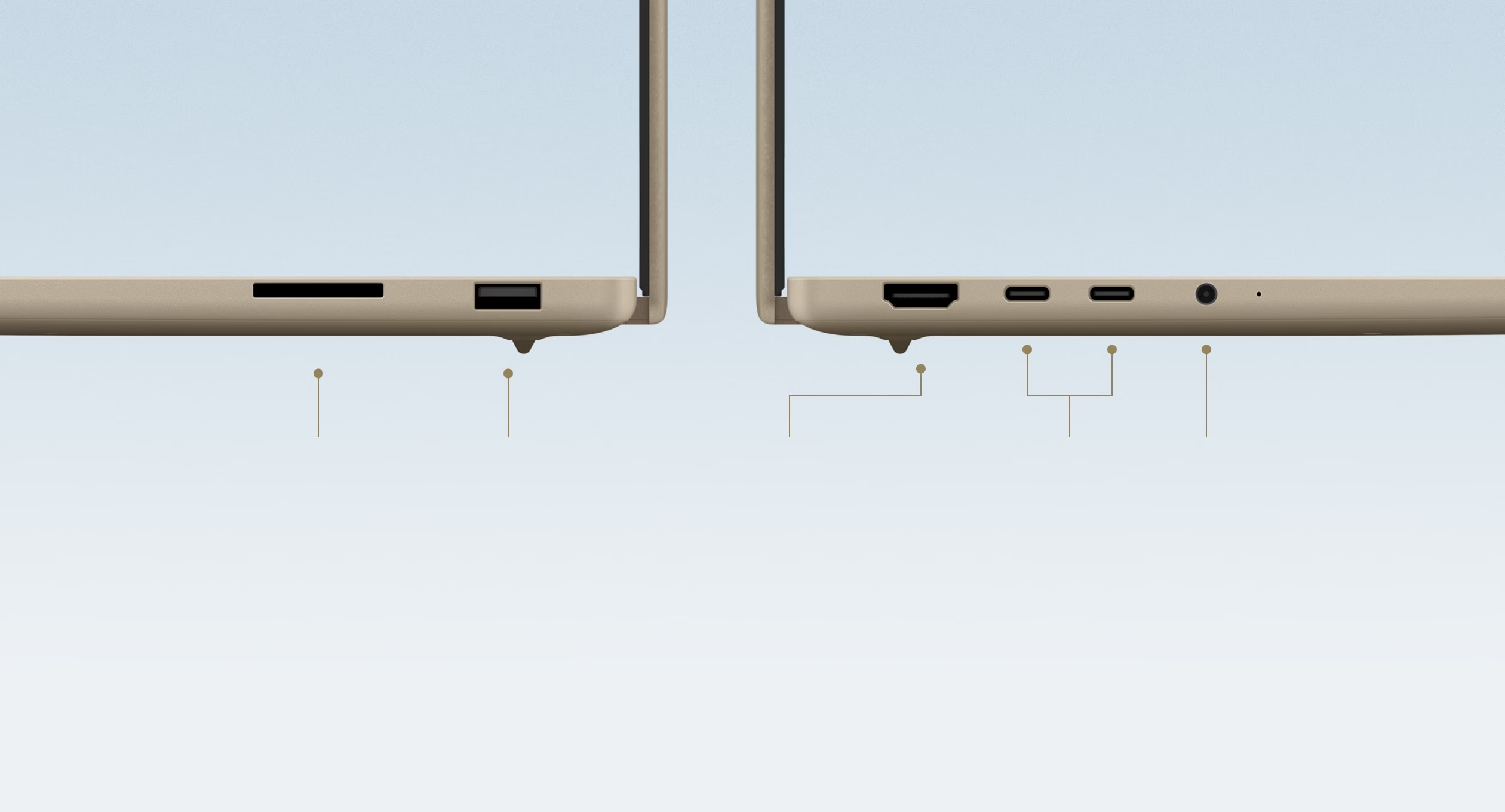
Connectivity helps the case more than people expect. The X2 Elite laptops I have seen ship with the kind of port complement and external-display support a colour-managed setup needs, so feeding a calibrated reference monitor is not the obstacle it once was on thin Arm machines. I argued earlier this year, when the chip clusters started shipping, that the platform story is no longer about raw speed but about ecosystem completeness, and the same logic that I applied to chips that never quite reach the products they should applies here in reverse: the Snapdragon X2 finally has the products, and increasingly the software, to match the silicon. Microsoft’s own push to make Copilot a first-class Windows citizen has, ironically, done more to drag the wider app ecosystem onto Arm64 than any amount of editor evangelism.
If you want a sense of how the hardware feels in the hand before the software conversation even starts, the thin-and-light design language here is genuinely good. The Lenovo Yoga Slim 7x I rated on the previous-generation chip already showed how far the form factor had come, and the X2 generation pushes that further while adding the editing headroom the older part lacked.

What a UK editor actually pays
Pricing in Britain has settled enough to give real numbers. The ASUS Zenbook A16, built on the X2 Elite Extreme with 48GB of memory and a 1TB SSD, sells at Currys for £1,799 (last checked: 2026-06-17), which undercuts the £2,099 ASUS lists on its own UK store and sits close to the US reference of roughly $1,599 to $1,699 for the same configuration. HP and Lenovo showed competing X2 Elite machines around the same launch window; UK RRP varies by exact model and retailer, so check the spec tier before you compare a headline figure to the Zenbook’s. The point is that an 18-core, 48GB, OLED creator laptop landing under £1,800 from a mainstream UK retailer is a serious proposition, not a curiosity.
The verdict I would stake my own kit on
So, ready or not? Ready for the editor who lives in H.264 and HEVC and cuts in DaVinci Resolve or native Premiere: yes, without the asterisk I have carried for years, and at a UK price that finally makes the argument on value rather than novelty. Not yet for the finishing colourist with a deep OFX and control-surface plugin stack, or the editor wedded to camera-original codecs with thin Arm acceleration, because the plugin ecosystem and a couple of decode paths are still catching up. That is a far narrower “not yet” than I have ever been able to write about Arm Windows, and the direction of travel is one-way. If I were buying a creator laptop for mainstream UK video work this summer, I would put the money on an X2 Elite machine and not feel I had compromised. If finishing and grading are your livelihood, give it one more software cycle, then buy without hesitation.
MMTW Editorial
Buyer action
Where to buy or check next
Use this as the final check before ordering a phone, changing network or trusting a headline monthly price.












Reader discussion
Leave a comment
Comments are moderated. Keep it useful, accurate, and on topic.