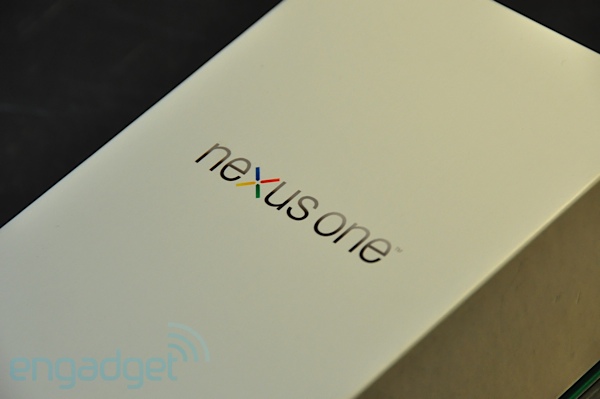
HTC Nexus One Review
The boys at Engadget jumped the gun a decided to post their HTC Nexus One a couple of hours before the official announcement tomorrow. Let’s say that they…
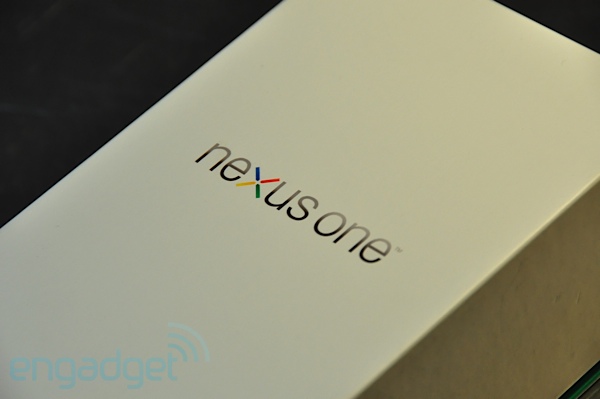
The boys at Engadget jumped the gun a decided to post their HTC Nexus One a couple of hours before the official announcement tomorrow. Let’s say that they weren’t really impressed, should come as no surprise especially after all the stupid hype surrounding this device. The hardware is nearly identical to the HTC HD2 (but with a smaller screen, a bit more RAM) in a less sexy shell, nnd as with all AMOLED screens it’s nearly impossible to use outdoors. Android 2.1 doesn’t seem to bring any new features compared to 2.0.X on the Motorola Droid other than the new homescreen we’ve seen before and there’s still no multi-touch support in the browser, keyboard, photo album etc. I suggest you head over there to check it all out.
Browser Speed test (Motorola Droid vs iPhone 3GS vs HTC Nexus One):
UI Walkthrough:
Voice To Text:
Here’s Josh’s conclusion with which I totally agree:
Never mind the Nexus One itself for a moment — there’s a bigger picture here, and it might spell a fundamental change for the direction of Android as a platform. Whereas Google had originally positioned itself as a sort of patron saint for Android — sending it off into the cold world to be nourished and advanced in a totally transparent way by the widely-supported Open Handset Alliance — it has instead taken a deeply active role and has elected to maintain some semblance of secrecy as it moves from pastry-themed version to version. In general, that approach isn’t necessarily a bad thing for device variety, functionality, and availability, but the way Android’s evolution in particular has gone down certainly seems like a bait-and-switch from an outsider’s view. Take Motorola and Verizon, for example: what had seemed like a deep, tight partnership literally just weeks ago with the announcement of Eclair and the selection of the Droid / Milestone as 2.0’s launch platform has taken a distant back seat just as quickly as it rose to the top. In a word, Google is plunging head-first into the dangerous game Microsoft has adamantly sought to avoid all these years on WinMo: competing head-to-head with its valued (well, supposedly valued) partners. Whether Android risks losing support over manufacturers and carriers being treated like pieces of meat remains to be seen, but realistically, Motorola (which has very publicly gone all-in with Mountain View over the past year) and others are likely to grin and bear it as long as the platform pays the bills — no matter how awkward competing with the company that writes your kernel and huge swaths of your shell might be.
Industry politics aside, though, the Nexus One is at its core just another Android smartphone. It’s a particularly good one, don’t get us wrong — certainly up there with the best of its breed — but it’s not in any way the Earth-shattering, paradigm-skewing device the media and community cheerleaders have built it up to be. It’s a good Android phone, but not the last word — in fact, if we had to choose between this phone or the Droid right now, we would lean towards the latter. Of course, if Google’s goal is to spread Android more wide than deep, maybe this is precisely the right phone at the right time: class-leading processor, vibrant display, sexy shell, and just a sprinkling of geekiness that only Google could pull off this effortlessly.
Then again, we suspect Motorola, Samsung, Verizon, and countless other partners might disagree.
The hype was unnecessary even if the Nexus One is the best Android phone out.
Source: Engadget
How we test
Buyer action
Where to buy or check next
Use this as the final check before ordering a phone, changing network or trusting a headline monthly price.