

The best Wi-Fi mesh system UK buyers can fit in 2026 is the one that matches the shape of their house, the speed of their broadband line and the thickness of their walls, not the one with the biggest number on the box. Mesh kits from Amazon eero, Netgear, TP-Link and Google now span everything from a sub-£200 starter pack to four-figure Wi-Fi 7 flagships, and the gap in real-world value between them is wide. According to Ofcom’s Connected Nations reporting, full-fibre (FTTP) now passes the majority of UK premises, which means more homes than ever have a broadband line fast enough to expose the weak point: the router. This guide ranks the kit worth buying by need, with GBP pricing from named UK retailers, last checked 2026-06-14.
- Top pick for most UK homes: TP-Link Deco BE65, a tri-band Wi-Fi 7 system from about £445 for a 3-pack (John Lewis, last checked 2026-06-14).
- Best for large or three-storey homes: Netgear Orbi 770 series, RBE773 3-pack around £759.99 and RBE772 2-pack around £549.99 (Netgear UK, last checked 2026-06-14).
- Best for gigabit and beyond: Amazon eero Max 7, around £599.99 a unit with 10Gbps Ethernet (Amazon UK, last checked 2026-06-14).
- Every system here works behind a BT, Sky or Virgin Media line in bridge or modem mode; full-fibre (FTTP) now passes most UK premises per Ofcom.
Why a mesh kit, and why now
A single router sat by the front door is the most common reason a UK home has dead spots upstairs and in the back bedroom. Brick internal walls, the solid-floor construction common in terraced and 1930s semi-detached houses, and the habit of leaving the master socket in the hallway all conspire against one box trying to cover everything. A mesh system splits the job across two or three nodes that talk to each other, handing your phone or laptop between them as you move, under one network name. That is the practical difference: not raw speed, but consistent speed in the rooms you actually use.
The case for buying in 2026 specifically is that Wi-Fi 7 has finally reached sane prices. A year ago the only Wi-Fi 7 mesh kits cost well over £700; today a tri-band Wi-Fi 7 set starts around £440. If you are already weighing up your broadband, it is worth reading our running coverage of the best UK full-fibre broadband deals alongside this, because the router upgrade only pays off once the line behind it is quick enough to matter. For homes that cannot get fixed-line fibre, our look at Vodafone 5G Home Broadband explains where 5G home plans fit, and a mesh kit slots in behind those too.
How I ranked the best Wi-Fi mesh system UK options
MobileTechWorld does not run a broadband test lab, so these picks are editorial judgement built from published specifications, manufacturer documentation and the weight of reported evidence from established reviewers. I weight three things heavily: how the system behaves on a typical UK home line rather than a 10Gbps lab connection, how it copes with brick and concrete, and total cost for the pack size most people actually need. Marketing speed ratings, the headline “BE19000” and “BE9300” figures, are the sum of every band added together and no single device ever reaches them, so I treat them as a rough tier indicator only.
Two specs do matter. The first is whether the system is dual-band or tri-band: tri-band kit adds a third radio that can be used for the wireless link between nodes (the backhaul), which keeps speeds up when nodes are far apart. The second is the wired ports. A 2.5Gbps or faster WAN port is the difference between a mesh kit that can take full advantage of a fast line and one that throttles it at 1Gbps. If you have only a standard fibre line today, that matters less; if you are on or heading towards multi-gigabit, it is the single most important number.
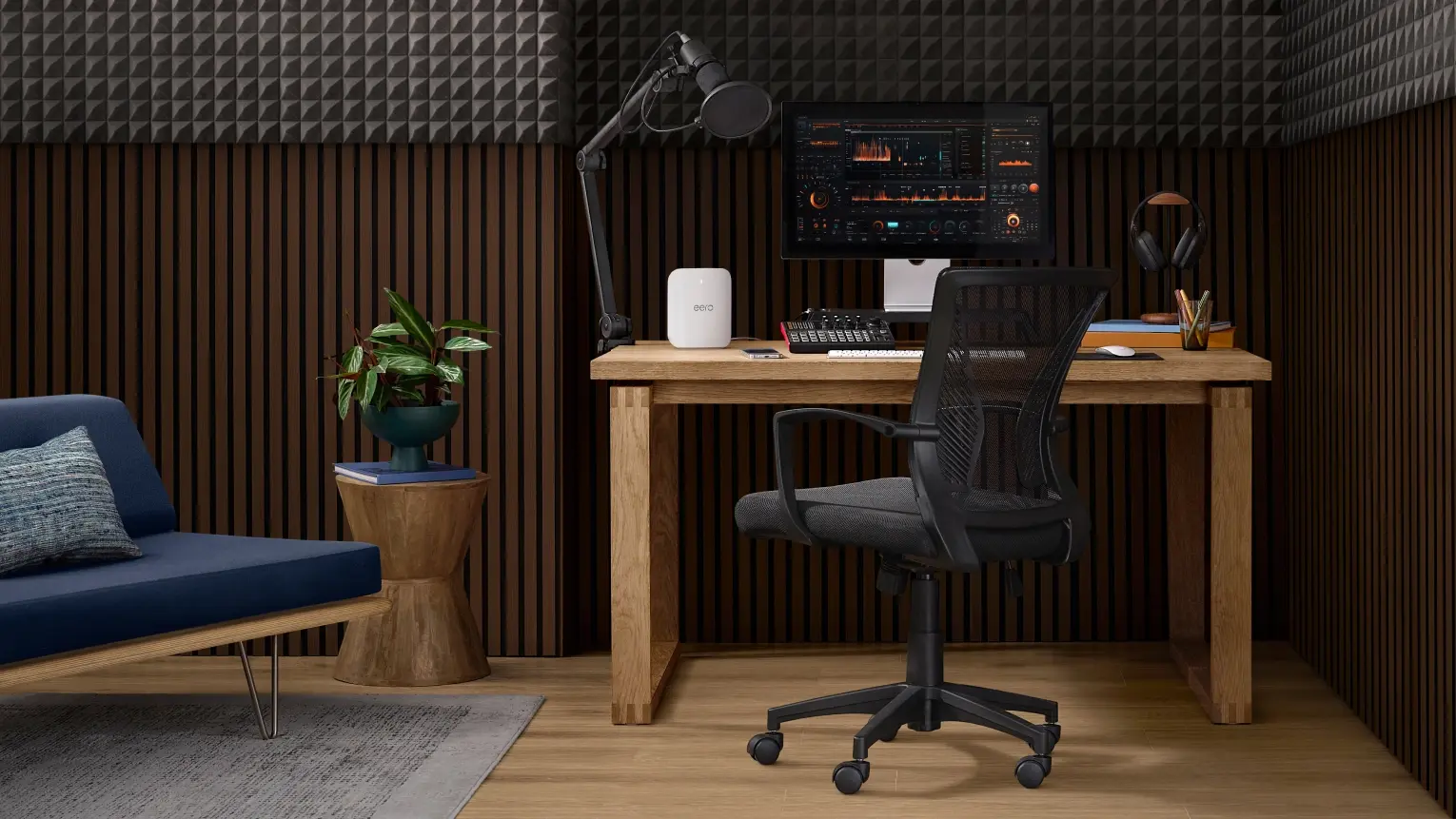
Best overall: Amazon eero for painless whole-home Wi-Fi
For the broadest set of UK households, the eero range is the easiest recommendation, and the reason is setup and reliability rather than peak throughput. The eero app does the heavy lifting: plug the first node into your BT, Sky or Virgin Media router in bridge mode, scan a code, and the system walks you through placing the others. Software updates arrive automatically, and the TrueMesh routing quietly steers devices to the best node. For a household that wants Wi-Fi to disappear as a problem, that polish is worth a lot.
The line-up scales cleanly. The dual-band eero 6+ is the entry point, supporting plans up to a gigabit and built-in Zigbee for smart-home kit, which makes it a tidy match for a Matter 1.4 smart home where the router can double as a hub. The eero 7 brings dual-band Wi-Fi 7 with 2.5Gbps support, while the tri-band eero Pro 7 adds the 6GHz band and 5Gbps support, covering up to 190m2 per unit. Amazon positions eero as a system that grows with your line, and that incremental ladder is its strength: you buy the tier your broadband justifies and add nodes later.
The trade-off is the ecosystem. eero is an Amazon product, the advanced features (eero Plus security, dedicated support) sit behind a subscription, and power users sometimes miss the granular manual controls that TP-Link and Netgear expose. For most buyers that is a fair exchange for a system that simply works.
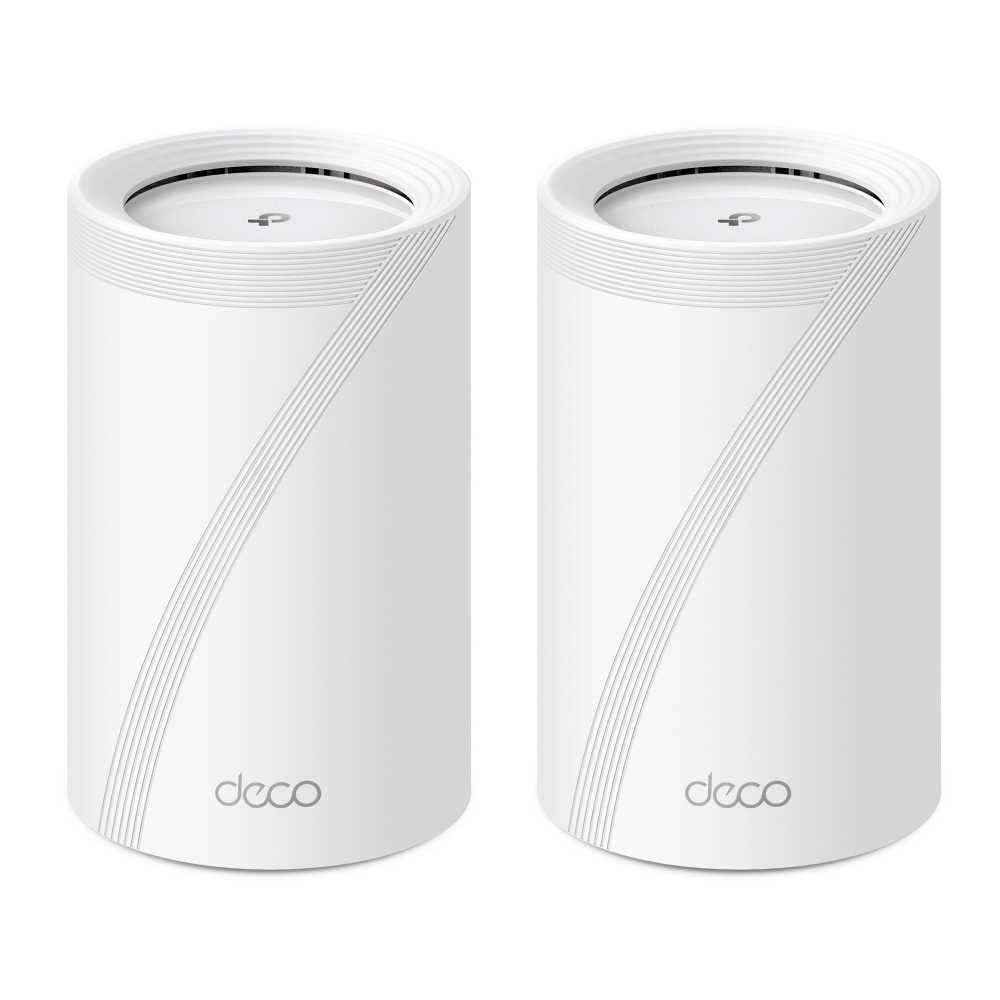
Best value: TP-Link Deco BE65 brings Wi-Fi 7 down to earth
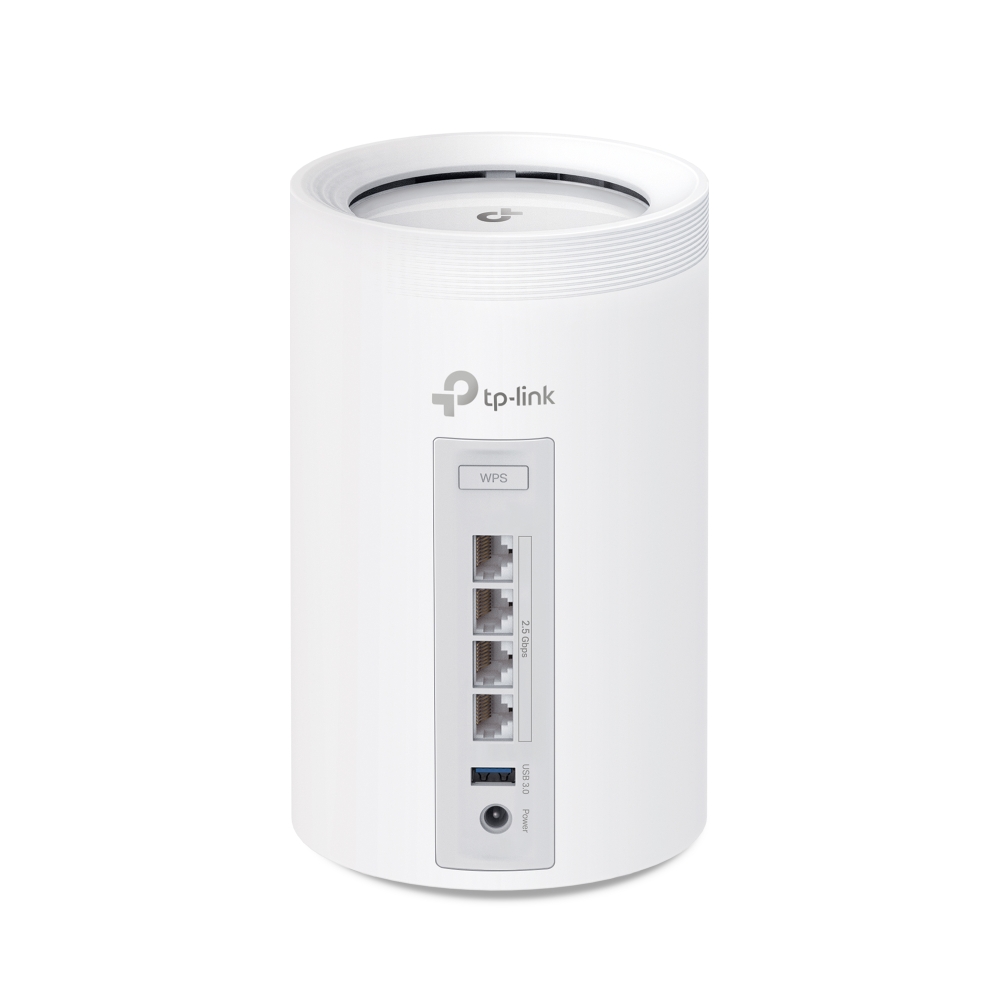
If the question is which kit gives the most modern technology for the least money, the answer in 2026 is the TP-Link Deco BE65. It is a tri-band Wi-Fi 7 system with a fast 6GHz band used for combined wireless backhaul, 2.5Gbps wired ports, and TP-Link’s HomeShield security tools, and a 3-pack lands at roughly £440 to £450 depending on retailer (Currys, John Lewis and Amazon UK listings, last checked 2026-06-14). For that price you are getting the same generation of Wi-Fi as kit costing far more.
The Deco app is more involved than eero’s but rewards the effort with proper controls: per-device QoS, a clear network map, parental controls and the option to run the nodes as access points if you would rather keep your ISP router doing the routing. Coverage from a 3-pack comfortably handles a typical three or four-bedroom UK house, and because it is tri-band the backhaul does not collapse when a node sits at the far end of the building. The honest caveats are that TP-Link’s headline “BE9300” rating is the usual additive number, and that the plastic finish feels less premium than the Netgear or Google designs. Neither dents the value argument.
Buyers who only want Wi-Fi 6 to save more can drop to a Deco X-series pack, which still covers most homes under about 200m2, but with Wi-Fi 7 now this cheap the BE65 is the one I’d steer most people towards.

Best for large homes: Netgear Orbi 770 series
When the building is the problem, big detached house, three storeys, thick stone walls or a long thin terrace, the Netgear Orbi 770 series is the kit designed to brute-force it. Netgear introduced the 770 line in 2025 as a more affordable Wi-Fi 7 Orbi, and it keeps the tri-band design and the enhanced backhaul tuning that made earlier Orbi systems the default for problem houses. Each node throws a strong signal, and the satellites are tuned to hold a fast link to the router over distance, which is exactly what a sprawling layout needs.
Pricing reflects the ambition. The RBE773 3-pack sits around £759.99 and the RBE772 2-pack around £549.99 at Netgear UK, with individual add-on satellites near £319.99 (Netgear UK and idealo, last checked 2026-06-14). That is a serious outlay, and for a standard semi it is more than you need. The reason to pay it is coverage headroom: if previous mesh kits left you with a stubborn dead zone, the Orbi’s range is the most reliable fix short of running Ethernet. Each node also carries 2.5Gbps Ethernet, so a fast line is not wasted. The drawbacks are price, physically large nodes, and an app that nudges you towards Netgear’s Armor security subscription.

Best looking and simplest: Google Nest Wifi Pro
The Google Nest Wifi Pro is the kit for people who want the router to look like an object they are happy to leave on a shelf rather than hide in a cupboard. It is a Wi-Fi 6E system, tri-band with the 6GHz band, managed through the Google Home app, and it doubles as a Thread border router for smart-home devices. At Currys it lists around £184.99 for a single unit and £369.99 for the triple pack (Currys, last checked 2026-06-14), and it is widely stocked at Argos and John Lewis too.
What you give up is the cutting edge. Nest Wifi Pro is Wi-Fi 6E, not Wi-Fi 7, and its wired ports top out at 1Gbps, so it cannot take advantage of a multi-gigabit line. For a standard UK fibre connection that is fine, and the setup is genuinely the simplest here if you already live in Google’s ecosystem. But if you are spending this much, the TP-Link Deco BE65 gives you a newer Wi-Fi generation and faster ports for similar money, which is why Nest Wifi Pro is a style and simplicity pick rather than a value or performance one.
Best for gigabit and gaming: Amazon eero Max 7
If your line is already multi-gigabit, or you want a system that will not be the bottleneck for years, the eero Max 7 is the flagship. It is a tri-band Wi-Fi 7 system with 10Gbps Ethernet, supports very fast plans, and pairs eero’s hands-off software with hardware that can actually move the data. Amazon lists it around £599.99 for a single unit, with multi-packs rising steeply from there (Amazon UK, last checked 2026-06-14). For a large home on a fast FTTP line, or a gamer who wants the lowest-latency wireless on offer, it is the most future-proof kit eero sells.
The honest framing is that almost nobody needs it yet. The vast majority of UK lines, even good full-fibre ones, do not get close to saturating a single eero Max 7, let alone a multi-pack, and you would feel no difference versus a Deco BE65 on a 900Mbps connection. Buy it if you have the line to justify it or you simply want the ceiling raised. Otherwise the money is better spent elsewhere. If you are still deciding on the line itself, our guide to BT, EE and Vodafone full-fibre deals is the place to start, and for London readers the value of Community Fibre is worth checking before you commit.
Best budget: a Wi-Fi 6 starter pack or BT Whole Home
Not every home needs Wi-Fi 7. If your broadband is a standard fibre line of up to about 150Mbps to 500Mbps and your house is a typical two or three-bedroom property, a Wi-Fi 6 starter pack is the sensible spend. A TP-Link Deco X-series or eero 6+ pack covers the job for well under the price of the flagships, and the eero 6+ adds a Zigbee smart-home hub into the bargain. For readers who want a kit from a familiar UK name, BT Whole Home Wi-Fi discs are sold through BT directly and remain an easy, well-supported option, though they are Wi-Fi 5 and 6 era hardware rather than the latest generation.
There is also the free option many people overlook: the mesh discs your ISP already offers. EE bundles Smart Wi-Fi discs with its broadband, and similar add-ons exist across the major providers. If you are an EE customer, it is worth reading our take on EE in 2026 and the network’s ongoing 5G and infrastructure upgrades before buying a third-party kit, because the supplied discs may already cover a smaller home at no extra cost. Buy a standalone mesh system only once the free option has been ruled out.
Setting it up behind a UK ISP router
The most common UK setup question is how a mesh kit coexists with the router your provider sent. The cleanest approach is to put the ISP router into modem or bridge mode and let the mesh system handle the routing, which avoids the double-NAT problems that cause game consoles and some smart devices to misbehave. BT, Sky and most providers support this, though Virgin Media’s Hub needs to be set to modem mode specifically. Where you cannot bridge the ISP box, running the mesh nodes as access points is the fallback, with the ISP router still doing the routing.
Placement matters more than people expect. Nodes want to be out in the open, not in cupboards or behind televisions, and ideally one node per floor with a clear-ish line between them. Where a wired backhaul is possible, even a single Ethernet run between two nodes, take it: a wired link beats any wireless backhaul and is the biggest single upgrade you can make to a mesh network’s stability. None of this changes your contract terms, and switching kit does not affect the mid-contract price-rise rules Ofcom now enforces, which apply to the broadband service rather than your hardware.
One more practical note for mobile-heavy households: a good mesh network only helps indoors. For coverage on the move you are reliant on your carrier, and if that is the weak link our Virgin Media O2 mobile guide covers how home and mobile bundles increasingly overlap.
| System | Wi-Fi | Top wired port | Indicative UK price | Best for |
|---|---|---|---|---|
| TP-Link Deco BE65 (3-pack) | Wi-Fi 7, tri-band | 2.5Gbps | From about £440 to £450 | Best value overall |
| Amazon eero 6+ (3-pack) | Wi-Fi 6, dual-band | 1Gbps | Budget, smart-home hub | Simple, cheap, Zigbee |
| Amazon eero Pro 7 | Wi-Fi 7, tri-band | 5Gbps support | Premium per-node | Easy, fast, polished |
| Amazon eero Max 7 | Wi-Fi 7, tri-band | 10Gbps | About £599.99 a unit | Gigabit and gaming |
| Netgear Orbi 770 (RBE773 3-pack) | Wi-Fi 7, tri-band | 2.5Gbps | About £759.99 | Large or awkward homes |
| Google Nest Wifi Pro (3-pack) | Wi-Fi 6E, tri-band | 1Gbps | About £369.99 | Design and simplicity |
Where to buy in the UK
All six systems are widely stocked. The eero range is cheapest and most reliably in stock at Amazon UK, which is unsurprising given eero is an Amazon brand, and prices there fall noticeably during Prime Day and Black Friday. The TP-Link Deco BE65 is sold at John Lewis (with its two-year guarantee), Currys, Argos and Amazon UK, so it is worth a quick price comparison across the four before buying. Netgear Orbi is available direct from Netgear UK as well as Currys and Amazon UK. Google Nest Wifi Pro is stocked at Currys, Argos, John Lewis and the Google Store. BT Whole Home and EE Smart Wi-Fi discs come direct from BT and EE respectively, often bundled with broadband.
Two consumer-rights points worth remembering. Buying online gives you a 14-day right to change your mind under the Consumer Contracts Regulations, separate from any retailer goodwill returns window, so you can test a kit in your own home and send it back if coverage disappoints. And John Lewis bundles a two-year guarantee on much of this category as standard, which can tip a close decision in its favour even at a slightly higher headline price.
My verdict
For most UK homes, the TP-Link Deco BE65 is the kit to buy: it brings tri-band Wi-Fi 7 and 2.5Gbps ports at a price well below the premium flagships, and a 3-pack covers a typical house. If you would rather the network simply vanish as a worry and you do not mind the Amazon ecosystem, the eero range is the easiest life, scaling from the cheap 6+ to the gigabit-ready Max 7. Pay for the Netgear Orbi 770 only if a big or awkward building has defeated cheaper kit, and treat the Nest Wifi Pro as a design choice rather than a value one. The honest bottom line: match the kit to your line and your walls, do not overspend on speed your broadband cannot deliver, and wire a backhaul if you possibly can.
| What I like | What I’d watch |
|---|---|
| Tri-band Wi-Fi 7 mesh now around £440 (Deco BE65) | Headline “BE” speed ratings are additive marketing numbers |
| eero setup is the most painless behind a UK ISP router | Advanced features often sit behind a subscription |
| Tri-band kit holds speed over distance in brick homes | Multi-gigabit flagships are overkill for most UK lines |
Frequently asked questions
Related coverage



Buying Guides
Nothing Phone 4a: Britain’s best £349 mid-ranger?


Buying Guides
Best gaming handheld UK 2026: which to buy now

Buying Guides







Reader discussion
Leave a comment
Comments are moderated. Keep it useful, accurate, and on topic.