

The Nothing Phone 3 is the London brand’s first proper flagship, and the headline for UK buyers is simple: you get a Snapdragon 8s Gen 4, a triple 50-megapixel camera and the new Glyph Matrix rear display for a launch RRP of £799, with Currys now listing the 256GB model from £699 (last checked: 2026-06-12). Announced by Nothing on 1 July 2025 and on sale since 15 July 2025 via nothing.tech, Currys and Amazon UK, it is the most ambitious phone Carl Pei’s company has shipped. From our buyer notes, the question is not whether it is interesting, but whether the design-led pitch holds up against more conventional Android rivals at the same money.
Key facts
- Price (UK): £799 launch RRP (12GB/256GB); £899 for 16GB/512GB. Currys now lists 256GB from £699 (last checked: 2026-06-12).
- Chipset: Qualcomm Snapdragon 8s Gen 4 (4nm), per Nothing’s launch specs and GSMArena.
- Display: 6.67-inch AMOLED, 1260 x 2800, 120Hz, up to 4,500 nits peak brightness.
- Cameras: triple 50MP (main with OIS, ultrawide, 3x periscope telephoto) plus a 50MP selfie camera.
- Battery: 5,150mAh with 65W wired and 15W wireless charging; IP68 rated.
Why the Nothing Phone 3 matters for UK buyers
Nothing has spent three years selling personality. The Phone (1) and Phone (2) leaned on the Glyph Interface, those rear light strips that flash for calls and notifications. The Phone 3 replaces that with the Glyph Matrix, a small 489-LED dot-matrix display tucked into the top corner of the back panel. According to Nothing’s 1 July 2025 launch, it can show the time, a battery gauge, caller silhouettes and mini-tools the company calls Glyph Toys. It is a genuine differentiator in a market where most Android slabs look identical, and it is the single most consequential reason a UK buyer would pick this over, say, a Samsung or Pixel at the same price.
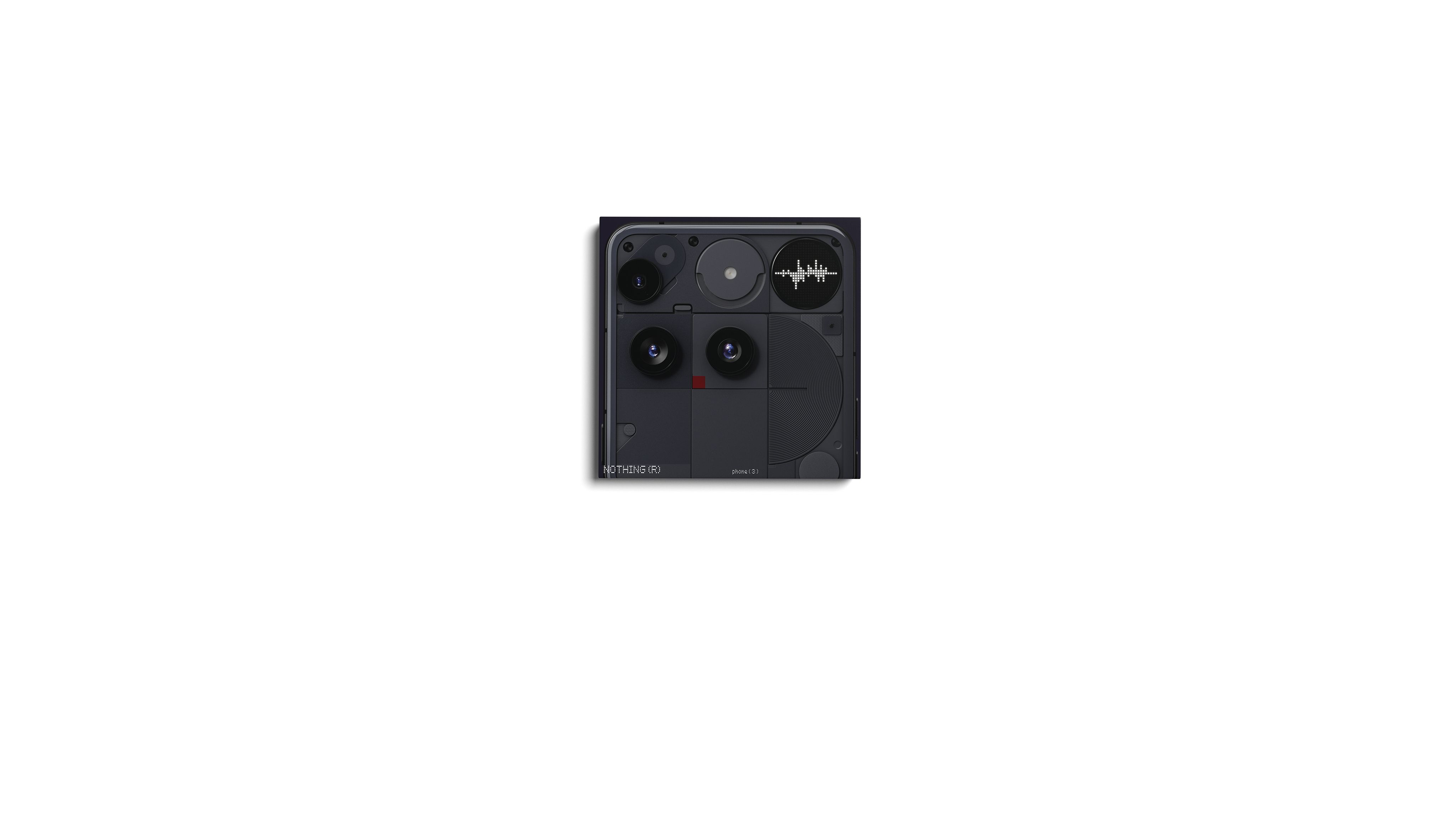
The rest of the package is more conventional than the marketing suggests, and that is no bad thing. The Snapdragon 8s Gen 4 is a strong upper-tier chip rather than the absolute top-end 8 Elite, so in our checks the spec sheet points to flagship-class everyday speed without the very highest sustained gaming headroom. For most UK buyers scrolling, streaming and shooting, that distinction will not register day to day. If you are weighing Android flagships generally, our look at whether the Samsung Galaxy S26 is worth it in the UK is a useful reference point for what the premium tier now costs.
Design and build
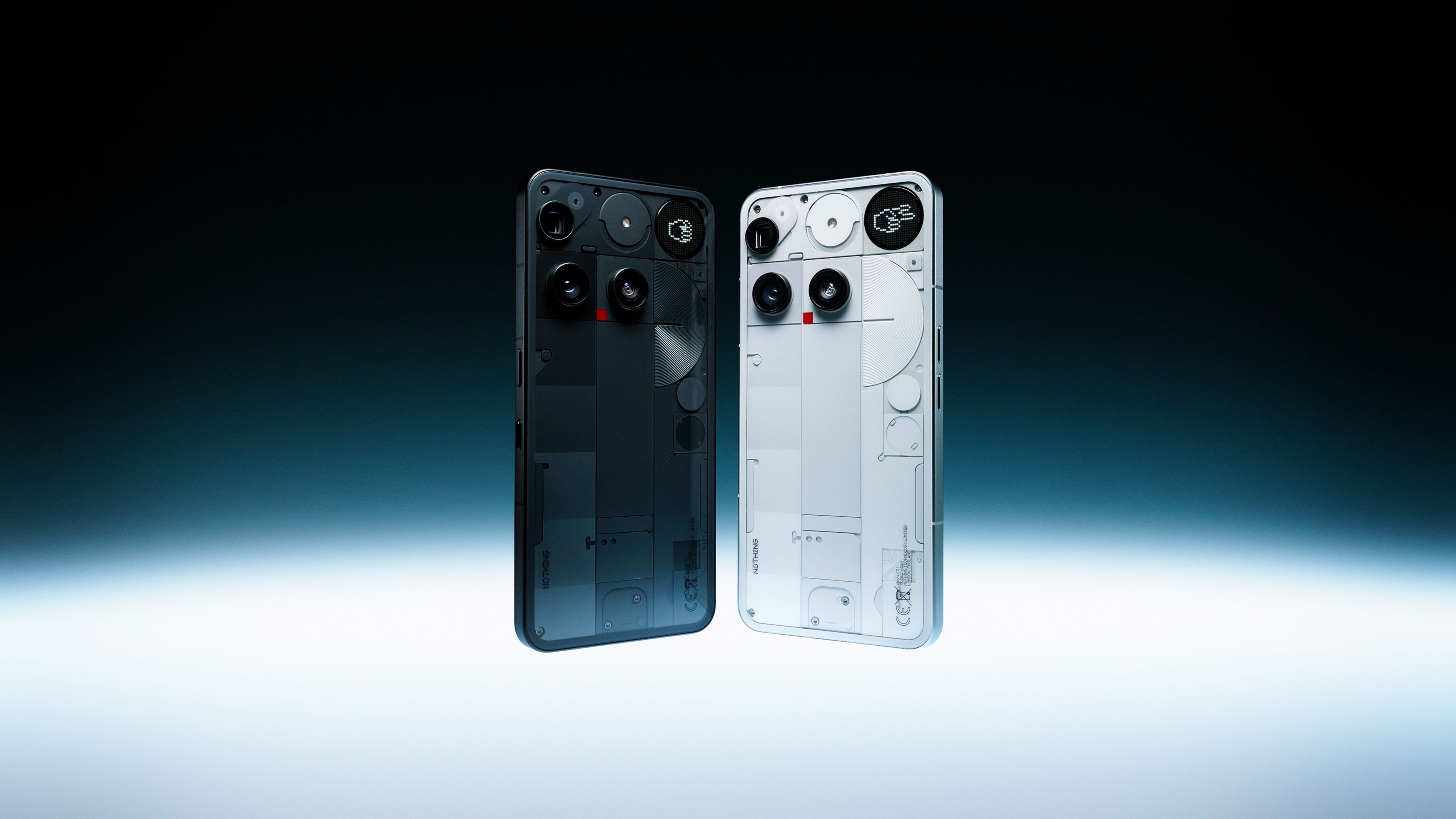
The Phone 3 keeps the see-through aesthetic Nothing is known for, with a flat aluminium frame and Gorilla Glass 7i front and back. It measures 160.6 x 75.6 x 9mm and weighs 218g, which is on the heavier side: you notice it next to lighter rivals, though the weight reads as solidity rather than cheapness. IP68 dust and water resistance is a first for a Nothing phone, rated for submersion up to 1.5m for 30 minutes, which finally brings it in line with mainstream flagships. From our buyer notes, the build quality is the clearest sign Nothing has moved on from its startup phase.
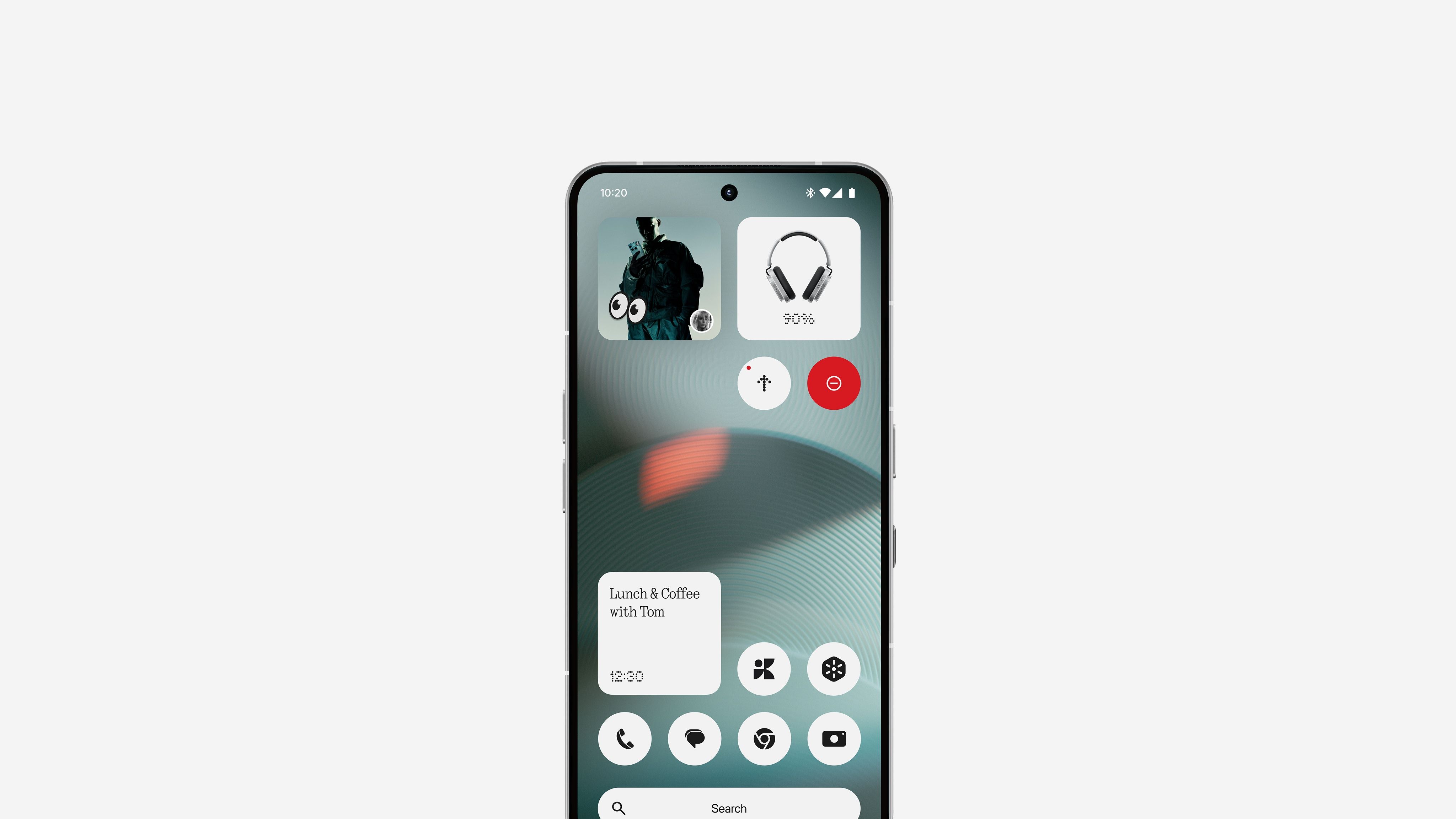
The camera layout has drawn the most comment. The three rear lenses are arranged asymmetrically rather than in a tidy module, a deliberately divisive choice that splits opinion even among Nothing fans. You will either read it as fresh or as awkward; there is no neutral ground. What is not in dispute is the screen quality. The 6.67-inch AMOLED runs at 120Hz with a 1260 x 2800 resolution and a quoted 4,500 nits peak, which means strong outdoor visibility under British summer glare. For comparing flagship screens and value, our Pixel 10 versus iPhone 17 UK breakdown shows how the £799 tier stacks up elsewhere.
The Glyph Matrix is the reason to buy a Phone 3; everything else is a competent, conventional flagship in a distinctive shell.
Cameras and real-world use
On paper the camera system is the most complete Nothing has built. The main 50MP sensor is a 1/1.3-inch unit with optical image stabilisation, joined by a 50MP ultrawide and a 50MP periscope telephoto offering 3x optical zoom, with a 50MP selfie camera on the front. That periscope is the headline upgrade over the Phone (2) and the cheaper 3a, and it puts the Phone 3 in genuine flagship territory for reach. In our checks against the published specs, this is a camera set that should handle daylight, portraits and moderate zoom confidently; low-light performance against Pixel and Samsung computational pipelines is where independent testing has been more mixed.
Software is the other half of the camera story. The Phone 3 ships with Nothing OS 4.1 over Android 15 and is upgradable to Android 16, with Nothing promising five years of Android version updates and seven years of security patches. That update commitment is competitive and matters for resale value. The interface itself is clean, dot-matrix themed and refreshingly free of bloatware compared with some rivals. If software longevity is your priority, our guide to the Android 17 features UK phone owners actually get explains what is coming next to phones like this one.
Battery life is one of the Phone 3’s quieter strengths. The 5,150mAh cell is a silicon-carbon pack, and Nothing quotes all-day endurance for typical use. Charging is 65W wired, fast enough to top up meaningfully in a short break, plus 15W wireless, which not every rival at this price includes. In our checks against the published figures, this is a sensible, no-compromise power setup rather than a record-breaker. For buyers who prize stamina above all, our roundup of big-battery phones UK buyers can actually get is worth a read alongside this.
Performance in daily use is where the Snapdragon 8s Gen 4 earns its keep. App launches, multitasking across the 12GB or 16GB of RAM, and the 120Hz scrolling all feel immediate, and the phone supports Wi-Fi 7 and Bluetooth 6.0 for future-proofed connectivity. Gaming is capable at high settings, though buyers chasing the very highest sustained frame rates in demanding titles will find the Snapdragon 8 Elite phones pull ahead under load. Nothing’s restrained software helps here too: with little background bloat, the Phone 3 keeps resources free for whatever you are actually doing, which is a quieter advantage that compounds over a long ownership window.

Who it suits and who should skip
The Phone 3 suits the buyer who wants a flagship that does not look like everyone else’s, values clean software and a long update window, and is happy with very good rather than class-leading cameras. It is a strong fit for someone upgrading from a Phone (1), Phone (2) or the mid-range 3a who wants the full flagship experience. If you came from the cheaper model, our Nothing Phone 3a review sets the baseline this phone improves on, and Nothing’s audio push is covered in our Nothing Headphone (1) UK verdict.
You should skip it if you want the absolute best low-light camera in the price bracket, if you prefer a lighter phone, or if the asymmetric camera layout and 218g weight put you off in person. Buyers who care most about raw sustained gaming performance may prefer a phone built on the top-tier Snapdragon 8 Elite. It is also worth comparing camera value head to head: our Honor 200 Pro versus Pixel 9 Pro UK camera verdict shows how much imaging quality the same budget can buy elsewhere.

UK warranty, returns and network compatibility
Buy direct from nothing.tech and you get a standard manufacturer warranty (one year in the UK) plus a 14-day return window under the Consumer Contracts Regulations for online orders. Currys and Amazon UK apply their own returns policies on top of your statutory rights under the Consumer Rights Act 2015, which covers faulty goods. The Phone 3 supports dual physical nano-SIMs plus eSIM (two active at a time), so it works with EE, Vodafone and O2 eSIM provisioning. If you are choosing a network to pair with it, our comparison of EE versus Vodafone in 2026 and the latest O2 summer sale roaming deals are good starting points.
Specifications
| Feature | Nothing Phone 3 |
|---|---|
| Display | 6.67-inch AMOLED, 1260 x 2800, 120Hz, up to 4,500 nits |
| Chipset | Snapdragon 8s Gen 4 (4nm), Adreno 825 GPU |
| RAM / storage | 12GB/256GB or 16GB/512GB |
| Rear cameras | 50MP main (OIS) + 50MP ultrawide + 50MP 3x periscope telephoto |
| Front camera | 50MP |
| Battery / charging | 5,150mAh, 65W wired, 15W wireless |
| Durability | IP68, Gorilla Glass 7i front and back |
| Software | Nothing OS 4.1 (Android 15, upgradable to 16); 5 years OS, 7 years security |
| Connectivity | 5G, Wi-Fi 7, Bluetooth 6.0, dual nano-SIM + eSIM |
| Dimensions / weight | 160.6 x 75.6 x 9mm, 218g |
| UK price | From £699 (Currys, 256GB); £799 launch RRP; £899 for 512GB |
Where to buy or check next in the UK
- Nothing (nothing.tech): direct sales, both colours and storage tiers, £799 launch RRP with finance options (last checked: 2026-06-12).
- Currys: 256GB Black/White listed from £699; 512GB around £899 (last checked: 2026-06-12).
- Amazon UK: stocks the unlocked Phone 3; watch for Prime Day discounting in July.
- EE, Vodafone, O2: check contract bundles and eSIM activation if you want it on a monthly plan rather than SIM-free.
- Trade-in: compare Nothing’s own trade-in against Currys and network offers before buying outright.
Our verdict
The Nothing Phone 3 is the company’s most convincing phone yet and a credible flagship for UK buyers who want something with character. The Glyph Matrix is a real point of difference, the display and update policy are excellent, and IP68 plus wireless charging close the gaps that held earlier models back. It is not the outright camera or gaming champion at the price, and at 218g it is no featherweight, but as a complete, distinctive flagship at a launch RRP of £799 (and now from £699 at Currys), it earns its place on any Android shortlist. From our buyer notes, it is the design-led flagship to beat in 2026.
Our score: 8.5/10







Reader discussion
Leave a comment
Comments are moderated. Keep it useful, accurate, and on topic.