
News · 9 Jun 2026 · Daniel Reid
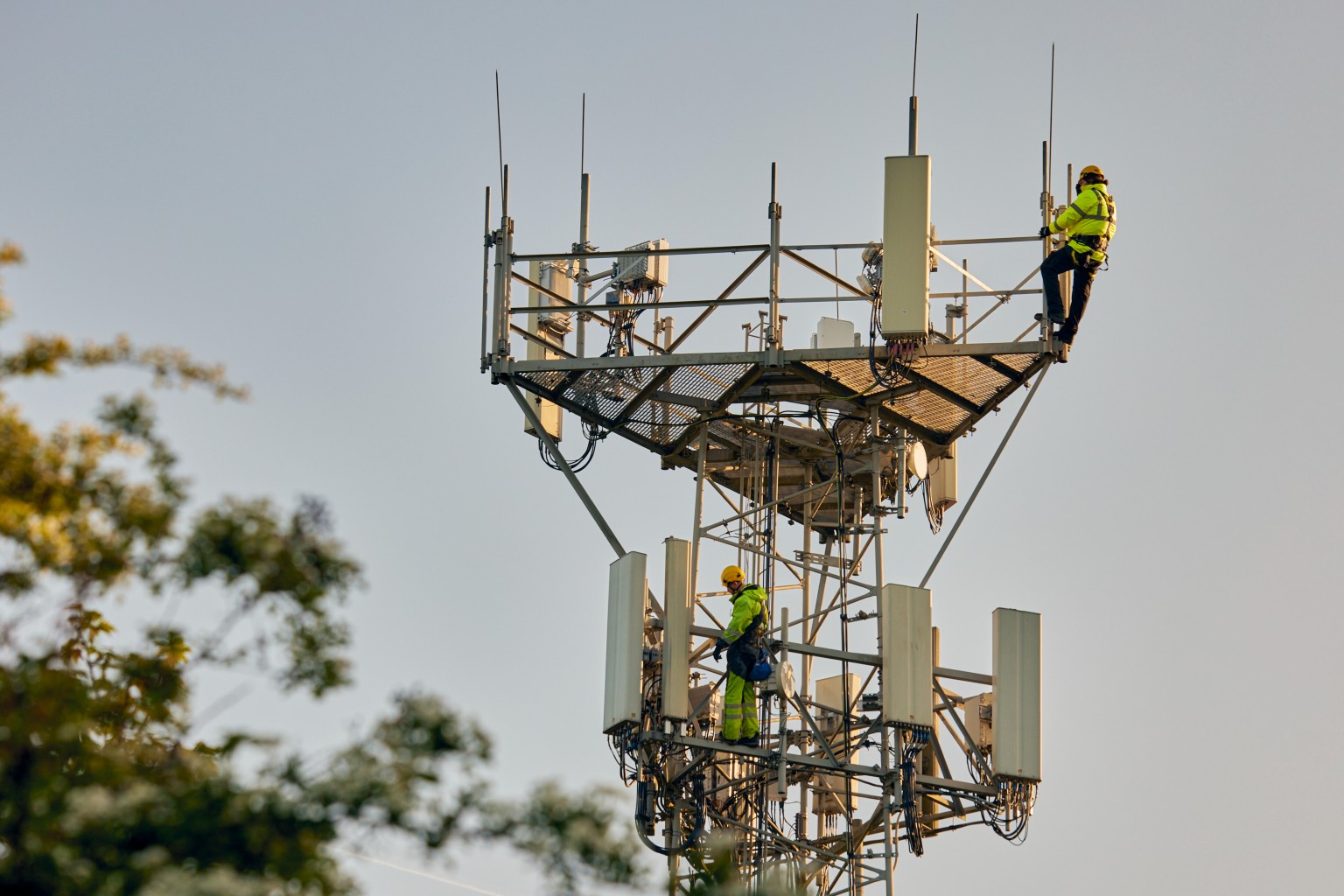
The VodafoneThree network upgrade just delivered a genuine world first, and it matters more for everyday UK coverage than most network announcements ever do. On 28 May 2026, VodafoneThree and its technology partner Ericsson completed the first national integration of core and radio network sharing on a live, multi-vendor mobile network. In plain terms, up to 28.6 million Vodafone and Three customers now automatically latch onto whichever of the two networks is strongest where they are standing, at no extra cost. This is the first major customer benefit of the Vodafone and Three merger, and it is the kind of behind-the-scenes engineering that quietly fixes dropped calls and dead spots.
- What happened: on 28 May 2026 VodafoneThree and Ericsson completed a world-first integration of core and radio network sharing.
- The technology: Multi-Operator Core Network (MOCN) sharing layered onto the existing Multi-Operator Radio Access Network (MORAN).
- Scale: delivered across more than 10,000 sites in the UK.
- Coverage: up to 28.6 million customers auto-connect to the best network; 50 million people (around 71% of the UK) can reach the fastest 5G speeds.
- Dead spots: roughly 16,500km² of mobile not-spots eliminated, as part of an £11 billion investment programme.
What the VodafoneThree network upgrade actually changed
Before this, Vodafone and Three ran as two separate networks even after their merger was cleared. A Three customer in a Vodafone-strong area, or vice versa, could not simply use the better signal. This upgrade changes that. By unifying the two operators’ core networks, the merged business can now route any customer onto whichever network gives them the best coverage and speed in real time. Andrea Donà, Chief Network Officer at VodafoneThree, put it simply: “This upgrade means customers are already experiencing improved reliability and coverage, as well as access to our fastest 5G speeds today.”
The “world first” claim is specific and worth understanding: operators have shared radio masts before, and they have shared core networks before, but doing both together at national scale across equipment from different vendors had not been done. That is the engineering achievement here. For UK customers, the practical upshot is that the combined network behaves as one, which is exactly what the merger promised. If you are weighing the merged operator against rivals, our EE versus Vodafone comparison sets out how the networks stack up beyond this single upgrade.
MOCN and MORAN: the jargon, in plain English

Two acronyms do the heavy lifting. MORAN, the Multi-Operator Radio Access Network, lets two operators share the same physical masts and antennas while keeping their own spectrum and core. MOCN, the Multi-Operator Core Network, goes a step further and lets them share the core brains of the network too, so a single connection can be steered onto the best available path. VodafoneThree already had MORAN; adding MOCN on top is what unlocks the automatic best-network switching.
Ericsson delivered this in two phases: first switching on shared capabilities at priority sites using existing hardware for quick wins, then progressively consolidating spectrum and upgrading sites to squeeze out more performance. The phased approach matters because it means customers see benefits now rather than waiting years for a full rebuild. It is a reminder that a lot of “5G” progress is not about new masts at all, but about software and clever sharing that make existing infrastructure work harder.
The “multi-vendor” detail is more important than it sounds. Mobile networks are built from kit supplied by different manufacturers, and getting equipment from rival vendors to share a core seamlessly is a genuine technical headache. Pulling it off at national scale, rather than in a controlled lab trial, is what makes this a world first rather than a press-release flourish. It also gives the operator more flexibility in future, because it is not locked into a single supplier for the brains of its network, which matters at a time when governments are increasingly attentive to who builds critical telecoms infrastructure.
Who benefits, and where the gains land

The clearest winners are existing Vodafone and Three customers in areas where one network was strong and the other weak. Up to 50 million people, about 71% of the UK population, can now reach the operator’s fastest 5G speeds thanks to the combined spectrum, and 28.6 million customers benefit from automatic best-network selection. If you have ever watched a friend on the other network get signal while you had none in the same room, this is the upgrade that closes that gap. It also strengthens the case for the operator’s 5G home broadband, which depends entirely on the quality of the local mobile signal.
It is worth being precise about what “fastest 5G speeds” means in practice. Peak speeds are headline figures; what most people feel is more consistent coverage and fewer drops, especially indoors and at the edges of cells. That everyday reliability, rather than a record-breaking speed test, is the real prize here. For anyone choosing between operators on coverage rather than price, our Vodafone versus O2 comparison and our look at the rival EE 5G network upgrades give the wider context.
What it means for rural Britain and not-spots

The figure that should matter most to policymakers is 16,500km² of not-spots eliminated. Rural mobile coverage has been one of the UK’s most stubborn connectivity problems, and combining two networks’ masts is one of the few ways to fix it quickly without building thousands of new sites. For a hill farmer, a rural business or a village that has long lived with patchy signal, an upgrade that merges two coverage maps into one is potentially transformative.
We would temper the optimism with realism. Not-spots eliminated “on paper” through combined coverage maps do not always translate into a perfect bar of signal in a specific valley, and the hardest-to-reach places often remain hard to reach. Still, the direction is unambiguously positive, and it does more for rural Britain than years of coverage pledges that never quite materialised. The test will be whether the lived experience in poorly served areas actually improves over the coming months.
Where it sits in Ofcom’s coverage rules
This upgrade does not happen in a regulatory vacuum. The Vodafone and Three merger was cleared by the Competition and Markets Authority on the condition that the combined business commit to a multi-billion-pound network investment programme, of which this £11 billion plan is the centrepiece. Ofcom, meanwhile, tracks UK coverage through its Connected Nations reporting and holds operators to spectrum and coverage obligations. An upgrade that demonstrably reduces not-spots is exactly the sort of outcome regulators want to see from the merger they allowed.
For customers, the regulatory backdrop is a reason for cautious confidence rather than blind trust. The commitments are binding, and progress like this is measurable, which means the operator can be held to account if delivery stalls. If you want to see how the merged network compares with rivals on the fundamentals, our EE versus Three comparison and our overview of Virgin Media O2 mobile in 2026 are worth a read alongside this story.
There is a wider lesson here about how UK mobile competition now works. With the market consolidating to three large mobile network operators, regulators are leaning harder on investment commitments to make sure consolidation benefits customers rather than simply reducing choice. This upgrade is, in effect, the first public test of that bargain: the merger was permitted on the promise of a better network, and delivering a measurable coverage gain so soon is the operator showing its working. Whether the remaining commitments arrive on schedule is the story to watch over the next several years, and it is one we will keep tracking.
The catch: what shared networks cannot fix

Sharing brings real gains, but it is not a cure-all. Combining two networks increases the total traffic those shared sites must carry, so capacity in busy areas has to keep pace or peak-time speeds can suffer. There is also a resilience question: the more two operators depend on shared infrastructure, the more a single fault can affect both customer bases at once. These are manageable engineering trade-offs, not reasons to dismiss the upgrade, but they are the honest other side of the ledger.
For most people, none of that will be visible day to day, and the coverage gains will outweigh the theoretical risks. The competitive picture matters too: with VodafoneThree, EE and Virgin Media O2 all investing heavily, customers should benefit from the arms race. If broadband is your priority rather than mobile, our guide to the best BT, EE and Vodafone full-fibre deals covers the fixed-line side of the same competition.
One practical question customers ask is whether this changes anything about their bill or their SIM. It does not. There is no new tariff to buy, no SIM swap and no setting to change; the work happens inside the network. That is part of why this kind of upgrade is easy to overlook, despite being more consequential than many flashier launches. The benefit arrives silently, the next time your phone holds a call in a spot where it used to drop, or pulls a faster connection in a building where signal used to fade. For most people, that invisible improvement is worth more than any headline speed figure, because reliability is what we actually notice when it is missing.
What comes next: 5G Standalone to 2034
This upgrade is a foundation, not a finish line. VodafoneThree has set out plans to bring 5G Standalone, the version of 5G that delivers the lowest latency and the most advanced features, to 99% of the population by 2030, and to reach every corner of the UK by 2034. The MOCN integration completed now is what makes those later ambitions practical, because a unified network is far easier to upgrade than two parallel ones. The next few years will show whether the merged operator can convert this engineering head start into a coverage lead customers actually feel.
There is a business dimension worth flagging too. Better, more consistent coverage is not just a consumer story; it underpins everything from card payments in rural shops to connected farm equipment and the fixed-wireless broadband that some businesses rely on where full fibre has not reached. A merged network that reaches further and drops fewer connections is a quietly significant piece of UK economic infrastructure. For households and small firms alike, the value of this upgrade will be measured less in speed-test screenshots and more in the calls that no longer drop and the payments that no longer fail, which is exactly the sort of unglamorous reliability that good network engineering is supposed to deliver.
Frequently asked questions
What did VodafoneThree and Ericsson actually do?
On 28 May 2026 they completed a world-first integration of core network sharing (MOCN) with existing radio sharing (MORAN) across more than 10,000 UK sites, so customers automatically use whichever of the Vodafone or Three networks is strongest.
Do I need to do anything to benefit?
No. The change is automatic for up to 28.6 million Vodafone and Three customers and comes at no extra cost. Your phone will connect to the best available network without any action from you.
Is this the same as Three’s old network or Vodafone’s?
It is both, combined. The two operators merged, and this upgrade unifies their core networks so the business runs as a single network rather than two separate ones.
Will rural coverage really improve?
The operator says the upgrade eliminates around 16,500km² of not-spots by merging two coverage maps. Real-world improvement should follow, though the hardest-to-reach locations may still see gaps.
Our verdict
This is one of the more genuinely useful network announcements of the year, and the rare merger benefit that lands for customers rather than just shareholders. Unifying Vodafone and Three so phones automatically pick the best signal, while wiping out 16,500km² of not-spots, is exactly what the merger was supposed to deliver. We would treat it as a real reason for existing customers in patchy areas to feel optimistic, while keeping a close eye on peak-time capacity and resilience on the shared network. If you are choosing a network on coverage, VodafoneThree just made a stronger case for itself, but compare it on price and your local signal before you switch. Solid engineering, delivered, with the proof now down to everyday experience.
Buyer action
Where to buy or check next
Use this as the final check before ordering a phone, changing network or trusting a headline monthly price.









Reader discussion
Leave a comment
Comments are moderated. Keep it useful, accurate, and on topic.