
News · 9 Jun 2026 · Daniel Reid
Vodafone 5G Home Broadband is the operator’s attempt to give the 3.7 million UK homes stuck on slow copper lines a genuine fast alternative, and for a lot of those households it will be the first time a triple-digit download speed has ever been on the table. The pitch is simple: plug in a router, point it at Vodafone’s 5G network, and get up to 150Mbps without waiting weeks for an Openreach engineer. The reality, as ever, is more nuanced, and whether it is fast enough for a busy UK family depends on what that family actually does online.
The key facts
- Vodafone 5G Home Broadband offers speeds of up to 150Mbps over Vodafone’s 5G mobile network, not a fixed line.
- Pricing runs from around £22 a month on a 24-month contract, with a flexible 30-day rolling plan at roughly £32 a month; Vodafone Together customers get a further discount.
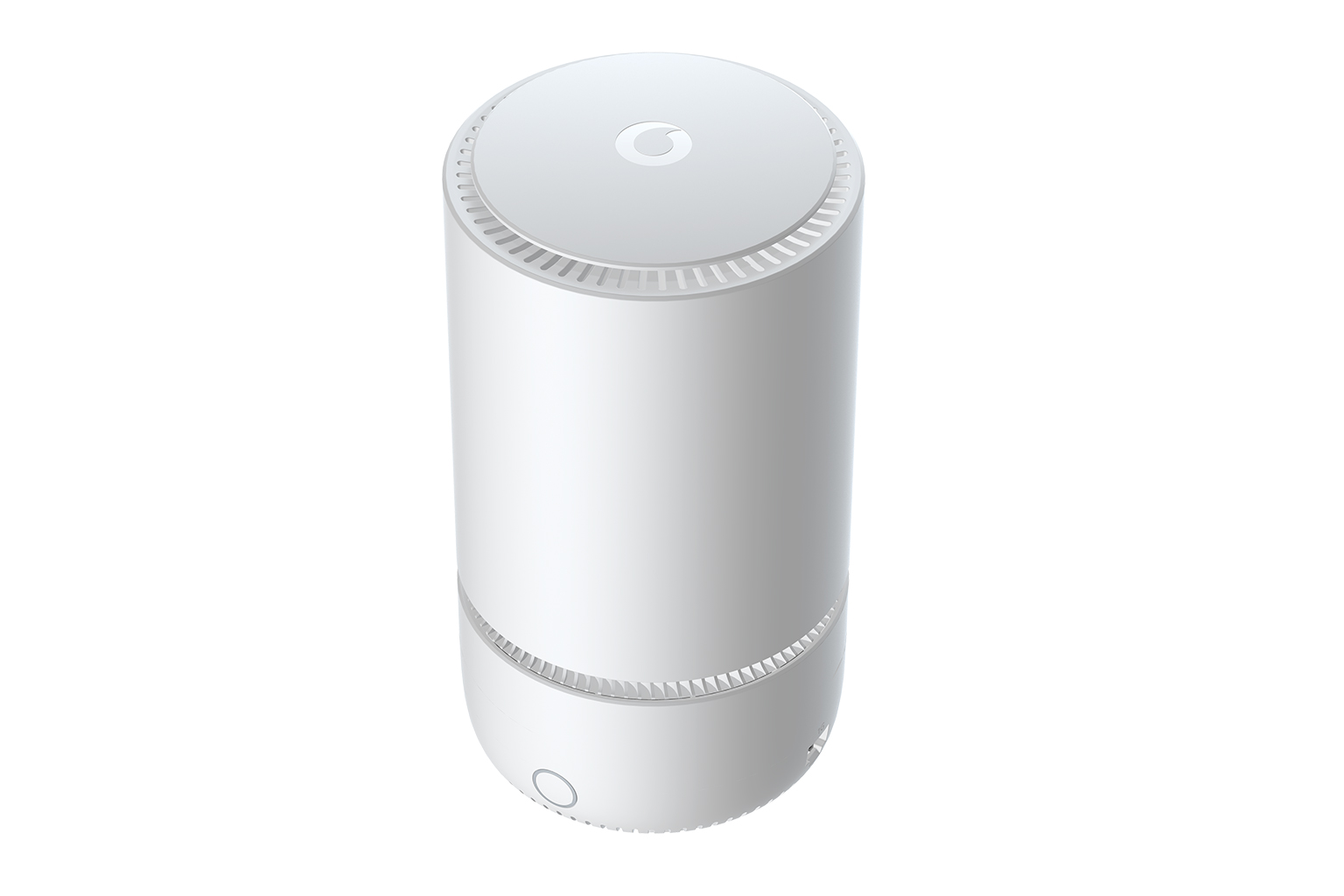
- There is no engineer visit and no upfront hardware cost: the service uses a self-install Power Hub you set up yourself.
- Vodafone is aiming the product squarely at homes that cannot get full fibre, not at areas already served by cheap FTTP.
- Rob Winterschladen, Consumer Director at Vodafone UK, framed it as a way to reach homes left behind by the fibre rollout.
What Vodafone 5G Home Broadband actually is
This is fixed wireless access, or FWA, rather than a wire in the ground. Instead of running data down a copper or fibre line to your home, Vodafone sends it over the same 5G radio network that serves your phone, and a router in your living room turns that signal into home Wi-Fi. That distinction matters because it changes almost everything about how the product behaves: installation, speed consistency, latency and the kind of household it suits. Where a traditional line gives you a fixed, predictable pipe, a 5G connection shares capacity with every other device on the local mast, so performance moves with the time of day and the strength of your signal.

The headline number, up to 150Mbps, is fast enough to put it well ahead of the FTTC and ADSL connections most of the target audience are stuck with today. A typical copper-fed “up to 67Mbps” line often delivers 30Mbps to 50Mbps in practice, and the millions of homes on slower ADSL are lucky to see 10Mbps. Against that backdrop, a stable 100Mbps to 150Mbps is transformative. The catch is the phrase “up to”: your real speed depends on how far you are from the nearest 5G mast, how busy that mast is, and where in your home you place the router. If you have weak 5G on your phone today, this is not the product for you.
Is 150Mbps fast enough for a UK family?
For most households, yes, comfortably. The way to think about it is concurrent demand rather than a single big number. A 4K Netflix stream needs about 25Mbps, a Disney+ or iPlayer 4K stream a little less, and a 1080p stream around 8Mbps. A typical busy evening might see two 4K TVs running, a teenager on a console, someone on a video call and a couple of phones refreshing in the background. Add those up and you are rarely past 80Mbps to 90Mbps at once, which leaves real headroom inside a 150Mbps ceiling. Households that lean on streaming, whether that is the latest Samsung 2026 TV lineup in the living room or a Nintendo Switch 2 in a bedroom, should find it copes well.

Where it gets tighter is large download jobs. A 100GB console game or a 4K film download will take noticeably longer than on a gigabit fibre line, and several big downloads landing at once can briefly saturate the connection. That is a genuine difference from full fibre, but it is a far cry from the experience on the slow lines this product replaces, where a single game update could tie up the connection for an evening. For the streaming, browsing, calling and homework that fill most family evenings, 150Mbps is more than enough.
Latency, gaming and video calls
Speed is only half the story. The other half is latency, the lag between your device asking for something and getting a response, and this is where fixed wireless has historically lagged behind a physical line. A good FTTP connection delivers latency in the 5ms to 15ms range; a 5G connection is typically higher and more variable, often 20ms to 40ms and prone to occasional spikes when the mast is congested. For browsing, streaming and Teams or Zoom calls, that difference is invisible. For competitive online gaming, where every millisecond counts, it can matter.

Our view is that a casual gamer playing Fortnite or FIFA on a console will not notice the difference most of the time, but a serious player chasing a competitive ranking will feel the variability against a wired connection. If gaming latency is your single biggest concern and full fibre is available on your street, the wired line still wins. If full fibre is not an option, Vodafone 5G Home Broadband is a far better starting point than the copper line it replaces, and the gap to fibre on latency is smaller than it has ever been.
Setup, contracts and the small print
The self-install promise is the most genuinely attractive part of the package for the audience Vodafone is chasing. There is no engineer appointment, no drilling, no waiting in for a window that gets missed. The Power Hub arrives, you plug it in, you position it near a window for the best signal, and you are online. For renters, for people who move often, and for anyone who has been told their address is months away from a fibre upgrade, that immediacy is the headline benefit, arguably more than the speed itself.
Reliability is the question owners ask most often, and the honest answer is that fixed wireless is more weather and congestion sensitive than a buried line. A storm will not cut a 5G signal the way it can a copper line, but heavy local demand at peak times can shave your speed, and signal can vary by room. The fix is usually placement: a Power Hub by a first-floor window facing the mast will routinely outperform one tucked behind a TV in a back room. Vodafone does not impose a data cap on the home plans, so the bigger practical limit is peak-time contention rather than a monthly allowance, which is good news for heavy streamers and large households.
On contracts, the flexibility is welcome. The 30-day rolling plan at roughly £32 a month costs more per month but lets you walk away with a month’s notice, which suits students, short tenancies and anyone using it as a stopgap until fibre arrives. The 24-month plan at around £22 a month is the better value if you are settled. As always with UK broadband, read the mid-contract pricing terms: most major providers now bake in annual increases, so the price you sign up to is rarely the price you pay in year two. If you are weighing networks more broadly, our EE versus Vodafone comparison and Vodafone versus O2 breakdown are worth a read before you commit.
One restriction to be clear about: Vodafone is positioning this for homes that cannot get full fibre, and availability is checked against your postcode. If you already have access to a cheap FTTP line, that wired option will almost always be the better long-term buy on speed, latency and price stability, and Vodafone is not pretending otherwise. This is a product for the connectivity gap, not a fibre replacement for everyone.
Who should buy it, and who should wait
The clearest case for buying is a household in a non-fibre area with strong Vodafone 5G coverage, a streaming-heavy routine and no appetite for an engineer visit. For them, this is a straightforward upgrade that lands the same day. The next strongest case is renters and short-term occupiers who value the 30-day exit over the lowest possible monthly price. The case to wait, or to look elsewhere, applies to anyone with a competitively priced full-fibre line already available, and to serious online gamers who will feel the latency variability.

One more group to flag: existing Vodafone mobile customers. The Vodafone Together discount stacks a saving on top of the headline price, and if your phone already runs on the network, you have a good proxy for how the broadband will perform, since both use the same masts. Check your home 5G signal on your handset before you order. If you see strong, consistent 5G indoors, the broadband will likely deliver. If your phone drops to 4G the moment you walk through the front door, treat the speed claims with caution and consider a 30-day plan first so you can test and cancel cheaply.
Where to check availability and buy in the UK
Because this product is sold and supported directly by the operator, the buying journey is short, but there are still checks worth running before you commit:
- Vodafone UK broadband pages: run the postcode availability checker at vodafone.co.uk/broadband to confirm 5G Home Broadband is offered at your address and which speed tier you qualify for.
- Your own phone: the cheapest coverage test you can run is the handset in your pocket. Strong indoor 5G is the single best predictor of a good experience.
- Ofcom mobile coverage checker: cross-reference Vodafone’s claim with Ofcom’s independent coverage map for your postcode before signing a 24-month deal.
- 30-day plan as a trial: if you are unsure, start on the rolling plan, test it for a month across your busiest evenings, then switch to the cheaper 24-month deal only once you know it performs.
- Vodafone Together: if you are already a Vodafone mobile customer, confirm the bundle discount is applied at checkout so you are not overpaying.
It is also worth keeping the wider household budget in view. Broadband is one line in a stack of monthly tech costs that now includes streaming and AI tools, and if you are trimming elsewhere our guides on Spotify’s 2026 price changes and cutting AI subscription costs in the UK pair naturally with a broadband switch. For renters comparing mobile and home options together, the Virgin Media O2 mobile guide is a useful companion.
Our verdict after weighing it up
Vodafone 5G Home Broadband is the right product for the right house. For the millions of UK homes that fibre has not reached, a same-day, self-install connection delivering up to 150Mbps is a genuine leap, and the flexible 30-day option removes most of the risk in trying it. We would happily recommend it to a streaming-heavy family in a strong-coverage, non-fibre area, and we think the Vodafone Together discount makes it a near-default option for existing mobile customers in that position. We would not recommend it over a cheap full-fibre line where one is available, and we would steer competitive gamers towards a wired connection if they have the choice. Check your phone’s indoor 5G first, start on a 30-day plan if you have any doubt, and you will quickly know whether 150Mbps over the air is fast enough for your family. For most, it will be.












Reader discussion
Leave a comment
Comments are moderated. Keep it useful, accurate, and on topic.